

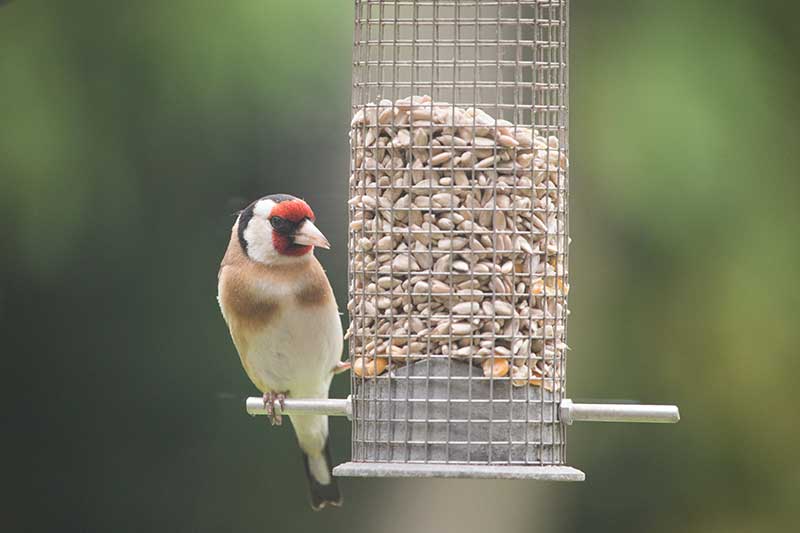
Sunflower seeds are one of the most nutritious foods you can offer to birds. Harvested from the Helianthus annuus sunflower plant, they are packed with healthy fats and protein, as well as essential vitamins and minerals like calcium, vitamin B, iron, and potassium, all of which are important for maintaining birds’ health.
There are two main types of sunflower seeds you can offer to birds: striped sunflower seeds and black oil sunflower seeds.
Striped sunflower seeds come from the type of sunflowers typically grown in gardens. These seeds are larger and have tougher shells, which can make them difficult for smaller birds and softbills to crack open and eat.
On the other hand, black oil sunflower seeds have higher oil content, making them more calorie-dense. Their thinner shells make them easier for many birds to eat. However, they tend to be more expensive than striped seeds.
While sunflower seeds are a popular choice for bird feeding, they can be messy. Birds crack open the shells, leaving the discarded husks on the ground. These shells can also damage grass and plants due to an allelopathic chemical they contain. Allelopathy occurs when one plant releases chemicals that inhibit the growth of others, allowing competing plants to thrive.
Dropped seeds can also germinate in lawns and flower beds, potentially attracting vermin and other unwanted pests.
If you want to feed sunflower seeds to your garden birds, the best option is to offer sunflower hearts. Also known as sunflower kernels or cracked sunflower seeds, sunflower hearts are the seeds with the shells removed.
Sunflower hearts not only offer the same high nutritional value as whole seeds but also come with several advantages:
They are easier for smaller birds and those with soft bills to eat, attracting a wider variety of species to your garden.
Birds don’t waste energy cracking open shells, which is especially important during the winter months when conserving energy is vital.
Sunflower hearts are safe for parent birds to feed their chicks.
They create less mess than whole seeds; any discarded hearts are easily blown away by the wind.
It’s rare for sunflower hearts to sprout in the ground.
Although sunflower hearts are more expensive than whole seeds, you’re not wasting money on uneaten shells. The extra cost reflects their convenience and the fact that they are more processed than straight sunflower seeds.
| Nutrient | Amount per 100g |
|---|---|
| Fat (total) | 51 g |
| Saturated fat | 4.5 g |
| Sodium | 9 mg |
| Potassium | 645 mg |
| Carbohydrates | 20 g |
| Protein | 21 g |
| Vitamin A | 1% (RDA) |
| Vitamin C | 2% (RDA) |
| Vitamin B6 | 65% (RDA) |
| Calcium | 7% (RDA) |
| Iron | 29% (RDA) |
| Magnesium | 81% (RDA) |
Sunflower hearts are a favourite among most bird species, with goldfinches and tits particularly attracted to them. Unlike whole seeds, they are also easier for softbills like robins and blackbirds to eat. You can also purchase sunflower heart chips, which are broken into bite-sized pieces, and which are perfect for feeding during fledgling season, as parent birds can easily feed them to their chicks.
Sunflower hearts are very popular with many species of bird, so you may find they are consumed much more quickly than other types of bird food.
To avoid overspending, limit the amount you put out or mix them with other seeds or suet pellets. If you’re worried about larger birds or squirrels eating too many sunflower hearts, be sure to choose the right bird feeder. Sunflower heart feeders have smaller holes throughout the tube rather than open ports, which helps control how much is dispensed at once.
Select a feeder with small perches, which will be difficult for larger birds to balance on. To prevent squirrels from raiding the feeder, consider investing in a squirrel-proof feeder or adding a squirrel baffle to the pole.
If you’re offering sunflower hearts to ground-feeding birds, a ground feeder or protective cage will prevent larger birds from accessing the food. As with all bird food, only put out enough for the birds to eat in a day to avoid attracting rats and other vermin that may come in search of leftovers.
Because sunflower hearts have a high oil content, they can spoil quickly in hot weather, and the oil may accumulate on feeders or bird tables. Without a protective shell, they can also become soggy in wet weather and may clog up feeders. To keep things clean and prevent the spread of disease, give your bird feeders a thorough scrub at least once a week.
Sunflower hearts and seeds typically have a shelf life of around three months when stored properly. If they start to smell rancid, it means the natural oils are breaking down due to exposure to oxygen, and the seeds are beginning to spoil.
To keep them fresh, store sunflower seeds in an airtight container or bag in a cool, dry place. If you’re purchasing in bulk, transfer the seeds from their original sack to prevent mice from nibbling through it. For even longer storage, you can extend the seeds’ freshness by keeping them in the freezer, taking out only what you need at a time.
This page contains affiliate links. For more information please see our disclosure here.


One Response
Can mouldy sunflower seeds but cleaned?