Breeding birds: 4,000 pairs
Wintering birds: 12,500
Family: Barn owls
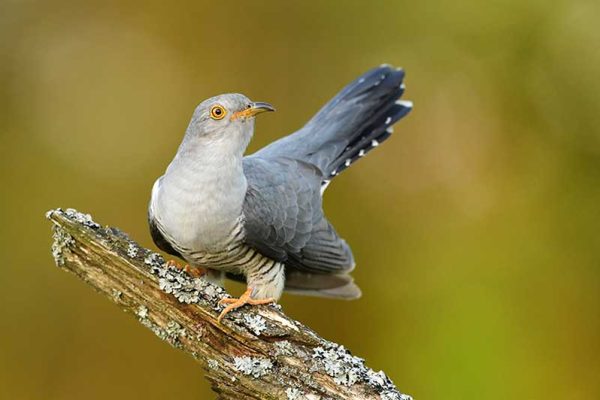
Barn owls have pale golden upperparts with light and dark grey spots, streaks, and mottles. The rounded wings and short tail are white or light brown with downy feathers, while the underparts are pale grey with pale buff on the sides of the breast. There are sometimes fine spots on the breast and flanks.
They have large heads with a white heart-shaped facial disc bordered with brown and no ear tufts. The eyes are dark, the hooked bill is pale pink or yellow, and the legs and feet are pale pink or yellow with black talons.
Males and female barn owls are similar, but the female is slightly larger and she has more spotting on the back and breast.
Juveniles resemble adults.
Try our interactive bird identifier
Barn owls begin breeding in April and produce 1 or 2 clutches a year. Most are monogamous, only selecting a new mate if the first has died, although about 25% will practise polygyny or leave their mate if breeding is unsuccessful. They nest in undisturbed buildings, as well as holes in a trees, crevices in cliffs and rocks, and they will also use nest boxes. They will often use old nest sites, clearing away any debris that is not needed. They do not build a nest but the female will line the area with bits of pellets.
Barn owls lay 4-7 white, non-glossy eggs which are incubated by the female alone for 27-34 days. The male feeds her while she is on the nest. The chicks are altricial and covered in white down which is replaced with buff down after 6 days. The female cares for the chicks and feeds them by tearing prey into pieces. If food is in short supply younger chicks will often die and become food for the surviving chicks.
Barn owls fledge at 50-70 days after hatching but will return to the nest to roost for another 2 months. They reach sexual maturity at 1 year.
90% of a barn owl’s prey consists of woodland rodents such as voles, mice and rats, hunted over open countryside. They will also eat small birds, amphibians, and insects.
Barn owls eat their prey whole, regurgitating large black pellets of indigestible parts including teeth, fur and bones.

Barn owls can be seen all over the UK. Look out for them in open country, grassland, and farmland, and alongside field edges, riverbanks and roadside verges. You can see them during the day but the best time to spot them is at dusk.
Britain's Birds
RSPB Handbook Of British Birds
Collins Bird Guide
The barn owl’s heart-shaped face collects sound in the same way as human ears and its hearing is the most sensitive of any animal tested.