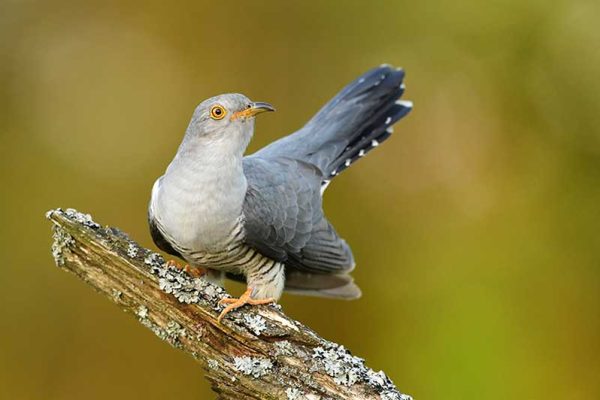
The barnacle goose is a medium-sized farmyard goose and one of the smallest geese in the UK. It belongs to the Branta genus, also known as black geese, which are distinguished from other true geese by their black legs and feet. This group also includes the Canada goose and the brent goose.
For a time, the barnacle goose and the brent goose were thought to be the same species, which which gave rise to the barnacle goose’s scientific name Branta.
Breeding birds: 900 pairs
Wintering birds: 94,000
Family: Ducks, Geese, And Swans
The adult barnacle goose has grey and black barred upperparts, with white uppertail coverts and sides of the rump. Its rounded tail is black. The upperwing flight feathers are black with an inner grey web, while the scapulars are pale grey, and the wing coverts are grey with black and white tips.
The underparts are much paler, with faint pale grey bars on the flanks. The underwing coverts are pale grey, and the undertail coverts are white. The head is white or pale buff with a black crown and nape. It has a short black bill, dark brown eyes with a small eye patch, and black legs and feet. Males and females look similar, though males are slightly larger.
Juvenile barnacle geese are duller in appearance, with a grey neck and grey flecks in the white areas of the head. Their upperparts have a slight brown tinge, and their flanks are washed with pale buff. They reach their full size at around two years old.
Try our interactive bird identifier
Barnacle geese breed in late May and June, producing a single brood each season. They are monogamous, forming lifelong pair bonds, and typically nest in colonies of up to 50 pairs, though some pairs nest alone. To avoid predators such as Arctic foxes and polar bears, they often choose cliff ledges for nesting, but they may also nest on the ground near lakes and rivers.
The female builds the nest in a shallow depression, using mud and dead leaves, and lines it with grass, moss, and down. She lays between three and six eggs, which can be white, pale grey, or pale yellow. The female incubates the eggs for 24–28 days while the male stays nearby to guard the nest.
Newly hatched goslings have grey down on their upperparts and white down on their underparts. They are precocial, leaving the nest soon after hatching and feeding themselves. By 40–45 days, they become fully independent and reach sexual maturity at 2–3 years old.
If the nest is on a cliff, the chicks must jump to the ground despite being unable to fly. This often results in injuries or fatalities, and the noise of their landing can attract predators. As a result, only about 50% of barnacle goslings survive their first month.
Barnacle geese eat grass, stems, leaves and aquatic vegetation. They will also venture onto farmland to eat crops.

Barnacle geese can be seen between October and March. The best place to spot them is on the Solway Firth in Scotland and England in estuaries, coastal meadows, salt marshes, lakes, and gravel pits.
Britain's Birds
RSPB Handbook Of British Birds
Collins Bird Guide
A medieval legend said that the barnacle goose was hatched from goose barnacles attached to driftwood because it was not seen in the summer when it was supposedly developing under the water. This meant it was acceptable to eat during Lent, despite the Church’s ban on eating meat, as it was not ‘born of the flesh’.