Wintering birds: c. 100
Family: Bitterns, Herons, And Egrets
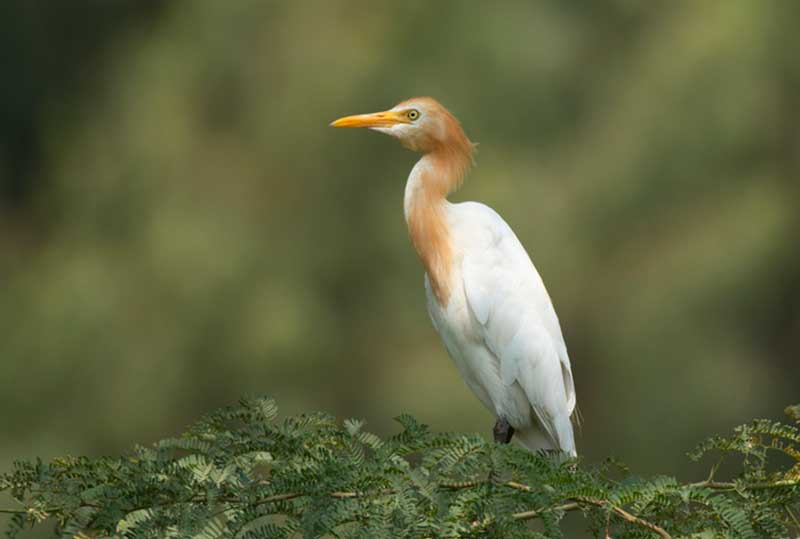
In breeding plumage, the adult cattle egret is white with orange-brown feathers on its crown, breast, and back. Shortly before breeding its bill, lores, and legs become bright red, while its eyes are yellow.
Outside of breeding season, the it is white sometimes with a pale buff wash. Its bare parts are duller with a yellow bill, and dark legs and feet. Male and female cattle egrets look similar.
Juveniles look like adults in non-breeding plumage with a black bill, legs, and feet. The eyes are pale yellow and the bill has a black tinge at the tip.
Try our interactive bird identifier
Cattle egrets breed in colonies often with other species and produce one brood per season. They build their nests in reedbeds, bushes, and trees, up to 20 m above the ground. Both male and female birds consturct the nest which is made from sticks and vegetation, and is reused for several years.
Theylay 3-5 pale blue or light green eggs which are incubated by both sexes for 22-26 days. Chicks are covered in white down and aggressively beg for food. At 2-3 weeks the chicks can climb out of the nest but remain nearby. They are independent at 45 days and can fly 5 days later.
Cattle egrets eat mainly insects but will also take crustaceans, frogs, tadpoles, lizards, and small birds and rodents.
It is often found near cattle and other grazing animals, foraging for prey that has been disturbed nearby.
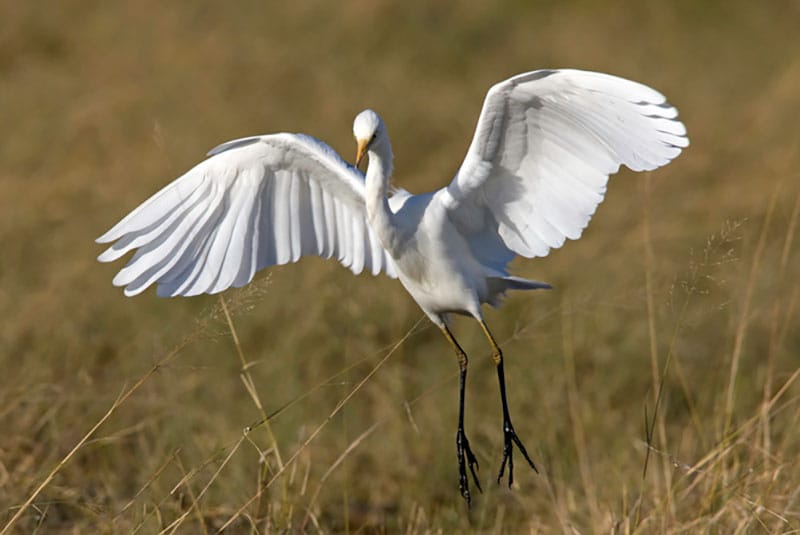
Cattle egrets can be found in the south of England and Wales. They are most often found near livestock and in winter they will congregate in flocks.
Britain's Birds
RSPB Handbook Of British Birds
Collins Bird Guide
During the winter of 2007/2008 there was a large influx of cattle egrets into the UK which led to the first ever pair breeding successfully in Somerset.