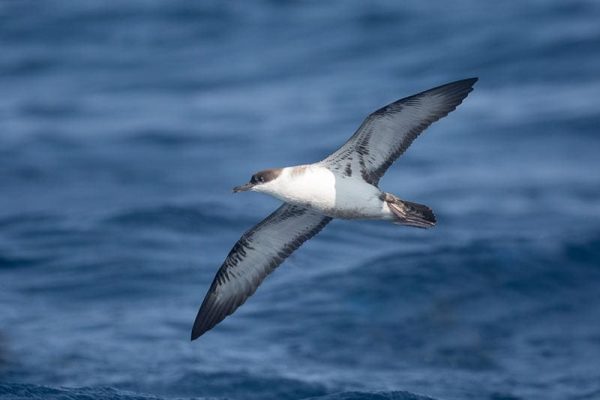
The corncrake is a small, secretive bird that is more often heard than seen. It has a unique, raspy call that is usually heard at night. When flushed, corncrakes appear to have a weak flight, but they undertake long-distance migrations to and from Africa. Numbers have steeply declined in recent years due the loss of nests and chicks from early mowing, loss of habitat, localised flooding, and disturbance by roads and wind farms.
Breeding birds: 870 calling males
Family: Rails, Gallinules, And Coots
Adult male corncrakes have rufous-brown upperparts, with dark brown feathers edged with buff which gives them a scaled effect. The wing coverts are chestnut-coloured which are conspicuous in flight. The foreneck and upper breast are pale grey with a pale brown scaled pattern, and the flanks, belly, and vent and white with rufous bars.
Corncrakes have a white chin and throat, and the centre of the crown and nape are brown with darker scales. The cheeks are pale grey, and there is grey stripe above the eye, and a rufous stripe that runs from the lores to behind the eye and down to the nape. They have pink bills, brown eyes, and flesh-coloured legs and feet.
Males and females are similar but the female is warmer in colour, the grey streak over the eye is less obvious, and there is less grey on the cheeks, nest, and breast. In breeding season the plumage of both sexes may be brighter.
Juvenile corncrakes resemble the adults but with narrower and paler edges on the upperparts, and the upperwing coverts have fewer bars. The sides of the head are buff rather than grey, the eyes are duller, and the legs and feet are dark grey.
Try our interactive bird identifier
Corncrakes breed between April and August. They can be monogamous or polygamous and produce 1 or 2 broods a season. They nest in grassland sheltered by hedgerows or bushes, or near trees. The female builds the nest alone which is located on the ground hidden by dense vegetation. It is a shallow cup constructed from grass, weeds, and brambles and lined with dead leaves. Tall grasses that surround the nest may be pulled over it like a canopy.
Corncrakes lay 8-12 white eggs with brown spots which are incubated for 16-19 days by the female alone. Chicks all hatch together, and they are covered in dark brown down with a rufous wash on the upperparts. The female cares for them and is sometimes helped by another adult until they can feed themselves at 3-4 days. They fledge at 34-38 days after hatching and reach sexual maturity at 1 year.
Corncrakes eat invertebrates such as earthworms, spiders, insects, and molluscs. They will also take small frogs and occasionally small mammals and birds. They supplement their diet with plant matter including seeds of grass and grain, and the green parts of plants.

Corncrakes arrive in the UK from their wintering grounds in Africa in April and leave again in September. They can be found mainly on the Western Isles but are secretive birds so can be hard to spot, spending most of their time in tall vegetation. Look out for them in hayfields and nettle beds.
Britain's Birds
RSPB Handbook Of British Birds
Collins Bird Guide
Corncrakes have been given many names over the years including ‘Crake gallinule’, ‘corn scrack’, ‘quailzie’, ‘grass quail’, ‘gorse drake’, and ‘landrail’. Many of these names reflect the fact that unlike most other members of its family, corncrakes live on dry land.