

Breeding birds: 52,000 pairs
Family: Woodpeckers
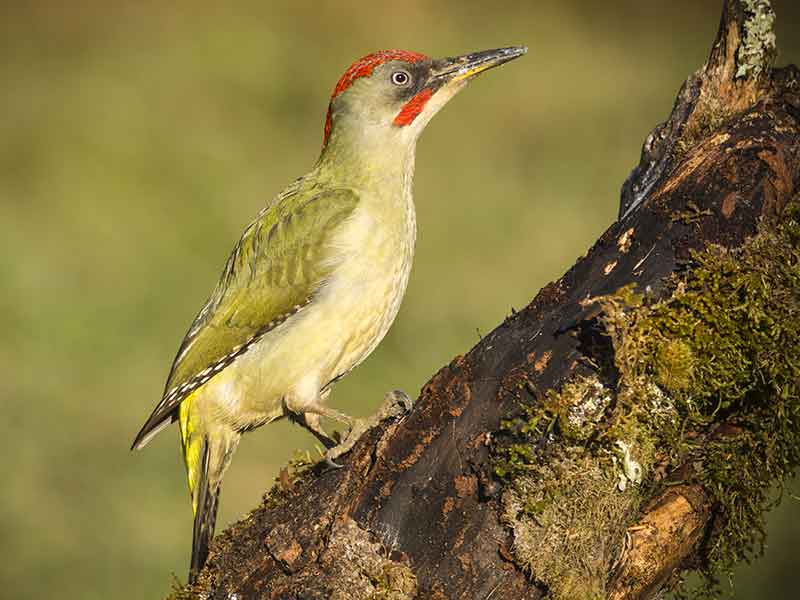
Male green woodpeckers have bright yellow-green upperparts with yellow rumps. Their uppertail feathers are black with green edges with some paler bars. Their underparts are paler green and the underwings are barred grey and white.
They have bright red crowns with black around their eyes and bills. Below the eye is a red stripe surrounded with black. Their chins and throats are grey and they have a long, pointed dark grey bill. Their eyes are white with a pale pink eye-ring. They have short legs and zygodactylous feet which are greenish-grey.
Female green woodpeckers look similar but their stripe below the eye is black. Juveniles are duller than adults and they have grey eyes. Their heads have grey streaks on the red patches.
Try our interactive bird identifier
Green woodpeckers make their nests in cavities in trees or branches. Both male and female excavate the hole making a tunnel and nest chamber in the wood. They use wood chips to line the nest.
Green woodpeckers lay 5-8 glossy white eggs which are incubated by both parents for 14-17 days with the male doing most of the incubation at night. Chicks fledge at about 25 days after hatching.
Green woodpeckers mainly eat ants although they will feed on other insects, worms, snails, fruits, seeds and berries.
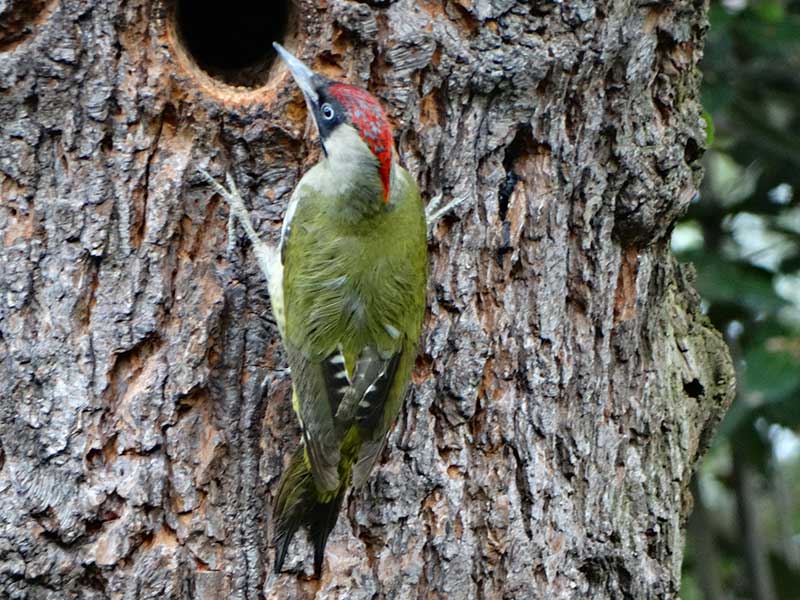
Green woodpeckers can be seen all year round across the UK except the far north of Scotland and Northern Ireland. They can be spotted feeding on the ground particularly in short grass and will venture into gardens and parks.
Britain's Birds
RSPB Handbook Of British Birds
Collins Bird Guide
Green woodpeckers can be identified by their laughing call and although they will drum on wood, the sound is not as resonate as that of great and lesser spotted woodpeckers.


