Breeding birds: 200,000 territories
Family: Treecreepers
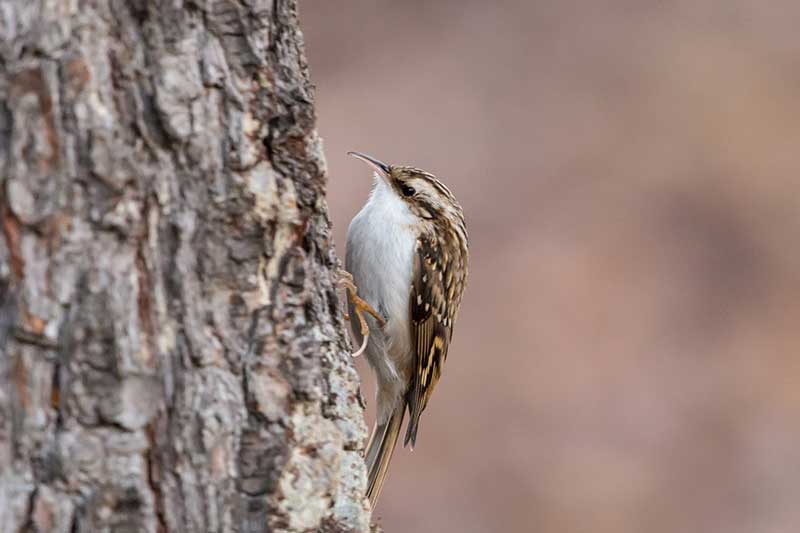
Treecreepers have streaked brown backs with white underparts and reddish-brown rumps. Their bellies, flanks and vent areas are tinged with buff. They have brown-white wing bars and the underside of the wings are silvery-white.
Treecreepers have a long, bill that curves downward, eyes are dark brown and legs are pale grey.
Adult male and female treecreepers look similar, while juveniles are are duller with less distinctive colouration.
Try our interactive bird identifier
Treecreepers build their nests in the crevices of trees or behind loose bark. They will also nest in the crevices of walls or in ivy. Both male and female treecreepers construct the nest from twigs, pine needles, and bark with a lining made from feathers, wool, spiders’ webs, moss and lichen.
Treecreepers lay 3-9 smooth, glossy eggs which are white with reddish-brown speckles. The female incubates the eggs by herself for 14-15 days but both parents feed the young. Chicks fledge 14-15 days after hatching.
Treecreepers use their bills to forage in the trunks of trees for insects, spiders and seeds in the winter. They will start at the bottom of the tree, working their way up in a spiral.
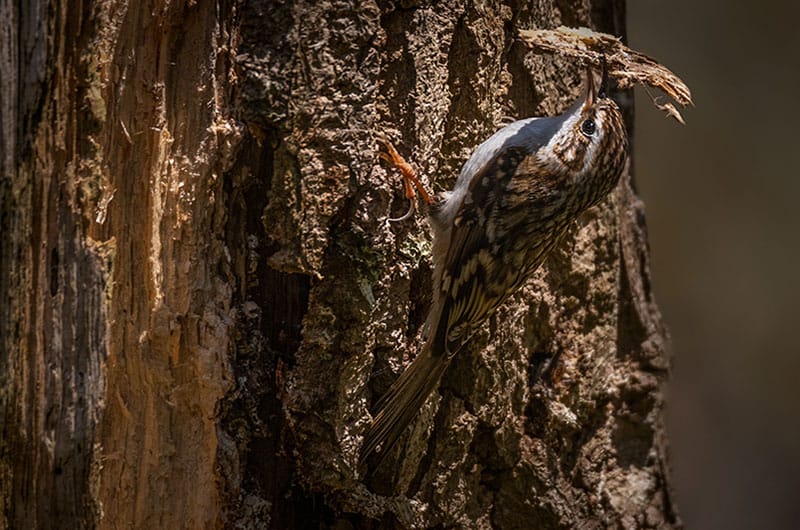
Treecreepers can be seen all year round in woodland and occasionally gardens. During the winter they will form flocks with other small birds.
Britain's Birds
RSPB Handbook Of British Birds
Collins Bird Guide
In the West Country treecreepers are nicknamed tree mice due to the way they climb up tree trunks like a mouse, supported by their long, stiff tails.