This week Foster & Partners have unveiled new designs for its refurbishment of the Snowdon Aviary at London Zoo. The Grade II listed building is to be modernised and upgraded with the aid of a Heritage Lottery Fund grant to help inspire future generations.
Foster’s original plans submitted to Westminster council in 2017 proposed a new multi-species enclosure where colobus monkeys would live alongside African grey parrots, while a herd of red duiker antelopes would roam on the aviary floor.
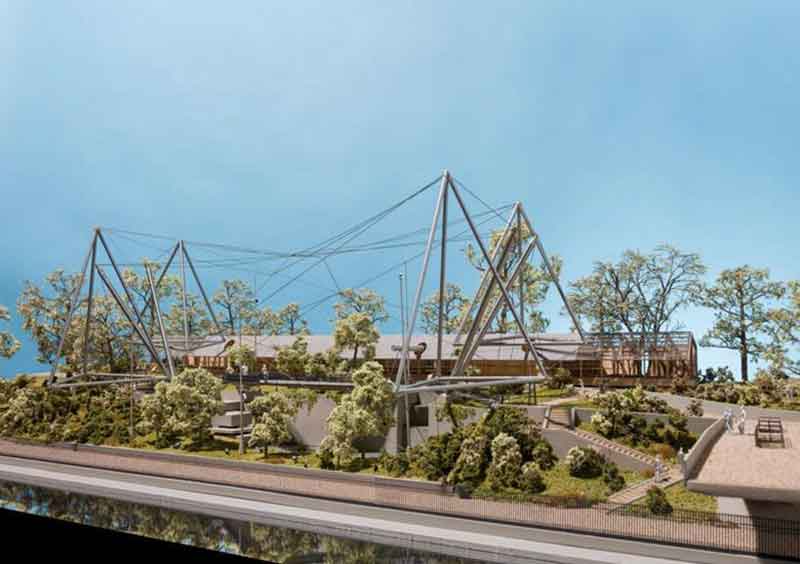
These plans have been revised and the space will be given over exclusively to the monkeys due to a shift in the zoo’s animal welfare guidelines on mixing different species within a single enclosure.
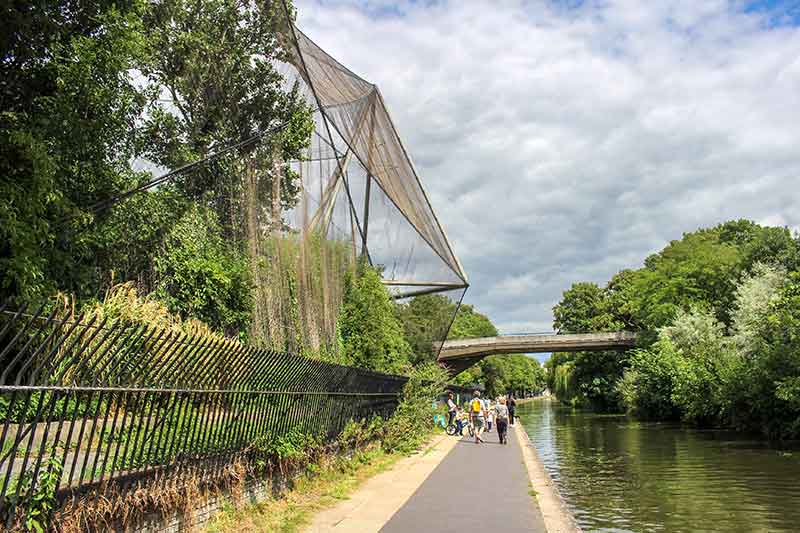
The Snowdon Aviary is iconic, its high resting platforms visible over the trees of Regent’s Park. If you were lucky you could sometimes spot a peacock proudly displaying beside the fence of the aviary that runs alongside Regent’s Canal.
Since its inception London Zoo has championed design. In 1826 a group of scientists, collectors, and gentlemen founded the Zoological Society of London in order to form a collection of animals and study them for the advancement of zoological knowledge.
Decimus Burton (30th September 1800 – 14th December 1881), one of the most fashionable English architects and urban designers of the time, was appointed to lay out the gardens and pavilions, and design accommodation for the animal collection. Some of his structures still exist in the zoo today including the Clock Tower, the Raven’s Cage, the East Tunnel, the Three Island Pond, and the Giraffe House.
Since then, many leading architects have contributed to the buildings of London Zoo and in 1960 the zoo’s committee issued a memorandum in 1960 dedicated to the ‘Future Policy on Bird Collections’ with recommendations to improve specimen visibility and species diversity. A detailed proposal for a large outdoor bird cage was put forward that should be designed to minimise the appearance of captivity.
What is wanted is a small artificial cliff, with ledges and holes designed to meet the known requirements of the different species. At the base of this would be fairly deep water (salt?). Under the conditions envisaged, the birds would probably rest on the cliff, even if they could not be induced to breed, and would fly up and down between it and the water.
The whole would have to be within a wire enclosure, of which the cliff would form a solid wall on one side; at least the roof should be of tensioned wires in one direction only, but it might unfortunately be necessary to have them set closely enough to exclude sparrows. Spectators should be admitted to a platform within the enclosure and opposite the cliff; there might be two platforms at different levels… The whole might well constitute a major feature of the Gardens, and one that would be unique so far as the writer is aware
The design of the aviary was a collaborative affair. Although it is usually attributed to Cedric Price (11th September 1934 – 10th August 2003), an influential architect who studied at St John’s College, Cambridge, and after graduating worked briefly for Emo Goldfinger, the idea was conceived of by Antony Armstrong-Jones, 1st Earl of Snowdon (7th March 1930 – 13th January 2017), and husband of Princess Margaret.
Armstrong-Jones was the son of a barrister who, after dropping out of Cambridge University where he too studied architecture, after failing his second-year exams, established himself as a photographer in fashion, design, and theatre.
He met Princess Margaret at a dinner party in Chelsea in 1958 and they married on the 6th May 1960 at Westminster Abbey. In 1961 the Queen gave him a peerage and he became The Right Honourable The Earl of Snowdon.
Snowdon had some previous experience having designed a birdcage at Mereworth Castle and while staying at the Royal Lodge in Windsor, Prince Philip, his brother-in-law and president of the Royal Zoological Society, was so impressed with his work that in a to-be-expected display of nepotism he recommended him for the job of building London Zoo’s new aviary.
Snowdon turned to his friend from university, Cedric Price, to help turn his vision into reality. Price described himself as an ‘anti-architect’ who worked on a number of unrealised projects, most famously the Fun Palace, a ‘laboratory of fun’ where visitors could go to enjoy performances of music, dance, drama, watch fireworks, or participate in arts and crafts activities.
Choose what you want to do – or watch someone else doing it. Learn how to handle tools, paint, babies, machinery, or just listen to your favourite tune. Dance, talk or be lifted up to where you can see how other people make things work. Sit out over space with a drink and tune in to what’s happening elsewhere in the city. Try starting a riot or beginning a painting – or just lie back and stare at the sky.
Price was also responsible for a university that never was, The Potteries Thinkbelt project, an infinitely extendable network and widespread community of 20,000 students that would include housing and learning centres, railbuses transformed into mobile teaching units, and inflatable lecture theatres.
He was an active member in many architectural circles and closely associated with the Architectural Association in London where he was lecturer. It was here that he met Frank Newby (26th March 1926 – 10th May 2001), an engineer, who had recently taken over the leadership of F.J. Samuely & Partners, one of the most innovative companies in the UK at the time, after the death of Felix Samuely in 1959.
Newby was one of Britain’s most eminent structural engineers. He studied mechanical sciences at Trinity College, Cambridge before joining Samuely’s consultancy firm and worked on the design of Skylon, a futuristic structure that appeared to have no visible means of support, for the Festival of Britain. It was Newby’s job to read the strain gauges on its cables to ensure it continued to ‘float’ off the ground.
The team were given a considerable budget by ZLS and between them they developed a structure that was seemingly completely at odds with gravity.
Working from a brief based on the zoo’s memorandum, Newby proposed a tension structure based on the principle of tensegrity that he had learned from Buckminster Fuller, with whom he had spent some time in the United States in 1953.
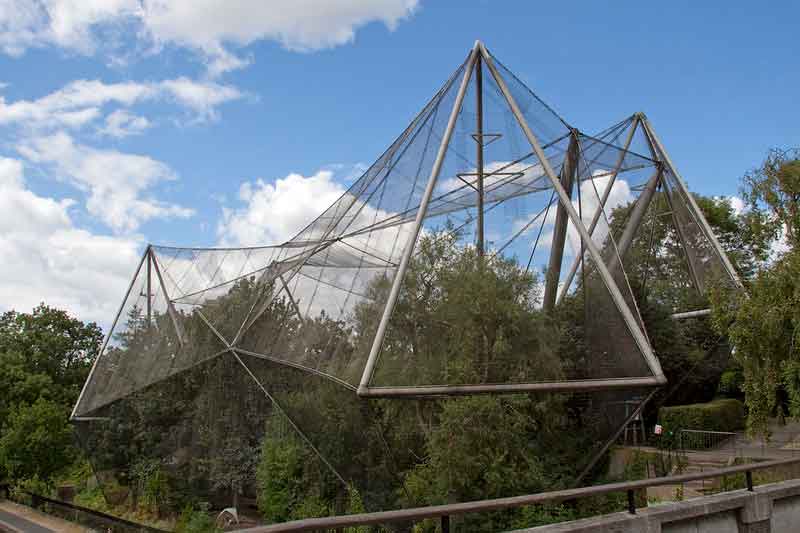
The submitted design consisted of two crystalline pavilions connected with a net over tension cables or a latticed shell which enabled the maximum space for free and unimpeded flight. It also included areas for perching at each end. The structure was said to be inspired by the graceful flight patterns of birds, mimicking them as they take off and land from the perches.
Once through the gate, face right. The Deer House, The Camel House, The Giraffe House, The Cattle and Zebra House and The Antelope House will all be found on your left across a canal and a wild ravine. Water Bus rides on the artificial river start at ten. As you face your right you see a path before you. Take it. You pass, on your right, The Owls Aviary and The Pheasantry.
All of the pheasants have gone away and you can count up fourteen empty cages, waiting. You can listen to the wind across The Reptile House, The Reptiliary, The Gentlemen’s Toilets, The Charles Clore Pavilion for Mammals and Moonlight World. Ahead of you a great fence of wide-mesh wire catches the wind; it is a huge crazy sail that is warped to the ground like a tent and has a door of brushed aluminum. It peaks in twenty places, it bulges at its sides; thick steel pipes at strange angles just like spars and when you walk inside, saying, “You go first. You come first, you always came first for me. You know that,” the noise that she makes for you by listening in silence, saying nothing, even when you try to smirk your sudden words away, is lost. For you are in The Snowdon Aviary, opened in 1965, the first out-of-doors walk- through aviary in The London Zoo, which houses many birds from a variety of natural habitats. The Aviary was designed by Lord Snowdon in association with Mr. Cedric Price and Mr. Frank Newby. A special leaflet about The Aviary is available from The Zoo Shop (price 1/-).
Lost, because the wind is constantly a high sighing human voice inside this cage. The ground slopes sharply and the steep bank is cut by a narrow concrete walk. A wide-barred railing keeps you from falling down, as the waterfall goes down, roaring onto rocks and wet bright vegetation, but you must be cautious at the dangerous rail not to drop like the water down on the rocks and tangled bushes below, very far. There are trees and creepers, everything is twined and seizing and moist and you must take care in the constant wind in which the bellow of her silence is lost.
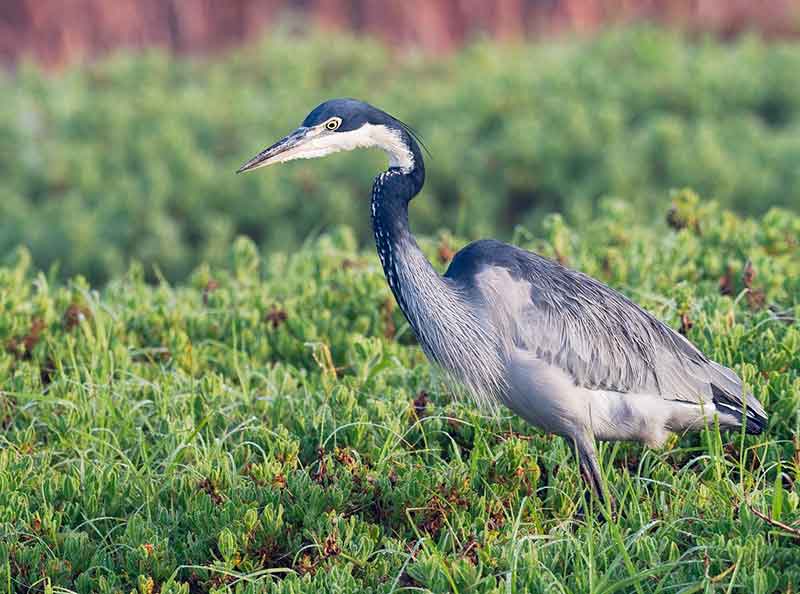
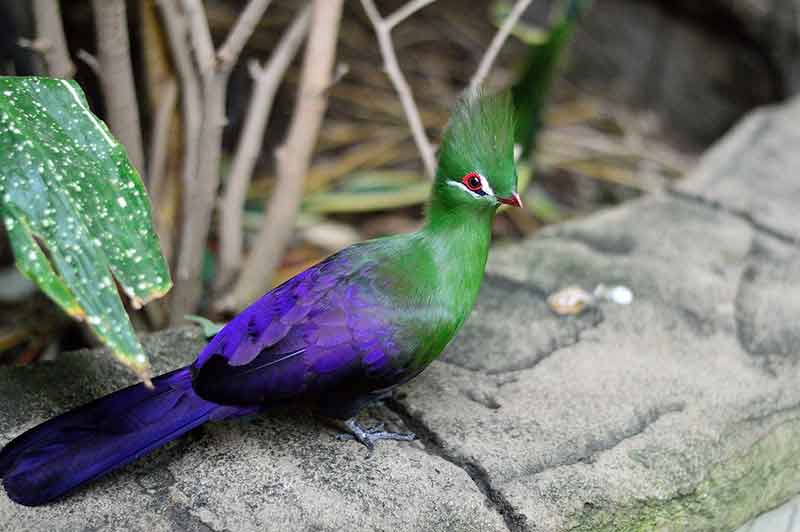
Shapes and colors move in the transplanted brush, something is moving off the edge of your vision near a pool or in the shadow of a twisted tree or under something green. Over one hundred and forty birds of every color are housed here, and below there are egrets ignoring you, herons and spoonbills; teal and ibises, touracos, kestrel, all were here this morning, will remain tonight, in the breathing wind and faintest rattle, as if chains were shaken, that the fence must always make.
Plans to make The London Zoo the most beautiful and modern Zoo in the world have been moving forward. Moving forward, out the final door, leaving you in The Aviary, she will face a wooden wall and large white sign: UNDER REDEVELOPMENT. Beyond and left she should see The West Bridge. Call her and the wind will crush your words. No birds will rise in fright at the sound of your voice. Move along the rail at which you must take care and leave this unique and justly famous structure.
Frederick Busch, “Bring Your Friends to the Zoo,” The Iowa Review, vol. 5, no. 1 (Winter, 1974), p. 33.
Within the structure an artificial cliff made from concrete with nesting holes was constructed to link the upper and lower areas of the sloping area the aviary was built on.
Inside, the site was landscaped and planted with silver birch, balsam poplar, and weeping willows, as well as climbing evergreen plants. An internal water system with two waterfalls stepped over basins formed small pools for water birds.
Diagonal legs at either end linked to the two four-sided pyramids (tetrahedrons) while a suspended ramp allowed visitors to observe the birds flying, nesting, and drinking from the waterfalls. Educational signage was placed strategically along the zig-zag walkway to prevent bottlenecks forming within the pavilion.
The roof was built from a pair of cross-over cables that ran along the apex of the aviary supported by pairs of tubular steel columns that formed giant ‘V’s to hold the cables in tension.
Technological innovations including the use of aluminium castings, stainless steel forgings, and lightweight welded mesh were used to bring the designs to life.
The resulting aviary was 150 ft long, 63 ft wide, and 80 ft high. The mesh used for its cladding contained 118 miles of black anodised aluminium wire.
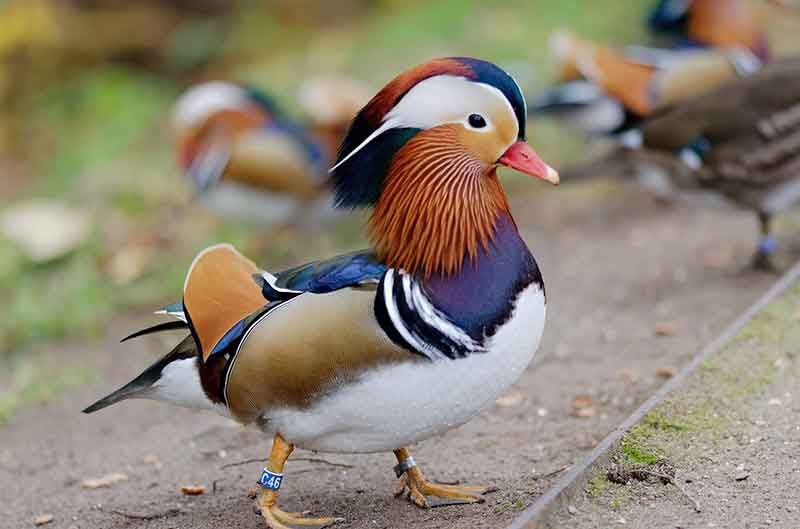
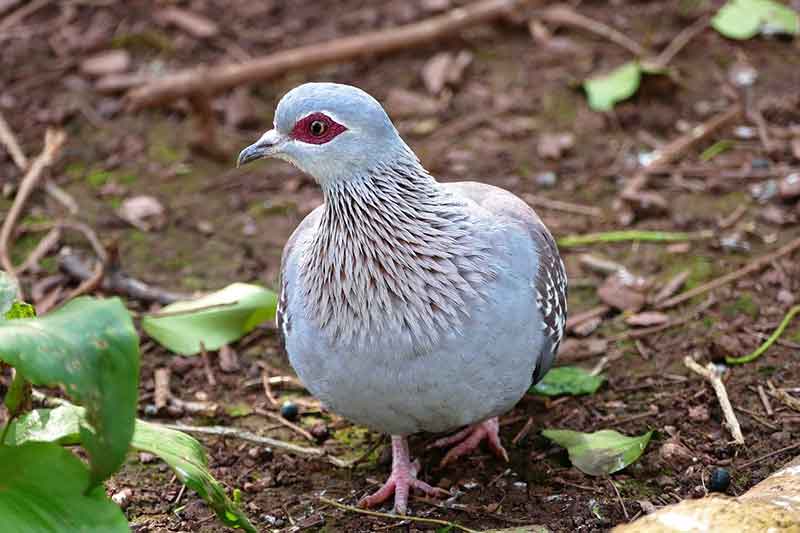
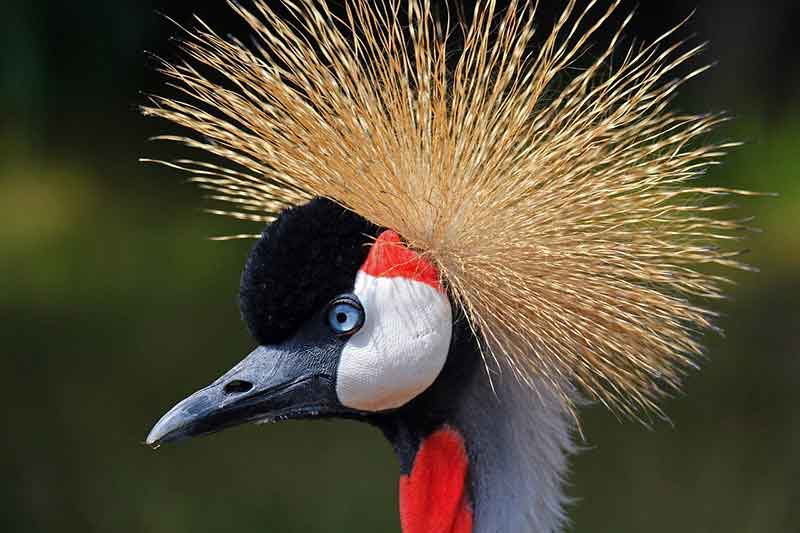
The aviary was opened in 1965 to mixed public opinion with the London Times describing it as “bizarre”. But the public were soon won over and flocked to visit the aviary which was filled with up to 150 birds during the summer including cranes, rollers, hornbills, and spoonbills.
Lord Snowdon, who affectionally referred to it as ‘the birdcage’ said the aviary was his proudest creation.


In the 1960s Price had advocated that buildings should adapt and change according to circumstances and they did not need to be permanent.
It therefore seems fitting that over 50 years after the Snowdon Aviary was constructed it is being reimagined for another purpose and to fit with the times.