Breeding birds: 17,000 pairs
Wintering birds: 77,000
Family: Gulls, Terns, And Skimmers
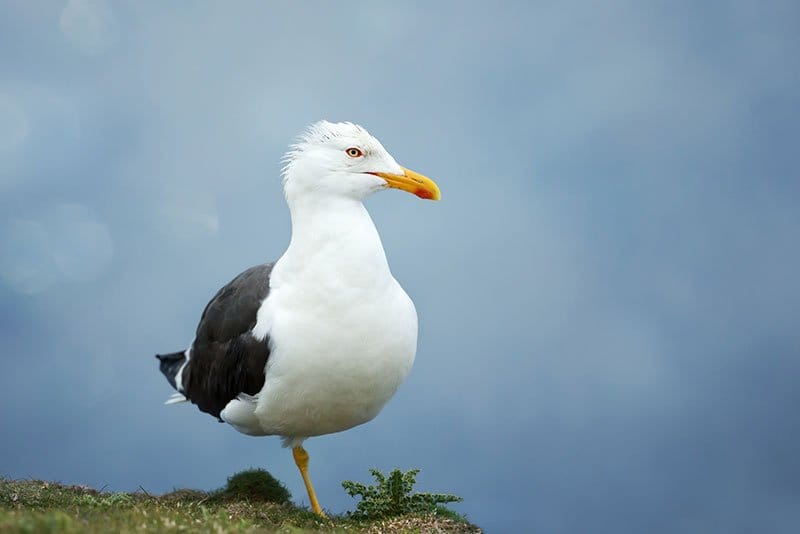
In breeding plumage, adult great black-backed gulls have black backs and wings and large white spots on the tips of their primaries.
Great black-backed gulls have large yellow bills with a red spot on the lower mandible. Their eyes are yellow with a red eye-ring and their legs and feet are flesh coloured.
In winter they look similar except on the head and neck which is streaked with grey-brown. The yellow bill and red spot are duller. Both sexes look similar except the male is much larger. Juveniles have mottled brown and white plumage and a black bill.
Try our interactive bird identifier
Great black-backed gulls nest on ridges and on roofs. The nest is bulky and made from grass, moss and algae lined with feathers, vegetation, rope and plastic.
Great black-backed gulls lay 1-3 olive-green or brown eggs. Both parents incubate the eggs for 27 days. Chicks are covered in grey down when they hatch and are fed by both male and female. The leave the nest 2-3 weeks after hatching and can fly 7-8 weeks later.
Great black-backed gulls have a varied diet and will eat fish, crustaceans, insects, other small birds and eggs and carrion. They will also occasionally eat small mammals such as rats, mice and rabbits.
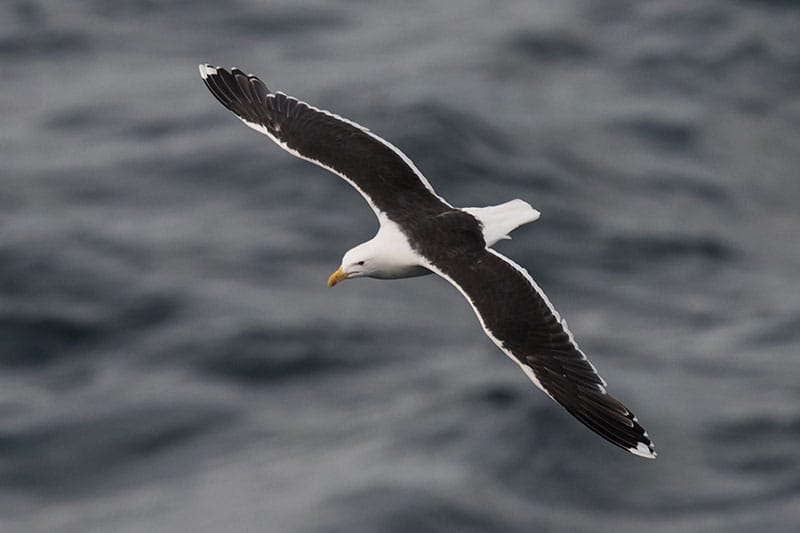
Great black-backed gulls can be seen all year round along coasts during breeding season and inland at other times of the year around harbours, reservoirs and rubbish dumps.
Britain's Birds
RSPB Handbook Of British Birds
Collins Bird Guide
In the 1800s the feathers of great black-backed gulls were used in clothing. After feathers fell out of fashion in the early 1900s the populations of great black-backed gulls dramatically increased.