


Breeding birds: 250,00 territories
Family: Old World Buntings
Male reed buntings in breeding plumage have grey-brown and rufous mantles streaked with black. They have grey backs and rumps with dark streaks and brown uppertail-coverts. Their upperwings are red-brown to dark brown with paler tips and their flight feathers are blackish-brown. They have deeply notched dark brown tails with white edges.
Reed buntings have black heads and throats with a white submoustachial stripe and white collars on their hind necks. They have small black bills dark red-brown eyes and pink legs and feet.
Outside breeding season male reed buntings have obscured head patterns due to new grey feathers. They have buff chins and white throats. Their underparts are paler and they have a blue-grey lower mandible.
Breeding females look similar to breeding males but with paler napes and dark streaked breasts and flanks.
Non-breeding females are similar to non-breeding males with less distinct markings on their crowns.
Juvenile reed buntings resemble females with chestnut crowns and heavy dark streaks. They have spots on their belly and flanks and buff upperparts with dark spots. Their eyes are dark grey.
Try our interactive bird identifier
Reed buntings breed from April to August, producing up to 3 broods per season. Female reed buntings build the nest usually on the ground in the base of a shrub. The nest is cup-shaped made from grass, twigs, mosses, reed stems, and leaves. It is lined with softer plant material.
Reed buntings lay 4-5 olive grey to pale purple eggs with dark markings which are incubated mainly by the female for 12-15 days. The chicks are fed by both parents and fledge at 10-12 days. They often leave the nest before they are able to fly.
Reed buntings eat mainly invertebrates such as insects, spiders, snails, crustaceans, and larvae. They will also eat seeds and plant materials.
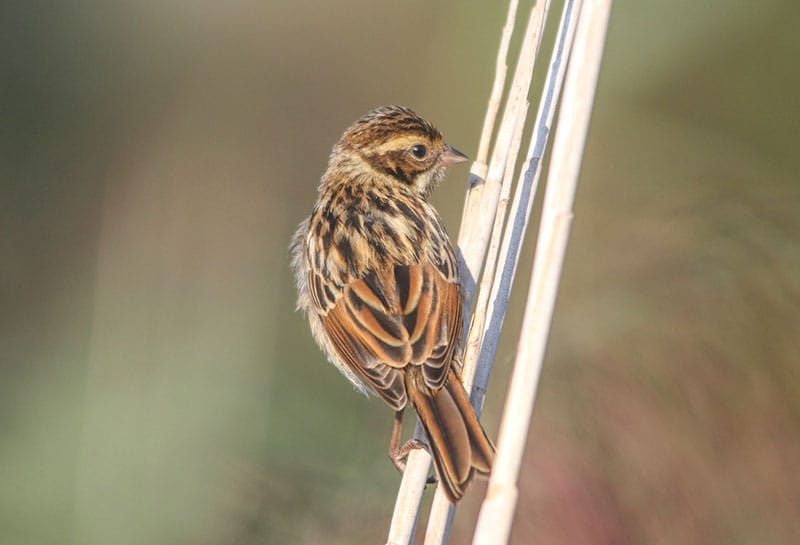
Reed buntings are found across much of the UK all year round. Look out for them on farmland and wetlands, and in winter they will venture into gardens.
Britain's Birds
RSPB Handbook Of British Birds
Collins Bird Guide
Because they nest on the ground, reed buntings are very vulnerable to predators. If they think they may be in danger reed buntings may feign injury to defend the nest.


