Breeding birds: 380,000 pairs
Family: Gulls, Terns, And Skimmers
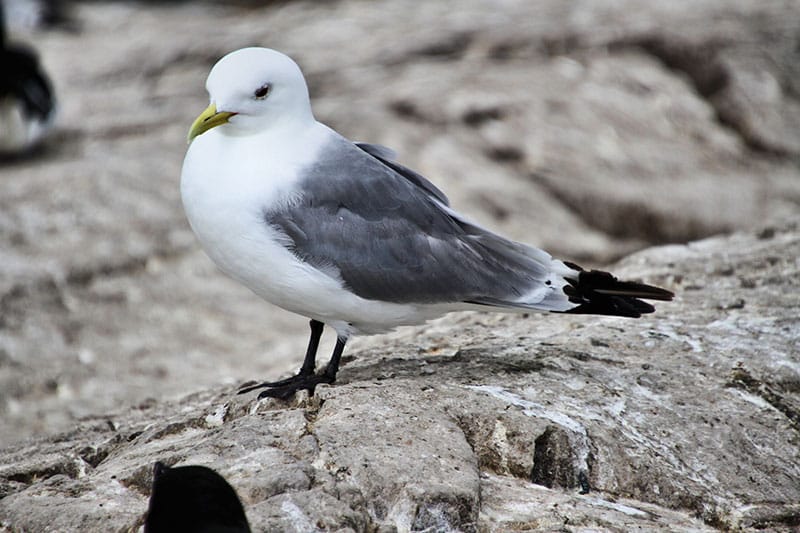
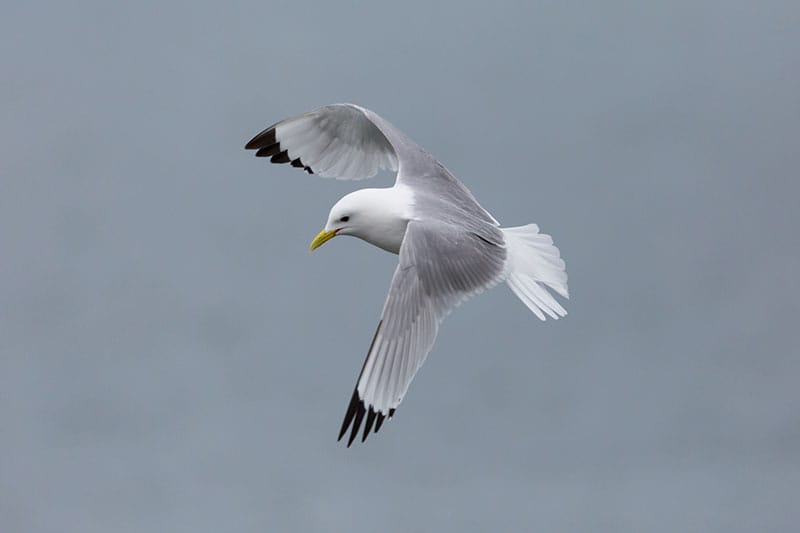
Adult kittiwakes in breeding plumage have blue-grey mantles and upperwing coverts. Their outer wings are paler grey with a black tip. Kittiwakes have white heads and dark brown eyes surrounded by a red eye-ring. Their bills are yellow and legs and feet are black.
In winter plumage kittiwakes have dusky grey crowns and napes and dark patches around their eyes. Male and female kittiwakes look similar.
Juvenile kittiwakes have black zigzag patterns on their wings, black napes and black tail bars.
Try our interactive bird identifier
Kittiwakes build their nests made of grass and feathers lined with moss and seaweed on narrow cliff edges. The nest is a deep cup which is trampled into shape.
Kittiwakes lay 1-3 buff eggs with dark spots which are incubated by both parents for 24-28 days. The chicks remain on the ledge where they are fed and guarded by both parents for 4 weeks. They fledge at 5-7 weeks after hatching.
Kittiwakes feed on fish, shrimps, worms, molluscs and other crustaceans.
Kittiwakes are coastal gulls and during breeding season can be seen in seabird colonies throughout the UK. They spend the winter out at sea.
Britain's Birds
RSPB Handbook Of British Birds
Collins Bird Guide
Young kittiwakes instinctively know to stay still so they don’t fall from their cliff-side nests.