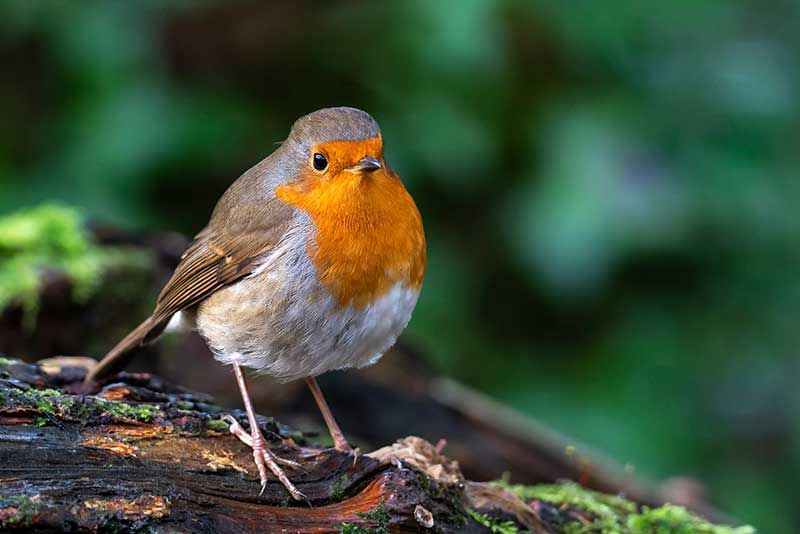
Robins, often called the gardener’s friend, are well-loved for their habit of following gardeners as they dig, eagerly searching for disturbed insects to eat. With their bright orange breast and curious nature, these birds have charmed their way into the hearts of many, making it no surprise that people enjoy attracting them to their gardens.
It’s rare to see more than one or two robins in your garden at the same time, as they are fiercely territorial and can even fight to the death to defend their space. The exception is during the breeding season, when males court potential mates with sweet songs that can sometimes be heard late onto the night or in the early morning. If you’re lucky, you might witness courtship feeding once the female has laid her eggs.
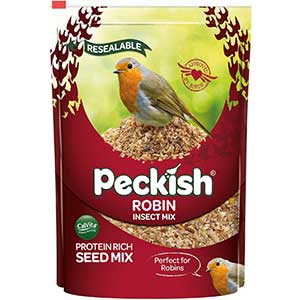
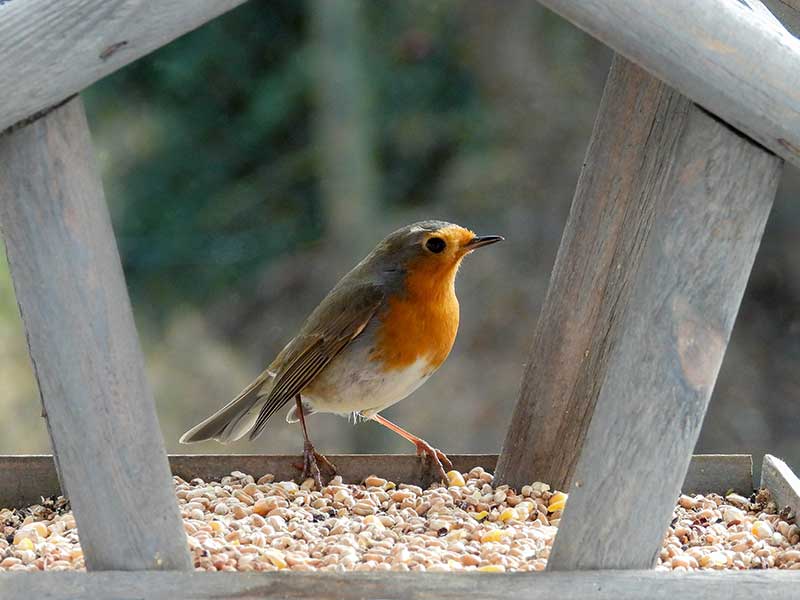
In the wild, robins primarily feed on invertebrates such as worms, spiders, and insects. During winter, they supplement their diet with seeds, fruits, and berries, and they readily visit gardens in both rural and urban areas in search of food at any time of the year.
To provide the protein they’d normally get from insects, mealworms are an excellent choice. Dried mealworms can be soaked overnight in warm water and left on a bird table, ground feeding platform, or scattered directly on the ground. If you’re not squeamish, you can also purchase live mealworms or even try breeding your own. However, if hedgehogs visit your garden, ensure they can’t access the mealworms, as these can cause a fatal bone disease in these prickly creatures.
Protein-rich kitchen scraps are another great option. Robins will gladly eat mild grated cheese, pieces of unsmoked bacon, or meaty pet food. Avoid offering leftover fat from roasting tins, as it can stick to their feathers, hindering their ability to fly and escape predators.
Although robins primarily feed on the ground, they will use hanging feeders in gardens if other food sources are unavailable. While they’re not as agile as tits, robins may hover at the feeder or hang on with one claw to peck at the food inside. If you want to encourage them to use hanging feeders, consider purchasing feeders with a perch to help them balance. Sunflower seeds, peanuts, and birdseed mixes are all suitable for hanging feeders, and adding suet pellets will provide the essential protein they need.
During winter, fat-based foods are especially beneficial, as they supply the energy robins require to endure cold temperatures. Robins start breeding as early as December or January, so ensuring they have plenty of food during this time is vital.
Fat balls and suet cakes are excellent choices, or you can make your own by melting suet and mixing it with seeds, nuts, mealworms, and raisins. Pour the mixture into a yogurt pot or other container and leave it to set, then hang it from your bird table or tree branches. In very cold weather, avoid leaving out too much food, as it may freeze and become difficult for birds to eat.

With regular feeding, don’t be surprised if a robin begins showing up near your house every morning, waiting for its daily meal. Robins are one of the few garden birds that may even become tame enough to feed from your hand. While this can be a fun and rewarding experience, remember they are wild birds, and it’s important not to let them become too tame, as their natural fear of humans is essential for their survival in the wild.
Robins feed on a wide range of grubs and insects, so attracting them to your garden can help with natural pest control while providing them with a source of food. One of the easiest ways to encourage insects is to dedicate a section of your garden to nature by letting it grow wild.
Avoid cutting your lawn too short to provide shelter for insects and allow grass to grow seeds for them to feed on. Create an insect-friendly habitat by piling up logs, leaves, twigs, and rocks. Alternatively, build a bug hotel by stacking bricks or wooden pallets and filling the spaces with bamboo, dry leaves, bark, straw, cardboard, stones, and tiles. To enhance this habitat, plant native wildflowers such as poppies, cornflowers, or oxeye daisies nearby. These will attract a wide variety of insects while adding a pretty splash of colour during summer.
In winter, robins enjoy eating berries, so consider planting berry-producing shrubs. Some good choices include:
Holly (Ilex aquifolium): A large evergreen tree with glossy, spiny leaves, famously associated with Christmas, producing bright red berries.
Hawthorn (Crataegus monogyna): A deciduous tree with thorny branches and glossy leaves that bears an abundance of dark red edible berries in autumn.
Rowan (Sorbus aucuparia): A tree with dark green leaves that turn stunning shades of red and yellow in autumn, accompanied by clusters of orange-red berries.
Cotoneaster (Cotoneaster horizontalis): Although not native, this shrub produces red berries in autumn that robins and other garden birds will happily feast on.
Firethorn ‘Orange Glow’ (Pyracantha): A robust evergreen shrub that has long-lasting, bright orange berries.
Robins typically build their nests hidden in vegetation close to the ground, typically in tree cavities, hedges, piles of logs, or crevices in walls. Near humans, they’ve been known to nest in some surprisingly unusual spots, such as letterboxes, old wellington boots, plant pots, lanterns, car bonnets, or even the pockets of clothing.
You can encourage robins to nest in your garden by planting native shrubs, trees, and climbers that provide dense cover and prickly foliage. Because robins may start building their nests as early as January, evergreens are especially valuable since they retain their leaves through the winter. Holly, ivy, fir, spruce, and certain species of honeysuckle are all good choices.
If you suspect robins have nested in your garden, avoid trimming hedges or cutting trees until the breeding season has ended and the chicks have fledged. Harming nesting birds or their eggs is illegal and could result in fines or even imprisonment. Be mindful not to disturb them, and if you own cats, try to keep them indoors until the chicks have safely fledged. It’s also a good idea to check sheds, outbuildings, hanging baskets, and flowerpots for robin nests before using or moving them.
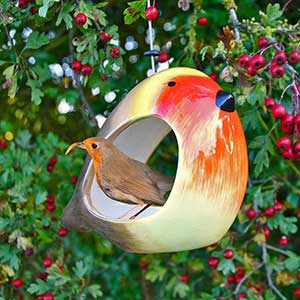
Robins are also happy to use open-fronted nest boxes that mimic their natural nesting sites. For best results, place the box in a hidden spot surrounded by vegetation, no more than two metres off the ground. Ideally, position the box so the entrance faces northeast and is sheltered from prevailing winds and rain.
Keep in mind that eggs and chicks in open-fronted boxes are vulnerable to predators such as magpies, squirrels, and cats. To minimise the risk, carefully choose a location that’s hard for predators to access. Alternatively, you can attach a stiff wire guard in front of the entrance. The gaps should be large enough for the robins to come and go but small enough to keep predators out.
Because most European robins don’t migrate, they can use a nest box year-round. In spring and summer, robins need nest boxes to raise their young, while during autumn and winter, they use them as warm, safe roosting spots to protect themselves from harsh weather.
This page contains affiliate links. For more information please see our disclosure here.