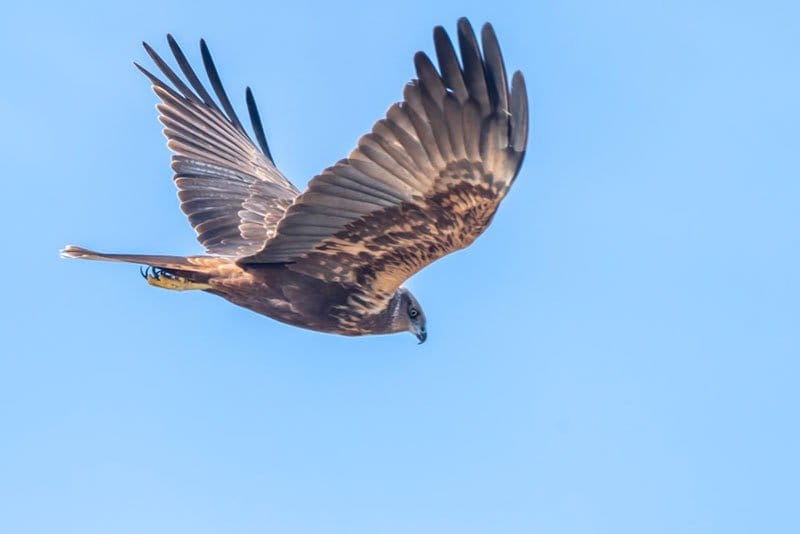
The booted eagle is a small eagle found across parts of Europe, Asia, and Africa. It is a migratory species, with populations in northern regions spending the winter in sub-Saharan Africa and South Asia.
This eagle has two distinct colour morphs. The pale morph has dark grey upperparts, a pale band across the upper wing, and white underparts with a rufous wash and darker streaks, while the head is pale rufous with streaks. The bill is yellow, while the legs and feet are covered in brown feathers which gives the bird its name. Less common than the pale morph, the dark morph has dark brown upperparts, a pale yellow tail with dark grey-brown edges, and blackish-brown underparts. The head and neck are pale brown with darker streaks. Males and females look similar, but females are larger in size.
The booted eagle primarily feeds on small mammals, reptiles, and birds, which it hunts while in flight.
Booted eagles build their nests from sticks lined with leaves, usually in trees or on crags. They may also reuse old nests built by other large birds, such as black kites or grey herons. The female lays 1–2 eggs, which she incubates for approximately 45 days while the male provides her with food. The chicks fledge at around 70 days old.
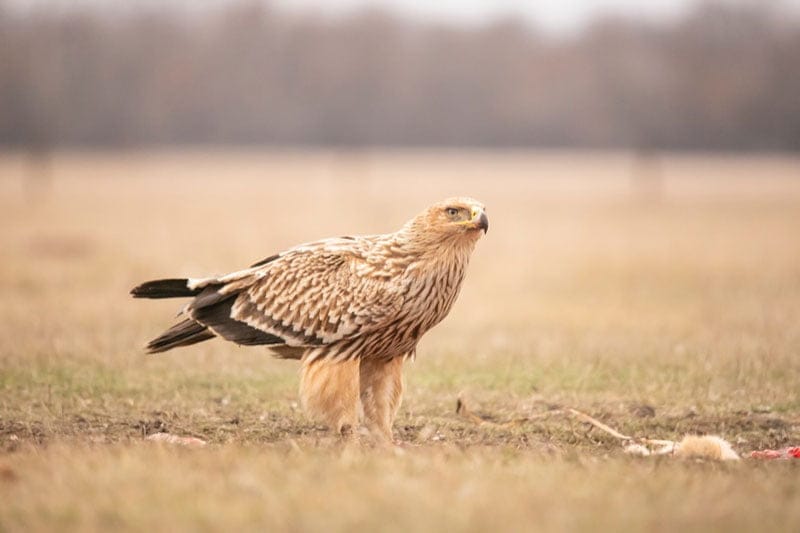
The eastern imperial eagle is a large bird of prey that breeds in southeastern Europe and western and central Asia. Most populations are strongly migratory, spending the winter in regions such as northeastern Africa, the Middle East, and parts of South and East Asia.
It has predominantly blackish-brown plumage with distinctive white shoulder patches. The tail is grey with narrow bars, a broad black subterminal band, and a white tip, while the undertail coverts are pale rust or cream. The head is marked by a pale golden-buff crown, nape, and sides of the neck, and its hooked bill is black with a yellow base.
This eagle is an opportunistic feeder, typically hunting prey on the ground by diving from a soaring flight. Its preferred prey includes small mammals such as hares, rodents, squirrels, and voles. However, it will also eat birds, reptiles, fish, and invertebrates.
Eastern imperial eagles build very large nests, averaging 1.5 metres in diameter, though nests up to 2.4 metres have been recorded. These nests are constructed from sticks and lined with twigs, fur, grass, and other vegetation. The female lays 2–3 eggs, which are incubated primarily by her for approximately 43 days. The eaglets fledge between 63 and 77 days after hatching.
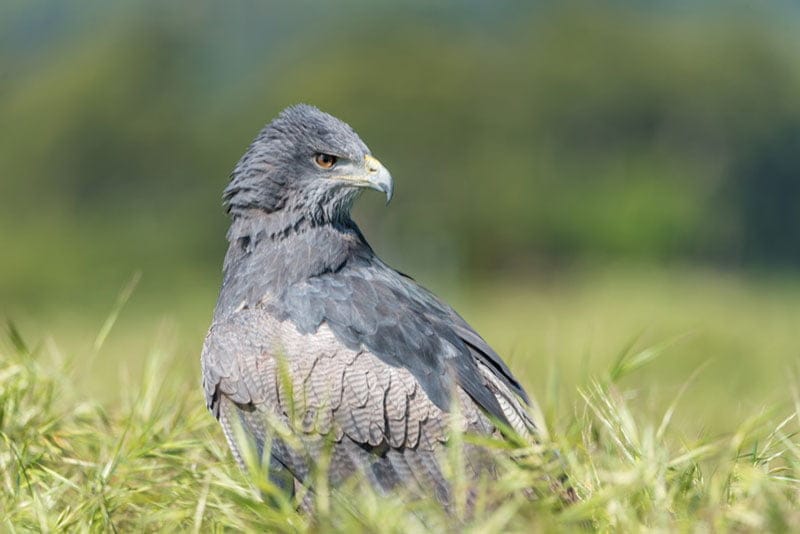
The black-chested buzzard-eagle, also known as the black buzzard-eagle, grey buzzard-eagle, or Chilean blue eagle, is a large bird of prey found in open areas across South America. Its range extends from the high elevations of the Andes in Colombia to the lowlands of Tierra del Fuego.
It has blue to slate-black or sooty brown upperparts with ashy grey shoulders barred in black. Its tail is black with a narrow, greyish-white terminal band. The underparts are predominantly white, finely barred with black, with a dark grey or black breast. The head is slate-black with a white chin and throat, while the hooked bill is dark grey with a yellow cere. Males and females look similar, although females are noticeably larger.
The black-chested buzzard-eagle primarily preys on mammals, particularly the introduced European rabbit, playing an important role in helping farmers control their populations. It also hunts foxes and skunks and occasionally feeds on birds, arthropods, and carrion, competing with the Andean condor for scavenged food.
The species nests on high cliffs or in the tops of tall trees, often reusing the same nest year after year. The female lays 1–3 eggs, which are incubated for about a month. Both parents participate in feeding the chicks and fiercely defend the nest from intruders. The chicks fledge at approximately 50 days old.

The crested serpent eagle is a medium-sized raptor found across forests, wooded hills, plantations, savannas, and mangroves throughout much of Southeast Asia.
It has predominantly brown plumage, with white and yellowish-brown spots on its underparts. The tail and underside of its flight feathers are black with broad white bars. Its head is dark grey-brown, with long dark feathers at the back, giving the appearance of a crest. The bill is dark grey with a yellow cere, while its yellow legs and feet are covered in scales.
There are 21 recognised subspecies of the crested serpent eagle, with seven of them proposed as separate species. Subspecies vary significantly in size, ranging from 40 to 75 cm in length and with a wingspan between 90 and 170 cm. Island subspecies are generally smaller than those found on the mainland.
The crested serpent eagle primarily preys on reptiles, including snakes and lizards, but its diet also includes birds, amphibians, fish, and invertebrates. It hunts by perching and waiting, before dropping down to capture its prey on the ground.
It builds platform nests from sticks, typically high in trees. The female usually lays a single egg, though in rare cases, two eggs may be laid, but only one chick is raised. The female incubates the egg for approximately 41 days, while the male remains nearby to guard the nest when she leaves to forage. The young bird fledges at around two months old.
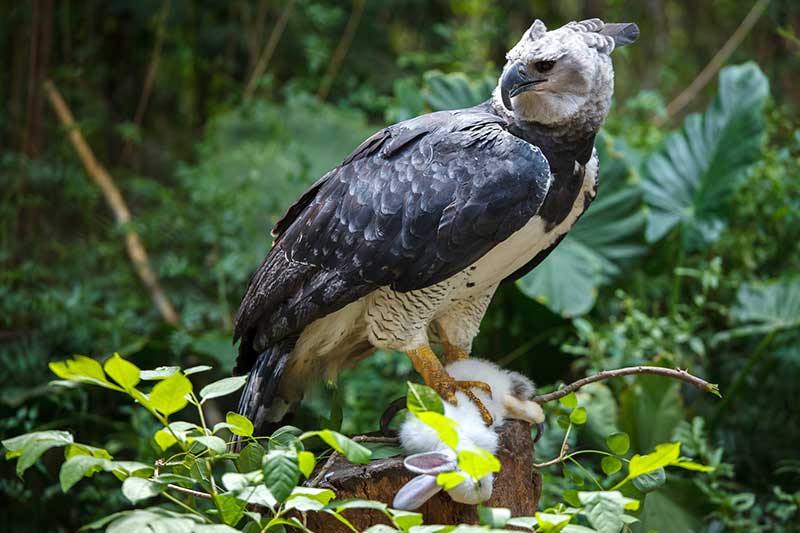
The harpy eagle, also known as the American harpy eagle, is one of the largest eagles in the world, with females weighing between 6 and 10 kg. It inhabits the tropical lowland rainforests of South and Central America, ranging from Mexico to northern Argentina, where it primarily resides in the forest canopy.
It has dark slate-grey upperparts and white underparts, with a broad black band across the upper breast. Its tail is black on the upperside with three grey bands, while the underside is black with three white bands. The head is pale grey, with a distinctive double crest of darker grey feathers. The eyes vary in colour, appearing grey, brown, or red. Its bill is black, and its legs and feet are yellow, with white, black-striped feathers covering the tarsi.
As an apex predator, the harpy eagle is incredibly powerful and can carry prey weighing up to half its own body weight. It hunts over 100 species, primarily targeting tree-dwelling mammals such as sloths and various monkey species. It also preys on ground-dwelling mammals, including armadillos, ocelots, squirrels, and foxes. Additionally, it ambushes macaws at salt licks and preys on reptiles like iguanas, snakes, and lizards. On rare occasions, it may take domestic livestock, including chickens, lambs, goats, and pigs.
Harpy eagles mate for life and typically raise one chick every 2–3 years. They build large nests from sticks, placing them in the forks of tall trees, often reusing the same site for several years. The female lays two eggs, incubating them for 56 days. However, if the first egg hatches successfully, the second is ignored unless the chick does not survive. The chick fledges at around 6 months but remains dependent on its parents for food for another 6 to 10 months.
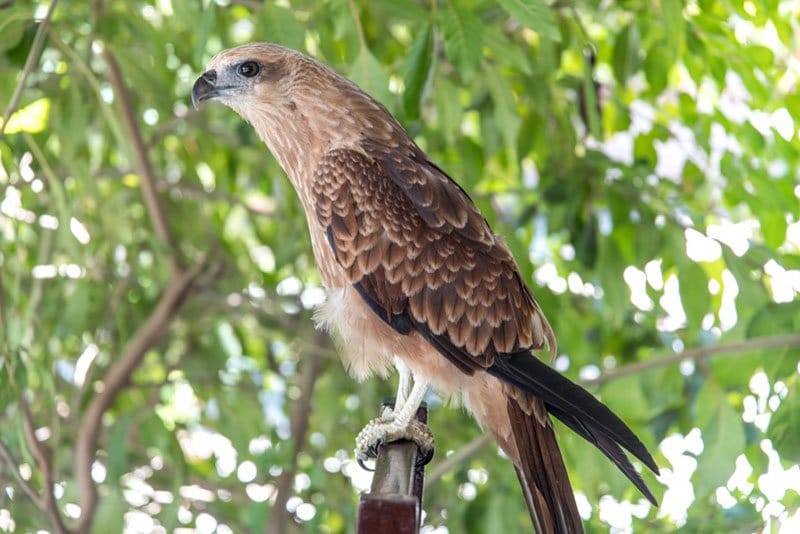
The Philippine eagle is the largest eagle in the world by length and wing surface area. Endemic to the Philippines, it inhabits the forests of Luzon, Samar, Leyte, and Mindanao.
It has dark brown upperparts and white underparts. Its face is dark brown, with a creamy brown nape and crown. Long, brown feathers on its nape form a distinctive shaggy crest. The eyes are blue-grey, the beak is slate grey, and the legs and feet are yellow with dark claws. Males are typically 10% smaller than females.
Originally known as the Philippine monkey-eating eagle, it was once believed to feed exclusively on monkeys. However, it is an opportunistic apex predator, selecting prey based on availability and ease of capture. Its diet includes lemurs, macaques, civets, flying squirrels, flying foxes, and rats. It also preys on birds such as hornbills, owls, and hawks, as well as reptiles like snakes and lizards. The Philippine eagle hunts by either waiting motionless on a perch or gliding between perches, gradually descending through the canopy. If unsuccessful, it will return to the treetops and begin again. When hunting monkey troops, pairs sometimes work together, with one eagle distracting the monkeys while the other attacks from behind.
The Philippine eagle’s breeding cycle lasts two years. They are monogamous and form lifelong pair bonds, and courtship involves aerial displays and loud calls. They build large stick nests, reusing them for several years. The female lays one egg, which she incubates for 58–68 days. Shortly before hatching, the female experiences egg lethargy, a condition where she avoids eating, drinks excessive water, and droops her wings. Both parents help feed and shade the chick from the sun. The eaglet fledges after four to five months.
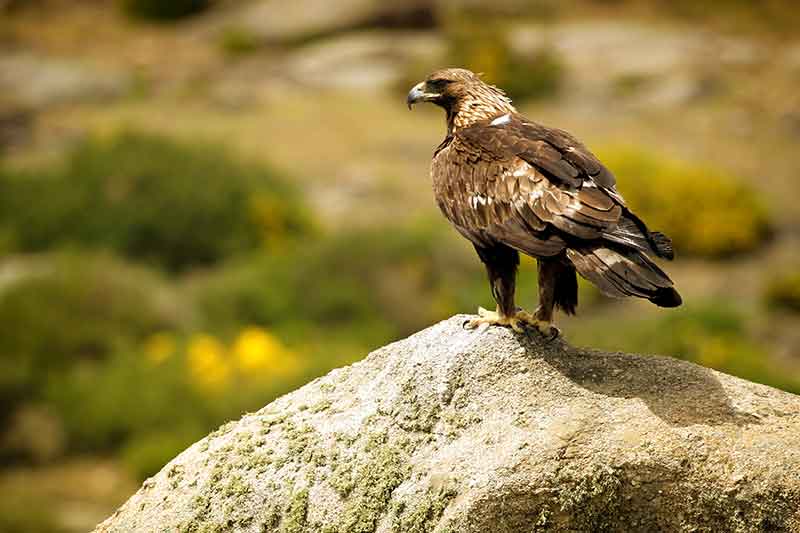
The golden eagle is the most widely distributed eagle species, found across Europe, Asia, and North America. It thrives in a variety of habitats but prefers open or semi-open landscapes, particularly mountainous regions, hills, and cliffs. Its range extends from arctic tundra to deserts and includes shrublands, grasslands, prairies, forests, and farmland.
It has predominantly dark brown plumage with a paler golden hue on the crown and nape, along with some grey on the wings and tail. The eyes are yellow, the bill is blue-grey with a black tip and yellow cere, and the legs and feet are yellow with black claws, and the tarsals are covered in pale brown feathers. Some individuals in North America also have distinctive white patches on their shoulders. There are six recognised subspecies, each differing slightly in size and plumage colouration.
Golden eagles are primarily diurnal hunters, employing at least seven known hunting techniques. They are opportunistic feeders, preying on over 400 vertebrate species depending on abundance and availability. Their diet mainly consists of small mammals such as rabbits, hares, hedgehogs, and squirrels, but they also hunt birds, reptiles, and fish. Larger prey, including seals, badgers, coyotes, and deer, have been documented. In Scotland, golden eagles have been known to prey on sheep.
Golden eagles typically mate for life and perform elaborate courtship displays to attract each other. Both sexes engage in undulating flight displays, with the male picking up a rock or small stick, dropping it, and diving steeply to catch it mid-air, repeating this several times. The female mirrors this behaviour using a clump of earth. Within their territory, they build multiple eyries and alternate their use over the years. A typical clutch consists of two eggs, incubated for 41–45 days, but the second chick rarely survives. Both parents feed the young, which fledge at around 70 days old.