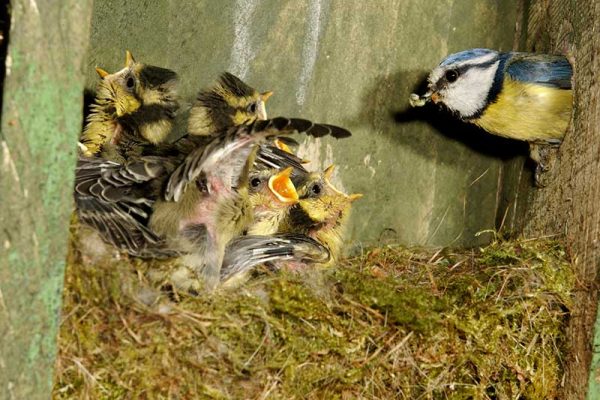
“As we usher in a new decade we know there may be some big changes ahead for the UK. But however things turn out our hope for 2020 is that people continue to become more aware of the natural world around them, and that we keep caring for birds whatever their colour, so that the future for our feathered friends and the next generation isn’t so blue.”
When we wrote this last New Year’s Eve we never imagined for a moment quite how prophetic our words would turn out to be.
2020 didn’t just bring big changes for the UK, it brought big changes for the world and our whole way of life. Much has and will be written about 2020 and for many it will be a year they would rather forget.
And yet, what we hoped for also came true; people did seem to become more aware of the natural world around them.
Because in trying to keep sane in an insane world many people turned to the great outdoors and all our wonderful wildlife.
As soon as the 1st lockdown was announced on the 23rd March we saw a big jump in traffic to our site which steadily increased over April, May, and June more than doubling on the previous year.
Our Facebook Group also welcomed many new members – over 20,000 in the first 6 weeks after lockdown – and numbers continued to grow throughout the year as more and more people who would never have described themselves as bird watchers began to find joy in the wildlife that visited their homes.
Below are just a handful of the comments we received about the pleasure birds gave people during lockdown – we particularly like the quote from Michelle describing herself as a fully-fledged weirdo!
It does work. Got up this morning. All TV the same. Looked at the window. There was Mocha, my friendly Blackbird on the windowsill waiting to be let into the Kitchen for food. And the World felt good.
Peter Smith
I thank my neighbour for recommending your page to me. I’ll be honest that, yes I liked birds but never paid much attention to them till my neighbour got me into them. I now sit by my window after I bought so many feeders and love watching their behaviour, characters an their beauty. Is so calming an relaxing. I’m constant asking my neighbour the names of birds that are in my garden. Think he’s happy I’m giving him a break, now that I’ve joined your lovely group. I’ve a wrens nest an lovely seeing how it cleans the nest. So small and fast. Also have blue tit, robin’s, black birds and great tit I think is called. Such a beautiful thing hearing them sing. Thank you
Pili Mari
For my part, I’m glad I found this group – it’s the perfect antidote to these troubled times that we’ve suddenly found ourselves living in. There’s something wholesome about seeing birds in the wild.
Jon Greaves
A long time ago I use to see people taking pictures of birds and I use to think weirdos, who takes pictures of birds. I then found out you had little houses/sheds that you hide in to stalk them and I was just, well quite disturbed to be honest. 20yrs on, I’m here hiding in the bushes trying to get a pic of a robin I now love being a weirdo
Michelle Wright
The trend was reflected in other wildlife websites. In an article in the Financial Times, both the RSPB and the Wildlife Trusts said that they had also seen large volumes of traffic during lockdown with a particular interest in webcams, building bird boxes, and animal poo.
Google Trends shows the popularity of search queries across different regions and languages and for two common queries, ‘garden birds’ and ‘bird identification’, the UK data shows a clear spike in interest over Lockdown 1.0. A similar increase in queries related to ‘garden birds’ can be seen worldwide.


The absence of people and traffic also meant that in some areas wildlife thrived. We wrote about the positive influence lockdown had on birdsong earlier in the year, and in its annual review published just a couple of days ago, the National Trust found that a number of bird species did particularly well due to fewer people about especially during peak breeding season.
At Blakeney Point in Norfolk, the lack of disturbance meant the little tern colony enjoyed its most successful breeding season for 25 years. The bird had been in serious decline since the 1980s with fewer than 2,000 pairs left in the UK. But with fewer visitors during spring, nests were more sheltered and over 200 little tern chicks fledged, even surviving the storms in June.

Common terns were also successful with 289 pairs fledging at least 170 chicks, the most since 1999. Sandwich terns arrived late to the site with 2,425 pairs fledging 1,100 chicks.
Living in an area with a high number of bird species also indicates that your surroundings have a high proportion of near-natural and diverse landscapes that contain green spaces, trees, wildlife, or water, and these sorts of surroundings also help improve people’s happiness.
The team found that fourteen additional bird species in the vicinity can bring as much satisfaction as an extra 124 Euros a month in your pocket, based on an average income of 1,237 Euros a month.
So if you’ve got the coronavirus blues or you’re just feeling a bit down in general about the prospect of an uncertain New Year, then do your brain a favour and head out into the garden or to your nearest park and spend some time amongst the birds.
Happy New Year from the team at Bird Spot x