

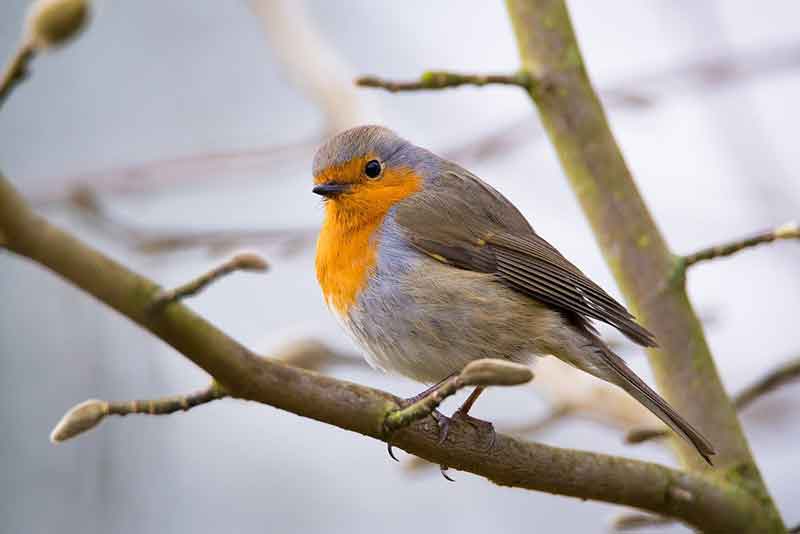
One of the most viewed questions in our popular Bird Brain series is “How Can You Tell Male And Female Robins Apart?”
Until we published our article, if you typed the question into Google, the first result was this (it may still be depending on what Google knows about you).
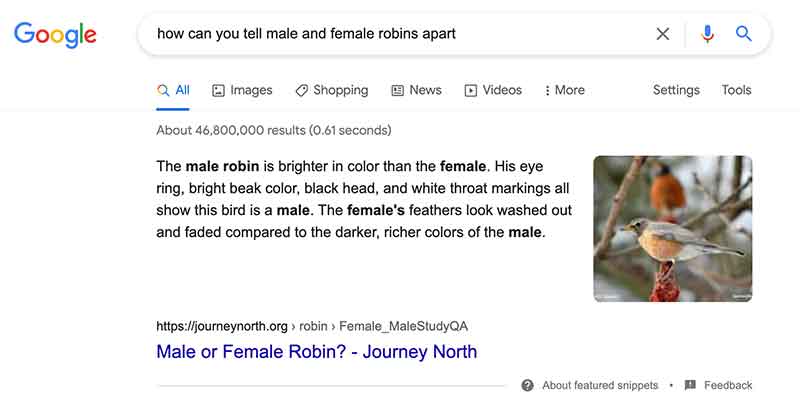
The problem is if you’re searching for that answer from the UK and looking for information about the European robin, the answer is incorrect. Google is surfacing an answer that relates to the American robin, where the two sexes do look somewhat different.
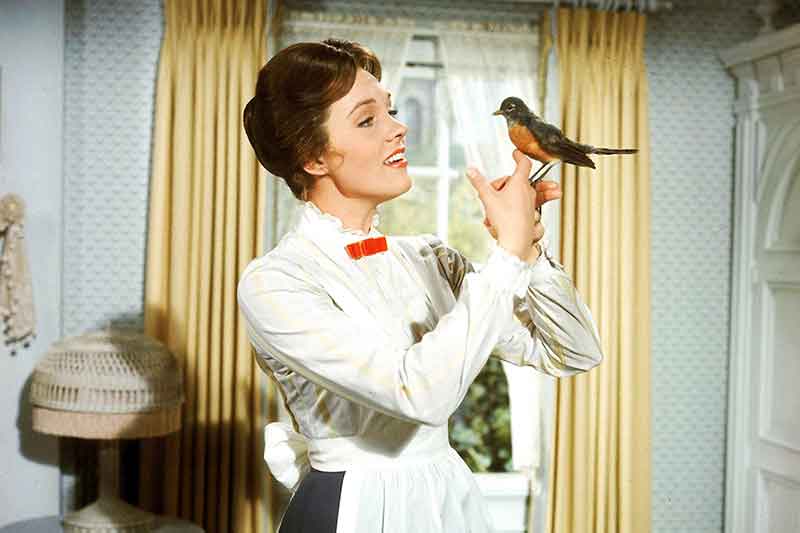
Google isn’t the first to appear to think that the two species are the same. In the film Mary Poppins, the robin that lands on Mary’s finger as she sings “A Spoonful of Sugar” is an American robin instead of a European robin.
Although American robins do occasionally turn up on these shores, we think the chances of one arriving in Edwardian London during the making of the film were slim. Unless it was enticed over here by Dick Van Dyke’s Cockney accent.
Despite having the same name, the American robin and the European robin aren’t even that closely related.
The American robin (Turdus migratorius) belongs to the Thrush family (Turdidae), and is a cousin of the blackbird, redwing, and song thrush, whilst the European robin (Erithacus rubecula) is a chat, and sits in the family of Old World Flycatchers (Muscicapidae). Other members of the chat family include the stonechat, nightingale, and bluethroat.
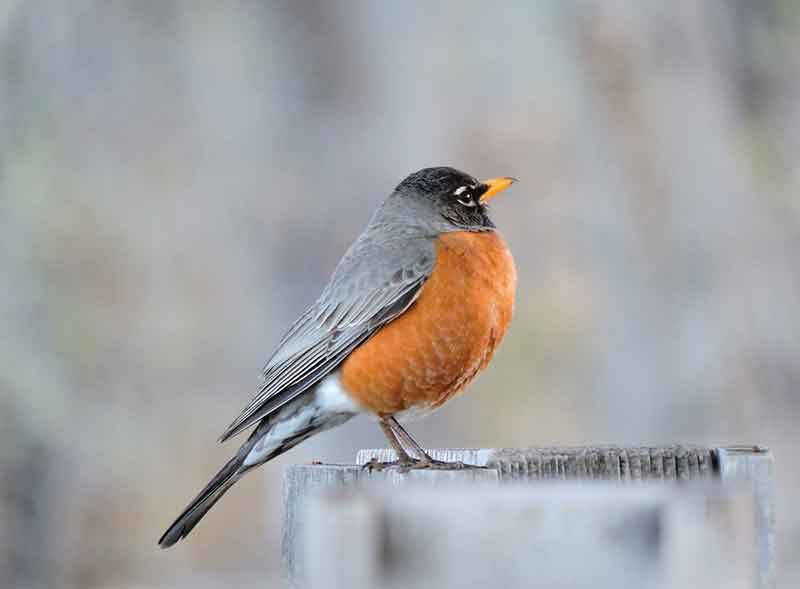
Thrushes and Old World Flycatchers and Chats are all small to medium-sized songbirds that forage for insects. They tend to have a stocky build, short, strong bill, and relatively short wings. There is a wide variety in shape, size, and colour between species although the flycatchers and chats are much more diverse than the thrushes.
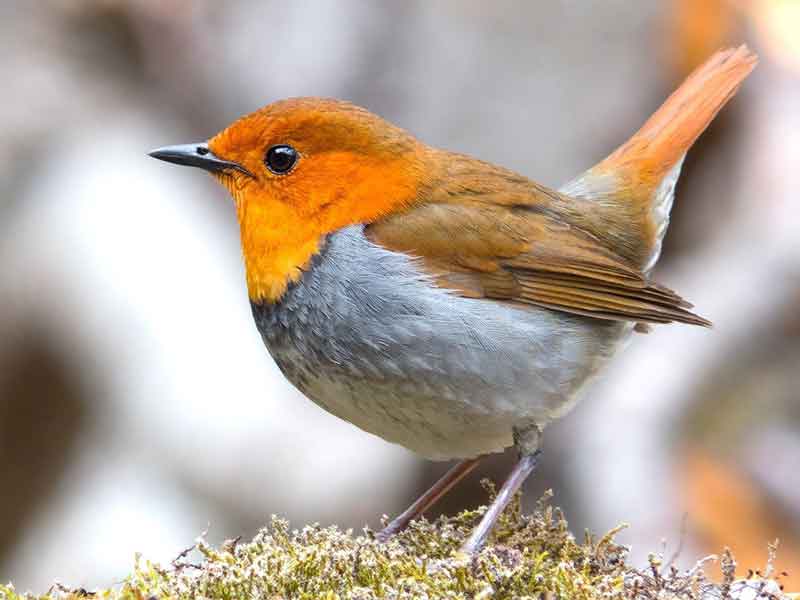
Until relatively recently the European robin was classed as a member of the Thrush family in the sub-family Saxicolinae. It was moved to the Chat family, and along with the Japanese robin (Larvivora akahige) and Ryukyu robin (Larvivora komadori), was placed in the sub-family Erithacus. However, in 2010, DNA analysis showed that the Japanese and Ryukyu robin were similar to a group of Asian robins and were moved to a new sub-family Larvivora, leaving the European robin as the sole member of Erithacus.
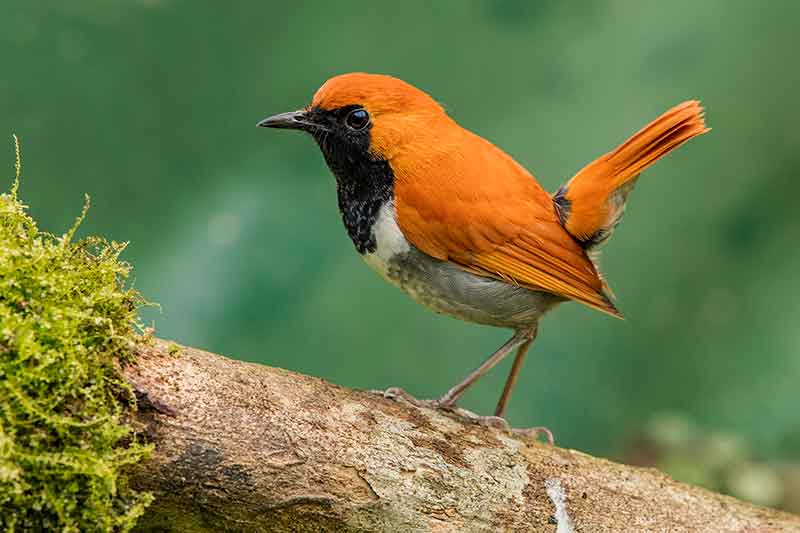
To make things more complicated there are several other songbirds called chats which aren’t actually Chats, such as the Australian chats which are honeyeaters, American chats which are cardinals but were formerly considered wood warblers, and the yellow-breasted chat, a large, shy North American songbird which is still in the wood warbler family although its placement is disputed.
Then there are the Australasian robins, which were originally classified as flycatchers but now sit in the family Petroicidae, which is part of the superfamily Corvoidea. This large family also includes Corvids (crows, jays, mapgies etc), Paradisaeidae (birds-of-paradise), and Monarchidae (monarch flycatchers, such as shrikebills, magpie-larks, and paradise flycatchers), that aren’t even slightly related to the aforementioned Old World Flycatchers.
If you’re not completely baffled by all of that and are interested in learning more about changes in bird taxonomy, John Boyd’s excellent website has lots of information including a detailed guide to the troublesome Muscicapidae family.
Although the American robin and European robin share the red breast, when you take a closer look at their other features such as body size and shape and compare them with other species in their respective families, the difference becomes much clearer.
The European robin is very much a solitary bird and will aggressively fight any bird that encroaches on its territory. American robins are more sociable and, in the winter, will join large flocks of other species of thrushes which is typical of the family’s behaviour.
And whereas the European robin is associated with Christmas, the American robin is often seen as one of the first signs of spring, as attested to in Emily Dickinson’s poem:
I dreaded that first Robin, so,
But He is mastered, now,
I’m some accustomed to Him grown,
He hurts a little, though —
So why the same name despite the difference in appearance and behaviour?
When colonial settlers arrived in the Americas, they encountered lots of new species of birds which would have been unfamiliar to them. Instead of giving these New World birds new names, they simply called them by Old World names, primarily based on similarities in appearance. The American robin with its red breast is just one such bird.
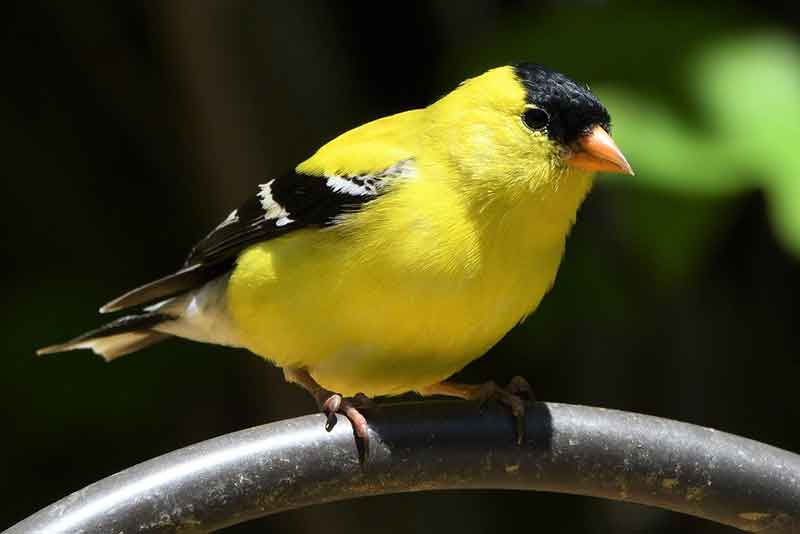
Two other garden birds, the American goldfinch (Spinus tristis) and European goldfinch (Carduelis carduelis), both have yellow plumage and both sit in the finch family. But while the American goldfinch shows clear sexual dimorphism, it can be a challenge to distinguish between the male and female European goldfinches.
Some birds have similar names but were not necessarily named after each other. Both continents, for example, have yellowhammers which are referenced in poems.
In Clark Ashton Smith’s poem Boys Rob a Yellow-Hammer’s Nest he describes the eggs as:
Porcelain-white, the flicker’s eggs
Lined the bottom of the hole
In the pine’s dead bole.
In John Clare’s poem The Yellowhammer’s Nest the description of the eggs is significantly different:
Five eggs, pen-scribbled o’er with ink their shells
Resembling writing scrawls which fancy reads
Of course, they are writing about two entirely different species of birds.
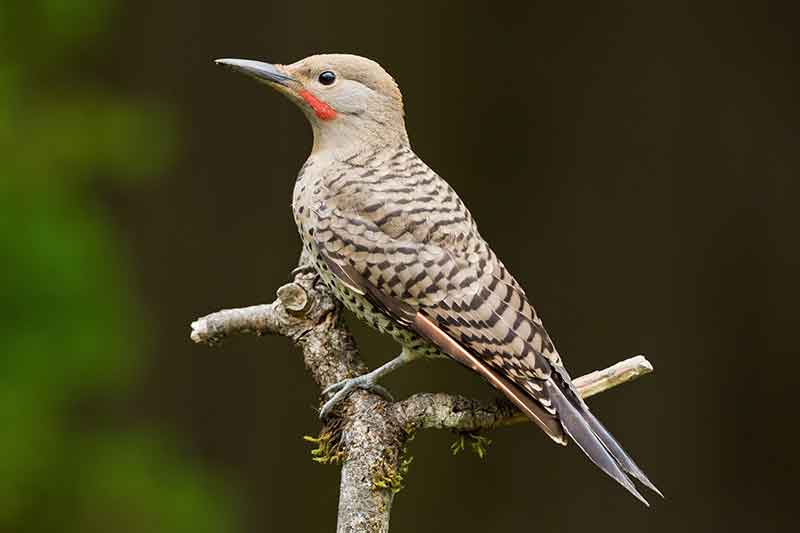
In Europe, the yellowhammer (Emberiza citronella) is a bunting with streaked plumage and a bright yellow head. The American bird named yellowhammer (Colaptes auratus) looks completely different and is a member of the woodpecker family. In Europe ‘hammer’ is thought to have come from the German word ‘Ammer’ which means bunting, whereas in America ‘hammer’ is on account of the bird’s habit of drumming on trees.
Although the American yellowhammer is now usually called the northern flicker, common flicker, or yellow-shafted flicker, it is still sometimes referred to as the yellowhammer, most famously in Alabama where it is the official state bird.
Confederate soldiers from Alabama in the Civil War wore uniforms trimmed with yellow. They were derided by other soldiers and given the nickname “yellowhammers’. In a two-fingered salute to their mockers, after the war, Alabama soldiers proudly wore yellowhammer feathers in their caps when attending reunions, and the name stuck.
Interestingly, the northern flicker has over a hundred other nicknames including clape, hick-wall, gaffer woodpecker, harry-wicket, heigh-ho, wake-up, walk-up, wick-up, yarrup, spright, taping bird, and the English woodpecker.
There are many more examples and something we’re going to explore further in a later post.
But returning to the robin, it got us wondering which birds are depicted on American Christmas cards? As a symbol of spring, we assumed that American robins wouldn’t feature, and that seems to be correct.
Cardinals and chickadees are popular choices, presumably because of the former bird’s bright red plumage, and because the latter look cute when huddled together in the snow.
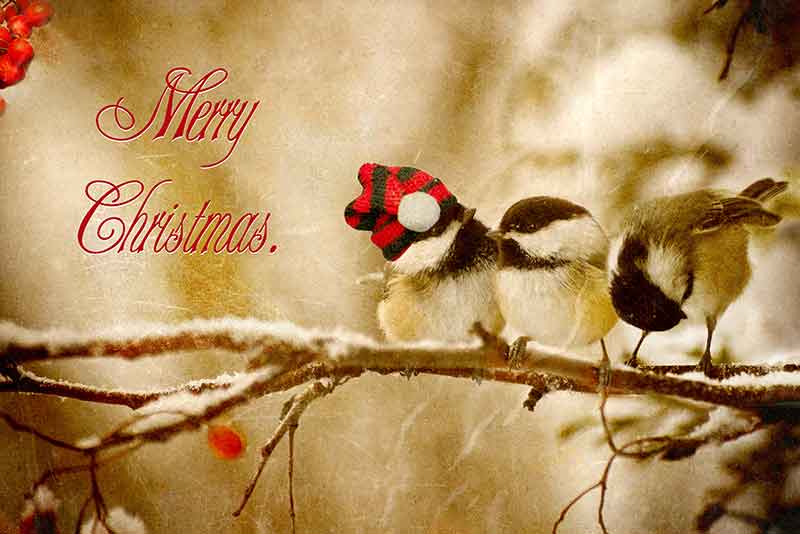
Happy Christmas from the team at Bird Spot x


One Response
I live in Texas and never realised your birds were different. I knew about robins but not the others.
In Texas we call grackles and crows blackbirds which my cousin says are differeent but you haven’t mentioned these birds. So are your blackbirds different birds?