Yet, within less than 200 years after the arrival of humans, the moas disappeared. What’s even more concerning is that the original settlers numbered just 400 people and by the time of the moas’ extinction the human population was only 2,500.
There has been much debate about whether animals became extinct due to humans or whether other factors, such as disease, volcanic eruptions, or climate change at the end of the Ice Age, were responsible.
But studies of fossil records have shown that the sole reason for the demise of the moas was hunting by humans. The evidence from their genetic history reveals that they did not gradually die out but were wiped out in a relatively short period.
The knock-on effect
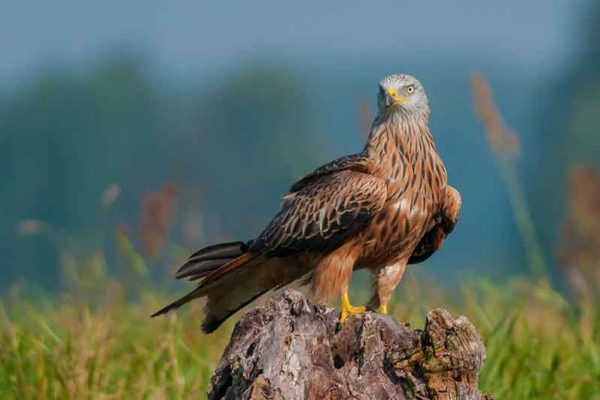
Before the arrival of the settlers, the Haast’s eagle, the largest eagle known to have existed, weighing in at an impressive 15 kg (33 lb), was the moas’ only predator and it had relied on them for food. With no moas to prey on, the Haast’s eagle soon ran out of food and it too became extinct shortly afterwards.
Moas also filled an ecological niche that would usually be occupied by large browsing mammals, such as elephants and giraffes. Some scientists have suggested that many of New Zealand’s endemic plants evolved to defend themselves against moas by growing small or spiky leaves when young, before divaricating as they get older, where the stems spread wide apart, to try and repel browsers.
One such example is the horoeka or lancewood tree, a curious-looking specimen that changes appearance twice during its lifetime. As a young tree, it produces stiff, leathery, spear-shaped leaves with tiny barbs along the edge that all grow from a central stem. It remains like this for about 15-20 years before the stem starts to branch and the leaves become wider and shorter and lose their barbs until the lancewood looks more like a typical tree reaching a height of up to 20 m (98 ft). By now, the leaves would have been well out of reach of the moas, the tallest of which probably reached about 3.6 m (12 ft).


There is some controversy over whether the lancewood and other plants, were driven to evolve solely due to their relationship with extinct birds. We should be mindful that correlation does not always imply causation, with the case of the dodo tree, or tambalacoque, a scientific theory, now discredited, that attempted to explain why the tree was on the brink of extinction, being one famous example.
Flightless birds still face an uncertain future and today more than half of them are considered threatened or vulnerable. A further 20% are endangered, and conversation efforts are needed to prevent these birds from going the way of the moas.
For one flightless bird, the Guam rail, these conversation efforts have paid off. The bird, endemic to the island of Guam in the western Pacific Ocean, was declared extinct in the wild by the late 1980s due to predation by the brown tree snake, a non-native species accidentally imported there in the 1950s.

Luckily before their numbers dwindled to zero, Guam’s Division of Aquatic and Wildlife Resources had captured a few of the birds and after a successful 35-year breeding programme the 2019 Red List was updated to officially announce that the bird was ‘extinct in the wild no more’. The Guam rail is only the second bird species ever to recover from extinction in the wild, the first being the Californian condor.