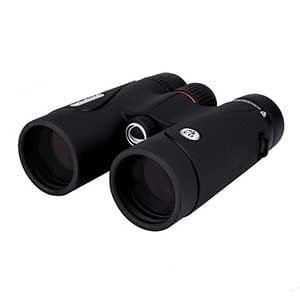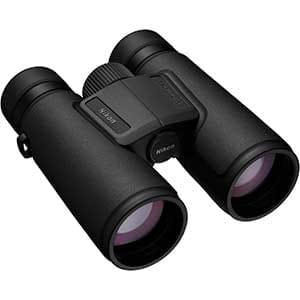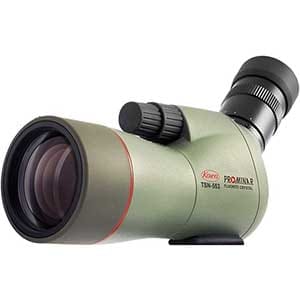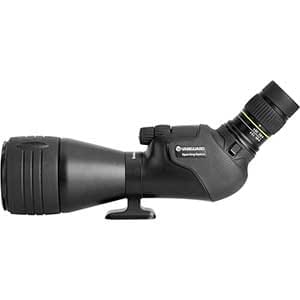
When it comes to bird watching, having the right optical gear can make all the difference. While binoculars and spotting scopes are both excellent tools for observing birds, they cater to slightly different needs and scenarios. This guide explores the key differences between binoculars and spotting scopes, when you might need each, their pros and cons, and the factors to consider when deciding which one is right for you.
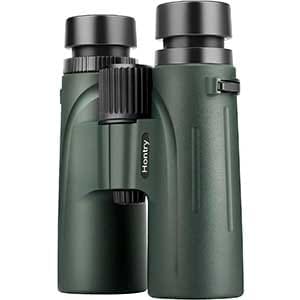
Binoculars are a staple for bird watchers of all levels, offering versatility and ease of use. They are particularly effective in the following scenarios:
General bird watching: Binoculars are perfect for casual birders exploring a variety of environments, from dense forests to wide-open wetlands. Their relatively moderate magnification provides a balanced view that works well in most habitats.
Tracking birds in flight: The wide field of view offered by binoculars makes them ideal for following birds in motion. Unlike spotting scopes, binoculars let you scan larger areas quickly, ensuring you don’t miss the action.
Close-range observation: For birdwatching within 10–50 metres, binoculars are unbeatable. Their magnification is sufficient for capturing these details, and they’re less cumbersome than spotting scopes, which are often overpowered for closer ranges.
Portability: One of the biggest advantages of binoculars is their lightweight, compact design. They are easy to carry around your neck, in a backpack, or even in your hand. This makes them ideal for long hikes or birding trips where mobility is key.
While binoculars are the go-to tool for most bird watchers, spotting scopes excel in specific situations, especially when precision and magnification are crucial:
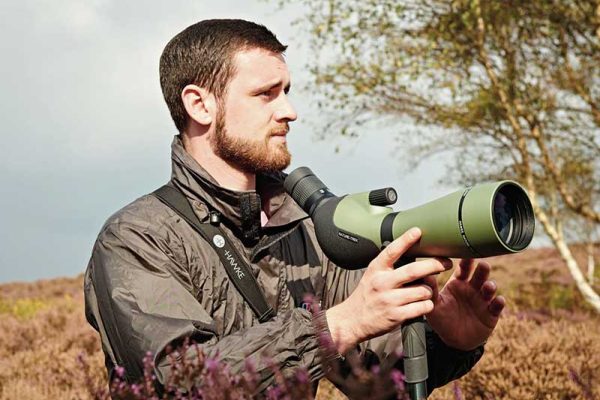
Long-distance observation: Spotting scopes are designed for birding at a distance, making them ideal for situations where binoculars fall short. The powerful magnification of spotting scopes (often 15x-60x) allows you to view birds in incredible detail that binoculars cannot achieve.
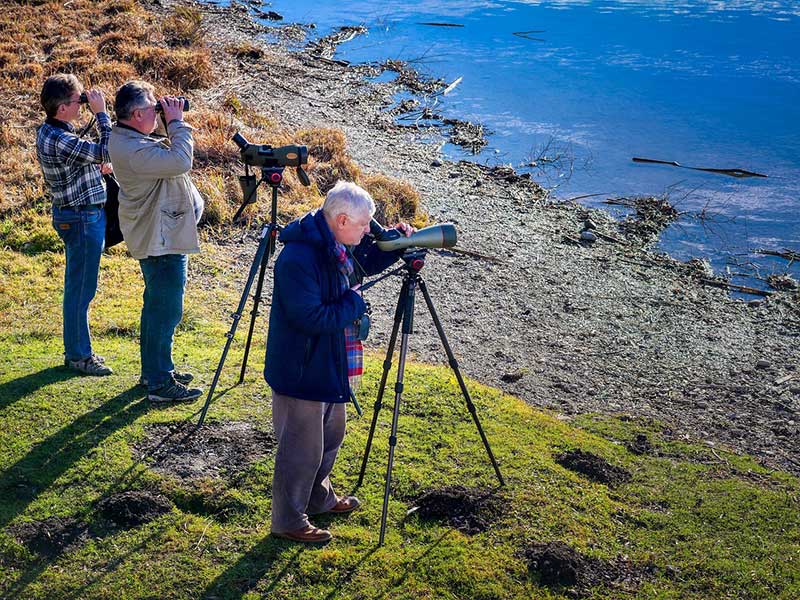
Stationary birding: If you prefer bird watching from a fixed location, spotting scopes are a fantastic choice. Once set up on a sturdy tripod, they provide a stable and detailed view of distant birds, making them particularly well-suited to patient birders waiting for a rare species.
Detailed study: Spotting scopes offer unmatched precision when it comes to examining intricate details. The high magnification and clarity of a spotting scope make it easier to observe these nuances.
Photography Many spotting scopes are compatible with digiscoping, which allows you to attach a smartphone or camera to the scope for high-quality images. This makes spotting scopes an excellent option for birders who enjoy capturing photos or videos of their sightings.
| Feature | Binoculars | Spotting Scopes |
|---|---|---|
| Magnification | 8x-12x, suitable for handheld use | 15x-60x, ideal for long-distance viewing |
| Field of View | Wide, ideal for tracking moving birds | Narrow, better for stationary observation |
| Optical Design | Compact and straightforward | Larger with angled or straight eyepieces |
| Size and Portability | Lightweight and easy to carry | Bulky, requires a tripod |
| Cost | Affordable options starting at ~£50 | Higher cost, starting ~£300 for quality models |
| Setup | Ready to use instantly | Requires setup with a tripod |
Binoculars are designed to be lightweight and compact, making them an excellent option for birdwatchers on the move. Binoculars are easy to pack and carry for extended periods without causing strain, and their portability is a key advantage for those who like to explore a variety of locations in a single outing.
Using binoculars is straightforward and requires no setup. Simply lift them to your eyes, adjust the focus, and you’re ready to observe. This simplicity makes them particularly appealing to beginner birdwatchers or those who value convenience. Unlike spotting scopes, which require precise setup on a tripod, binoculars allow you to react quickly to unexpected sightings.
With their broad field of view, binoculars are excellent for tracking fast-moving birds or scanning large flocks. The ability to scan a wide area helps you locate and follow birds in motion more effectively than a spotting scope, which has a narrower field of view.
Binoculars are available in a wide range of price points, making them accessible to birdwatchers of all budgets. While high-end models provide exceptional optical quality, there are many affordable options for beginners that still deliver good performance, making them a practical starting point for anyone interested in bird watching.
Binoculars are highly versatile and perform well in various environments, from observing garden birds at close range to spotting birds of prey soaring high in the sky.
Most binoculars have a maximum magnification of 10x-12x, which can limit their effectiveness when viewing birds at great distances. For these scenarios, a spotting scope’s higher magnification offers a significant advantage.
At higher magnifications, even slight hand movements can cause the image to shake, reducing clarity and making it harder to focus on the bird. While some binoculars come with image stabilisation technology, this feature is generally more expensive and may not be available in all models.
Spotting scopes typically offer magnifications ranging from 15x to 60x, providing exceptional detail over long distances. If you’re scanning a large area, the powerful magnification of a spotting scope allows you to see birds that would appear as mere specks through binoculars.
Spotting scopes excel at revealing intricate details, such as feather patterns, subtle colour variations, or leg bands that binoculars may miss. This level of precision is invaluable for advanced birdwatchers who want to study species closely or document rare sightings.
Many modern spotting scopes are compatible with digiscoping – attaching a camera or smartphone to capture high-quality images or videos. This feature allows birders to document their observations with remarkable clarity and share their discoveries with others.
Spotting scopes are ideal for stationary birding, such as observing from a hide or an observation deck. Once set up on a tripod, they provide a stable and uninterrupted view, making them perfect for scanning large areas or watching bird behaviour over extended periods.
Spotting scopes are significantly larger and heavier than binoculars, which can make them cumbersome to carry on long birding trips. They also require a sturdy tripod for stability, further adding to the overall weight and bulk of your gear.
High-quality spotting scopes are expensive, with top-tier models costing significantly more than even premium binoculars. You’ll also need to factor in the cost of a reliable tripod, which is essential for steady viewing. For birders on a budget, the upfront investment may be prohibitive.
Due to their high magnification, spotting scopes have a much narrower field of view compared to binoculars. This makes it more challenging to locate or track moving birds, especially those in flight. Scanning large areas with a spotting scope can also be time-consuming and less intuitive than using binoculars.
Unlike binoculars, spotting scopes require time to set up and adjust properly. Mounting the scope on a tripod, aligning the view, and fine-tuning the focus can delay your birdwatching experience. This can be frustrating if you need to react quickly to a fleeting sighting.
Binoculars: Better for close-range bird watching in forests, gardens, and varied terrains.
Spotting scopes: Best suited for open areas like wetlands, coastal regions, or large lakes, where long-distance observation is needed.
Binoculars: Sufficient for most birdwatchers observing within 10–100 metres.
Spotting scopes: Essential for viewing distant species, such as seabirds, raptors, or waders.
Binoculars: Ideal for birders who move frequently or cover large areas on foot.
Spotting Scopes: Perfect for stationary birding, where you can set up and observe for longer periods.
Binoculars are generally more affordable, with good-quality options available for £100–£300.
Spotting scopes and tripods often start at £300 for decent models, with top-tier equipment exceeding £1,000.
Opt for 8x or 10x magnification for a good balance of power and stability.
Look for waterproof and fog-proof models for outdoor use.
Consider compact binoculars if portability is a priority for long hikes.
Choose a sturdy tripod with adjustable legs for maximum stability.
Consider angled eyepieces for comfortable viewing during long sessions.
Look for dual-focus scopes (coarse and fine adjustments) to maximise clarity at high magnifications.
For most birdwatchers, binoculars are the ideal starting point. They’re portable, easy to use, and versatile enough for a range of environments and distances. However, spotting scopes shine in specific scenarios, such as long-distance observation or when studying birds in detail from a fixed location. Many dedicated birders eventually use both tools, employing binoculars for general observation and a spotting scope for more focused study or photography.
This page contains affiliate links. For more information please see our disclosure here.