Breeding birds: 681 pairs
Wintering birds: 38,000 pairs
Family: Ducks, Geese, And Swans
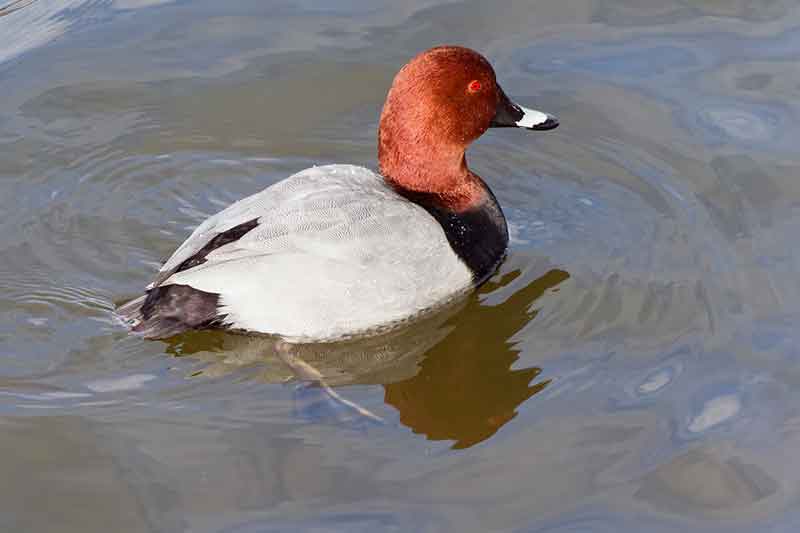
Adult male pochards in breeding plumage have a black upper mantle, rump, tail, and breast. The upperparts are light grey with silver-grey flight feathers with dark tips. The underwing is white.
Their heads are chestnut-coloured and they have a dark grey bill with a light grey subterminal band and a black nail. Their eyes are bright orange or red and they have blue-grey legs and webbed feet.
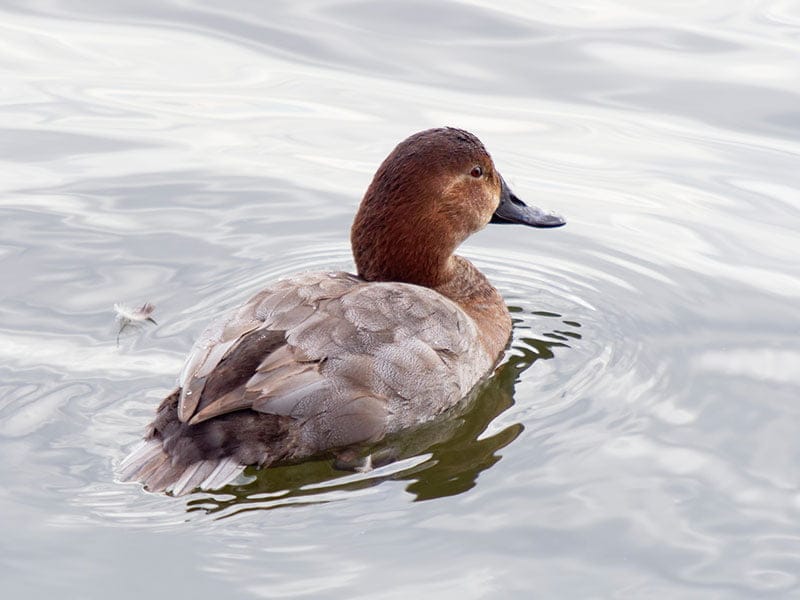
Adult female pochards have grey-brown plumage which is darker on the upperparts. The wings are brown and the head is dull brown with a pale grey eyestripe. The lores, cheeks, and throat are pale grey with a darker pattern. They have a dark grey bill with a light grey subterminal band and a black tip. The eyes are brown and the legs and feet are grey.
Males in eclipse plumage are similar to females but with a greyer body and darker breast.
Juveniles resemble the female with more mottled underparts and a duller head and no eyestripe.
Try our interactive bird identifier
Pochards breed from mid-April to June. They are monogamous and produce 1 brood a season. They nest on the ground in a shallow depression amongst vegetation, or on a platform over water. The female builds the nest alone which is constructed from grass, reeds, and leaves and lined with down.
Pochards lay 8-10 smooth, pale green-grey or greedy-buff eggs which are incubated by the female alone for 24-28 days. The male usually leaves the nest site during this period. The ducklings are covered in brown and yellow down and fledge 50-55 days after hatching. They reach sexual maturity at 1-2 years.
Two females may sometimes share a nest incubating up to 22 eggs at a time.
Pochards feed mainly on plant matter such as roots, seeds, grasses, and sedges. It will also eat invertebrates including molluscs, crustaceans, and occasionally amphibians and small fish.
Pochards can be seen all year round but more so in the winter when UK resident birds are joined by large numbers from eastern Europe and Russia. Look out for them in open lakes and gravel pits in eastern England and Scotland, as well as larger lakes and estuaries in winter.
Britain's Birds
RSPB Handbook Of British Birds
Collins Bird Guide
The common pochard is part of the Aythya genus of diving ducks which includes 12 described species including the Madagascan pochard, which is thought to be the rarest bird in the world and at one time was believed to be extinct.