Breeding pairs: 7,400
field_608d1207824ca
Try our interactive bird identifier
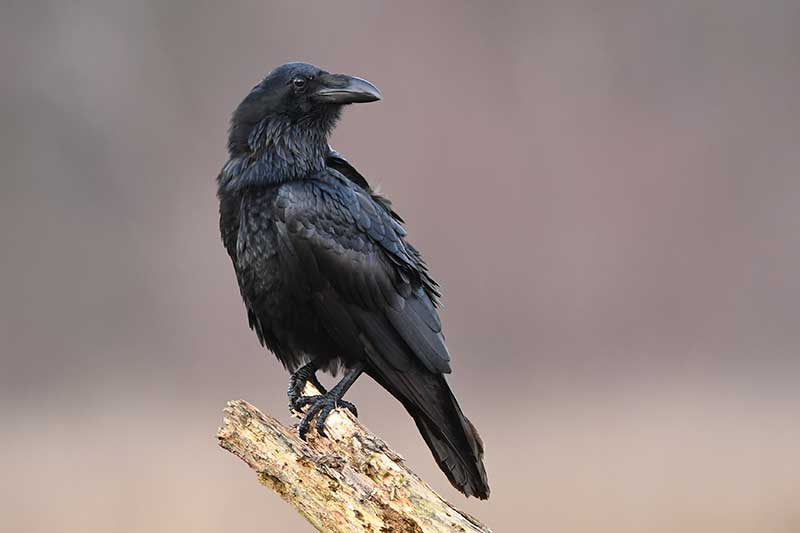
Ravens nest in cliffs or tall trees. The nest is bulky and made from sticks, reeds and decayed leaves and grasses lined with twigs, wool, fur, paper and other soft materials.
Ravens lay between 3 and 7 pale blue-green or olive-green eggs flecked with darker brown. They are incubated for 18-21 days by the female who is fed by the male. Chicks are fed regurgitated food by both parents and leave the nest 5-7 weeks after hatching although they may be cared for by they parents for longer.
Ravens eat mainly carrion but also amphibians, small birds and reptiles as well as grains, acorns and fruit.
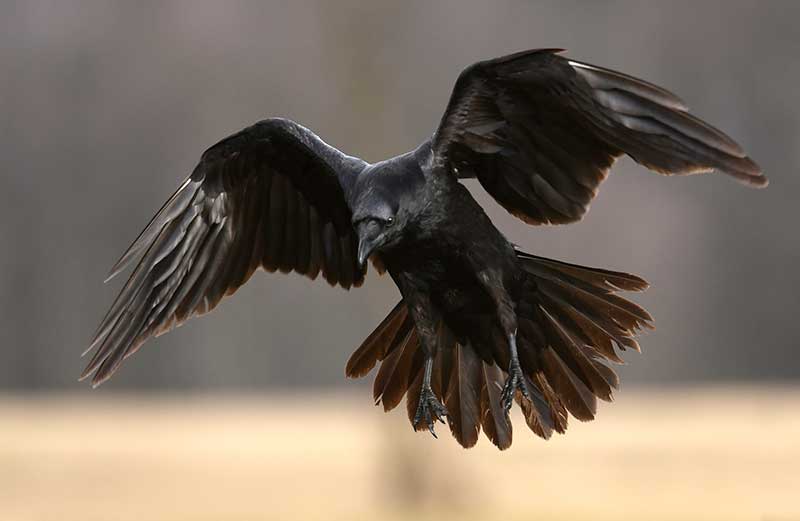
Ravens can be seen all year round mainly in the upland areas of south-west England, the north Pennines and Lake District and Scotland.
Britain's Birds
RSPB Handbook Of British Birds
Collins Bird Guide
Ravens can mimic human speech and singing and other birds’ calls and in captivity can learn to talk better than some parrots.