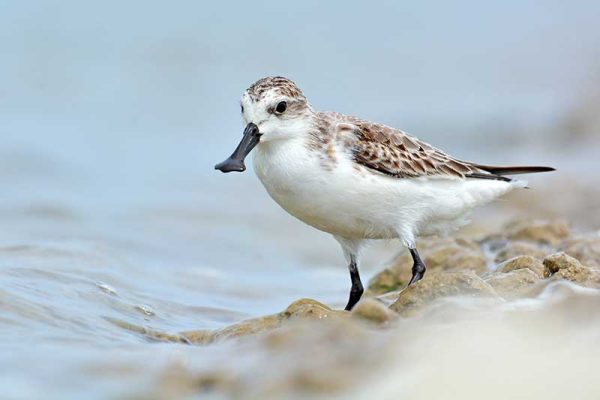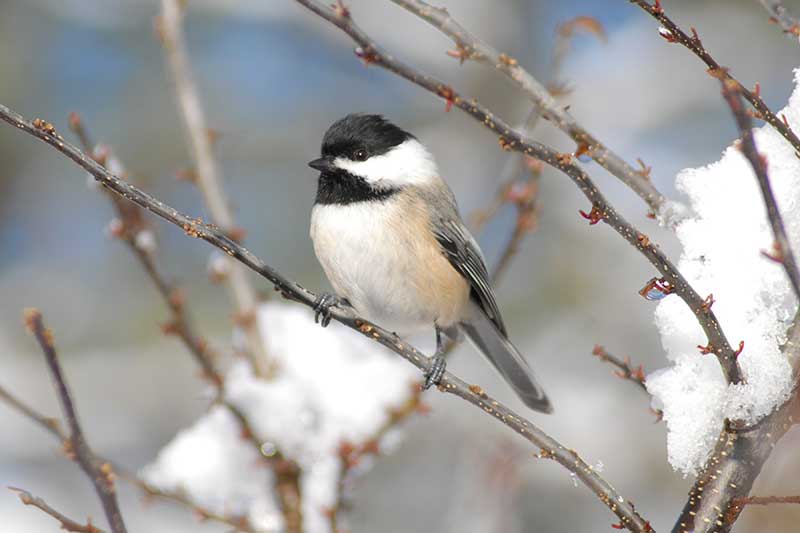
The black-capped chickadee is a small, energetic bird with pale grey upperparts and white underparts and buff-coloured flanks. Its distinctive black cap and bib contrast with its white cheeks, making it easily recognisable.
The species is found across much of North America, inhabiting woods, forests, thickets, parks, and suburban areas.
Known for its friendly nature, the black-capped chickadee is a frequent visitor to bird feeders, where it enjoys suet, sunflower seeds, nyjer seeds, peanuts, and mealworms. It may also take up residence in nest boxes placed in gardens.

The American robin is a large, round-bellied thrush, recognised by its upright posture as it hops or runs across lawns. The male has a grey back, a brick-red chest, and a distinctive white patch on its lower belly. Its head is grey or black, with black streaks on the throat and a yellow bill. Females look similar but are generally duller, with a browner head.
The species is widespread across North America, inhabiting woodlands, forests, shrublands, parks, and gardens.
As well as foraging for worms on lawns, the American robin will feed at bird tables and ground feeders, enjoying suet, peanuts, sunflower hearts, fruit, and mealworms. It may also use nest boxes in gardens.
The American robin has been recorded in Britain.

The American goldfinch is a small, lively finch with a stout, conical bill and notched tail. During the breeding season, males have bright yellow plumage with a black forehead and black wings with white markings. Females in breeding plumage resemble the males but are a softer yellow with more olive tones on their upperparts. Outside the breeding season, both sexes become much duller, with black and brown streaked wings.
They are found throughout North America, inhabiting fields, floodplains, open woodlands, orchards, and gardens.
American goldfinches are frequent visitors to gardens rich in thistles and other seed-bearing plants. They also feed on sunflower and nyjer seeds, which they happily take from feeders, hoppers, or directly from the ground.
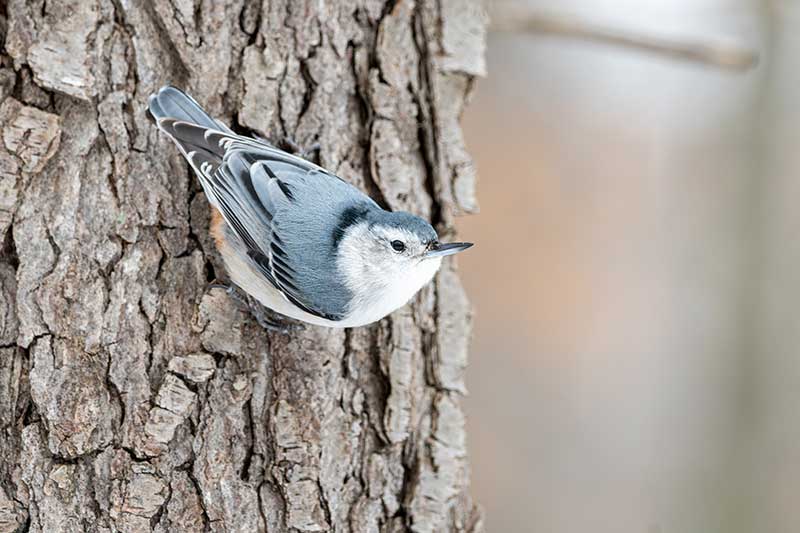
The white-breasted nuthatch is a small, agile bird with a compact body, no visible neck, and a short tail, often seen clinging to tree trunks. Males have slate-grey backs, white underparts with a touch of chestnut on the belly, a white face, and a striking black cap. Females are similar in appearance but sport a grey cap instead of black.
The species is widespread across North America, from southern Canada to northern Florida, inhabiting forests, orchards, parks, and gardens.
White-breasted nuthatches are frequent visitors to garden feeders, where they enjoy sunflower seeds, peanuts, suet, and mealworms. They are also known to make use of nest boxes.
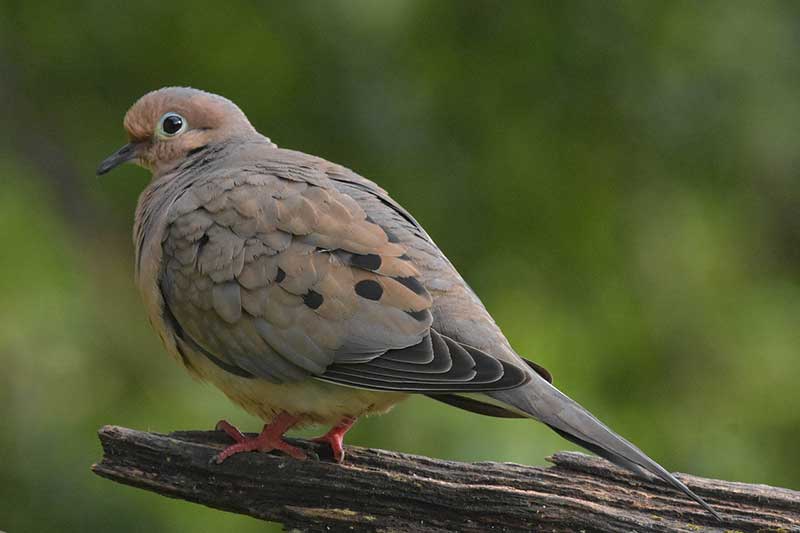
The mourning dove, also known as the rain dove and colloquially as the turtle dove, is a slender, graceful bird with a small head. Its has grey-brown upperparts with black wing spots and soft peach-coloured underparts. The eyes are dark and encircled by light blue skin, while males have distinctive purple patches on the sides of their necks.
It has an extensive range, spanning the United States, southern Canada, and Mexico. It is commonly seen in open fields, countryside, and perched on telephone wires.
Mourning doves frequently visit gardens to forage for seeds, including sunflower, nyjer, corn, millet, and oats, favouring ground feeding. They also nest in dense shrubs and evergreen trees.
The mourning dove has been recorded in Britain.
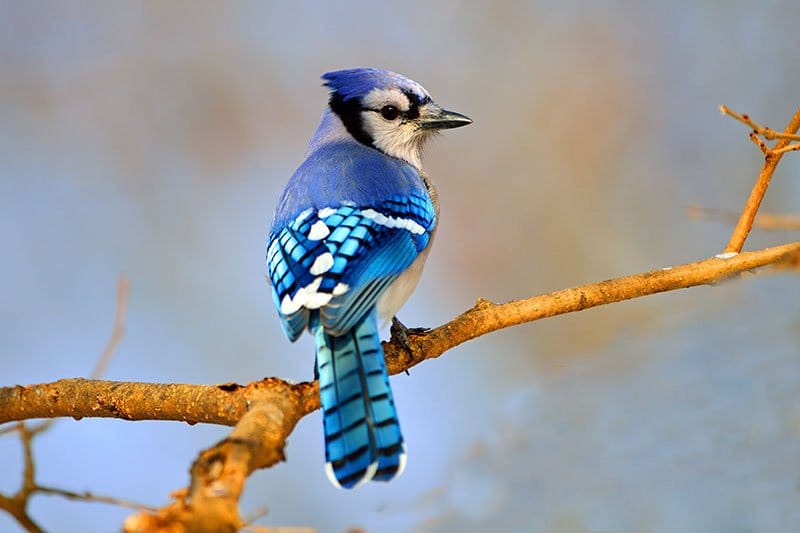
The blue jay is a striking bird with bright blue upperparts, grey and white underparts, and wings patterned with black and white barring. Its head features a prominent blue crest and a distinctive black band around the throat.
Blue jays are widespread across the eastern and central United States, thriving in forests and woodlands, especially those with oaks, as acorns are a favourite food. Blue jays are also commonly found in parks, suburban neighbourhoods, and urban areas.
In gardens, blue jays are frequent visitors, feeding on sunflower seeds, peanuts, cracked corn, suet, fruit, and mealworms from tray or hopper feeders. They are also known to make use of bird baths.
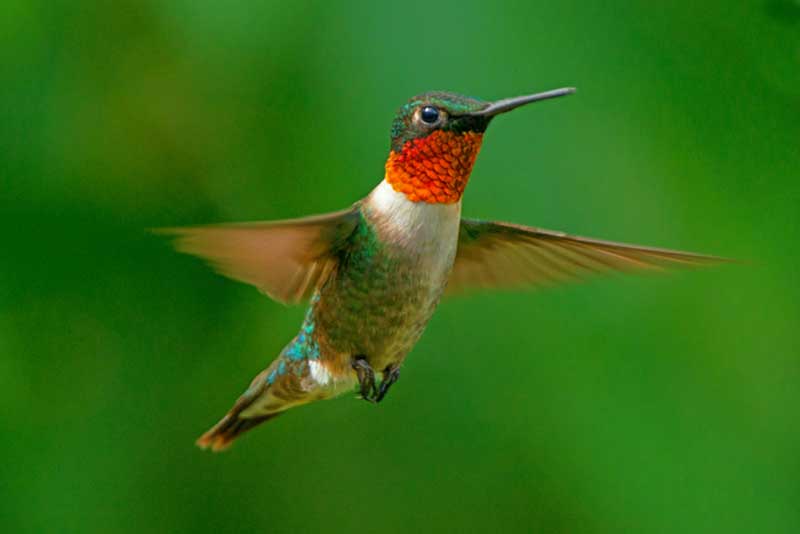
The male ruby-throated hummingbird is a dazzling bird with bright emerald-green upperparts and pale grey-white underparts. Its head has a dark mask and a green crown, while its brilliant red throat patch, or “gorget,” may appear black depending on the angle of light. Females have golden-green upperparts but lack the red throat patch.
It breeds across much of the eastern United States and southeastern Canada, migrating to Florida, Mexico, and Central America for the winter. It is commonly found along forest edges, in orchards, and in gardens.
Ruby-throated hummingbirds can be attracted to gardens by using hummingbird feeders filled with sugar water or by planting nectar-rich tubular flowers in shades of red, purple, and orange.

The Northern cardinal is a large songbird, with a long tail, a short, thick, conical bill, and a distinctive crest on its head. The male displays brilliant crimson plumage, with a black face mask that extends down to the throat, and a coral-coloured bill. His back and wings are marked with darker tones. The female, in contrast, is a pale olive-brown, with a red tint on her wings, crest, and tail. Her face mask is dark grey and less pronounced than that of the male.
Northern cardinals are found throughout the eastern United States and Canada, typically on the edges of woodlands, forests, wetlands, parks, and suburban areas.
Northern cardinals enjoy a variety of bird food, often visiting feeders, bird tables, and foraging on the ground, with a particular preference for sunflower seeds.

The song sparrow is a brightly coloured sparrow with a rounded head and long tail. Its upperparts are rusty-brown with dark streaks, while its buff-coloured underparts are also streaked, and have a dark spot in the centre of the breast. The face is grey, marked with a dark stripe through the eye and russet stripes on the crown. Males and females are similar in appearance.
The species is found throughout most of the United States and Canada, commonly living in areas close to humans, such as farms, marshes, scrubland, and parks.
Song sparrows are frequent visitors to gardens, where they forage for seeds such as sunflower, corn, nyjer, and millet from bird tables and the ground.
The song sparrow has been recorded in Britain.
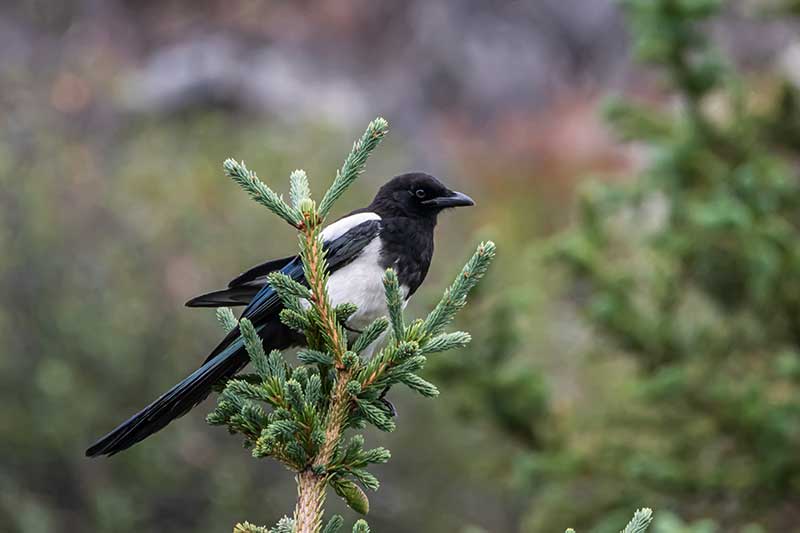
The black-billed magpie, also known as the American magpie, is a member of the corvid family and closely resembles the Eurasian magpie. It has black plumage with white scapulars, belly, and primary wing feathers. Its wings and tail have an iridescent blue-green sheen. The head is black with dark eyes and a black beak. Unlike many other corvids, there is a noticeable size difference between the sexes, with males being approximately 25% larger on average, though some overlap occurs.
Black-billed magpies are distributed across much of the western United States and Canada, except in California, where they are replaced by the yellow-billed magpie. They inhabit grasslands, fields, riverine areas, and urban environments, often seen in small flocks.
In towns, they are fairly common and may visit gardens to feed on suet, peanuts, seeds, and fruit, either from bird tables or directly from the ground.
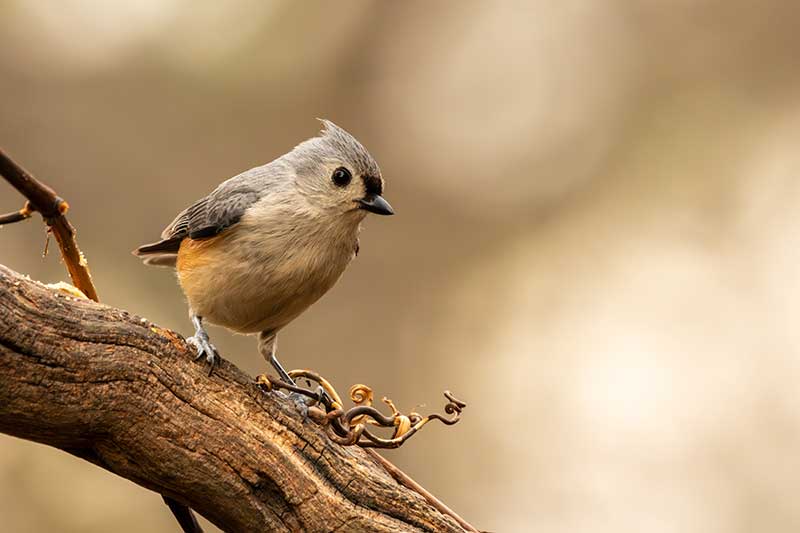
The tufted titmouse is a tiny, stocky bird with a long tail and a distinctive crest on its head. Its upperparts are blue-grey, while its underparts are white, with a rusty patch on the sides of its flanks. The forehead is black, and the crest is grey. The eyes and small, conical bill are black. Males and females are similar in appearance, though males are typically larger.
Tufted titmice are found throughout the southeastern United States, although their range is expanding northwards, partly due to the abundance of food, especially in gardens.
These birds are common visitors to gardens, particularly in winter, where they feed on sunflower seeds, nyjer seed, peanuts, mealworms, and suet from bird tables and feeders. They nest in cavities and will readily use suitable nest boxes.

The downy woodpecker is the smallest woodpecker species in North America, with a blocky head and short bill, which set it apart from the almost identical-looking hairy woodpecker. Its upperparts are black, with a white back and white spots on the wings. The underparts are white, and the tail is black with white-barred outer feathers. The head is striped black and white, and adult males have a red patch on the back of the crown.
It is found across most of Canada and the United States, inhabiting open woodlands, forests, orchards, and city parks.
Downy woodpeckers are the most likely woodpecker species to visit bird feeders, where they feed on sunflower seeds, peanuts, peanut butter, and suet. They will also drink from hummingbird feeders.

The Eastern bluebird is a small thrush with a round head and a plump belly. The male has bright blue upperparts, reddish-brown underparts, and a white belly. The female, in contrast, has grey upperparts with a blue wash on her wings and tail. Her underparts are paler, and she lacks the blue on her head.
Eastern bluebirds are found across the eastern United States and southern Canada, typically in open areas near trees, pastures, meadows, farmland, and suburban parks and golf courses.
In winter, they visit gardens to feed on peanuts, mealworms, fruit, and suet, and will also use nest boxes when available.

The house finch is a small songbird with a conical bill, short wings, and a notched tail. The male has streaked brown upperparts, a streaked belly and tail, and a rosy red wash on the breast and head. The intensity of the red colouration varies by season, ranging from pale yellow to deep orange, as it comes from pigments in the fruits and berries they eat. The female is streaked brown overall and lack the red colouring.
Native to Mexico and the southwestern United States, house finches were introduced to eastern North America and are now year-round residents. They are commonly found on farms, forest edges, parks, and in urban areas.
In gardens, house finches visit bird feeders to eat sunflower and nyjer seeds, sometimes arriving in flocks of over 50 birds.
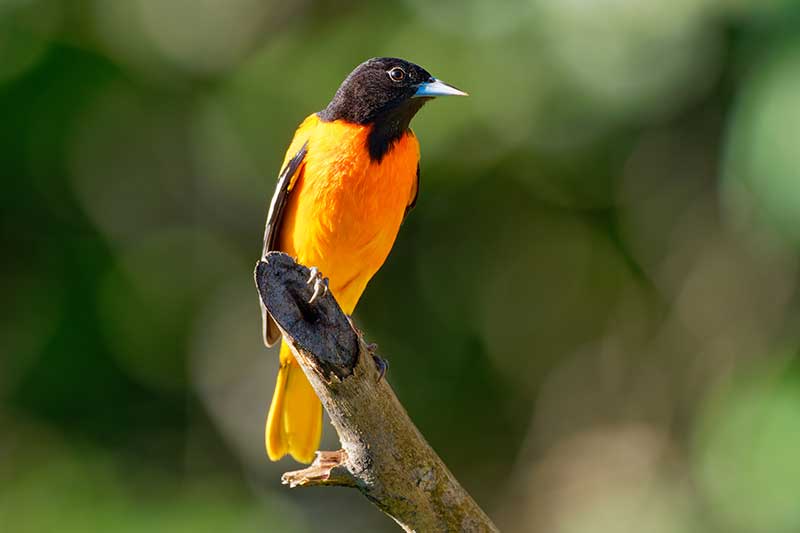
The Baltimore oriole is a medium-sized songbird with long legs and a pointed bill. The male has vibrant orange plumage, with a black head and back, and black wings with white patches. Females are more subdued, typically featuring brown upperparts, darker wings, and muted orange underparts, though their appearance can vary.
It breeds in eastern North America, inhabiting woodlands, forest edges, orchards, farmlands, and suburban areas. During the colder months, it migrates to the Neotropics, spending the winter in Central America and northern parts of South America.
Baltimore orioles will visit gardens to eat fruit and suet, which they will readily take from bird tables. They also drink sugar water from hummingbird feeders. To further entice them, consider planting bright fruit-bearing and nectar-rich plants such as raspberries, crab apples, or trumpet vines.
The Baltimore oriole has been recorded in Britain.
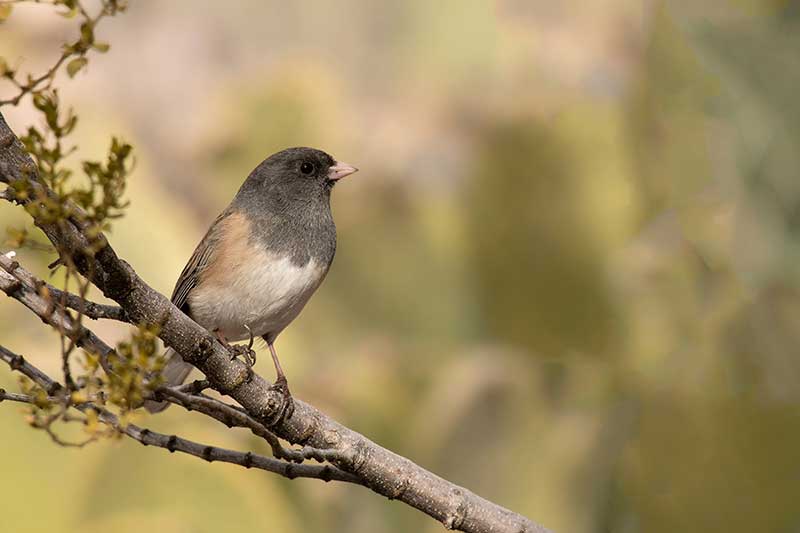
The dark-eyed junco is a medium-sized sparrow with a round head and long tail. It has dark grey upperparts and tail with white outer feathers. On the underparts, the breast is grey, and the belly is and a pale grey or whitish. The head is grey, the eyes are black, and the bill is pale pink. Males and females are similar. There are several subspecies of dark-eyed junco that show variable plumage.
It is found across most of North America breeding in forests in Canada and migrating to the United States for winter where it can be seen in woodlands, parks, and gardens.
Dark-eyed juncos visit bird feeders to eat seeds such sunflower, nyjer, millet, and corn, as well as peanuts. They prefer to feed from the ground so can often be seen eating spilled seeds.
The dark-eyed junco has been recorded in Britain.
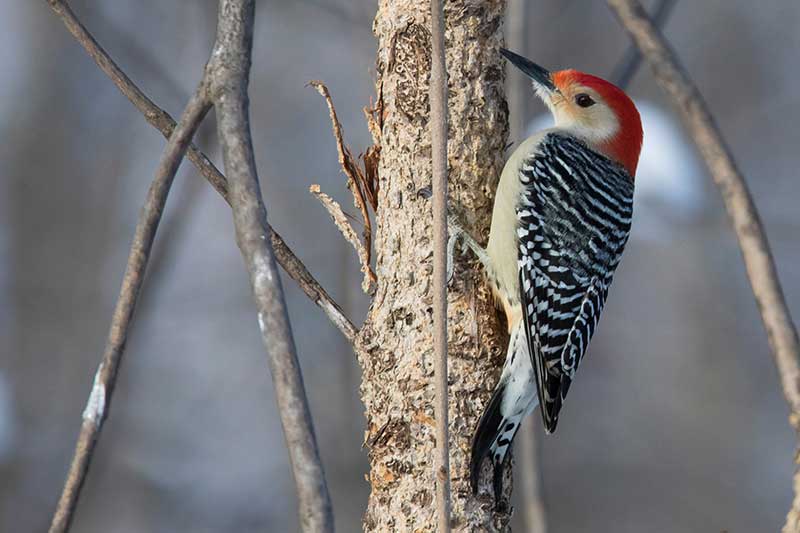
The red-bellied woodpecker is a medium-sized woodpecker with a rounded head. Its back has black-and-white barred plumage, while its underparts are pale grey. Although the bird is named for the faint reddish tinge on its belly, this is often hidden from view. The male has a red cap that extends from the bill to the nape, while the female has a red patch on the nape and another just above the bill.
It is native to the eastern United States and Canada, where it inhabits deciduous forests. It uses tree cavities for nesting, favouring decayed trees as well as live softwoods like elms, maples, and willows.
Red-bellied woodpeckers are visitors to gardens, where they feed on suet, peanuts, sunflower seeds, and fruit. They may also drink sugar water from hummingbird feeders. Retaining dead trees in gardens can encourage these woodpeckers to forage naturally for insects or find suitable nesting sites.
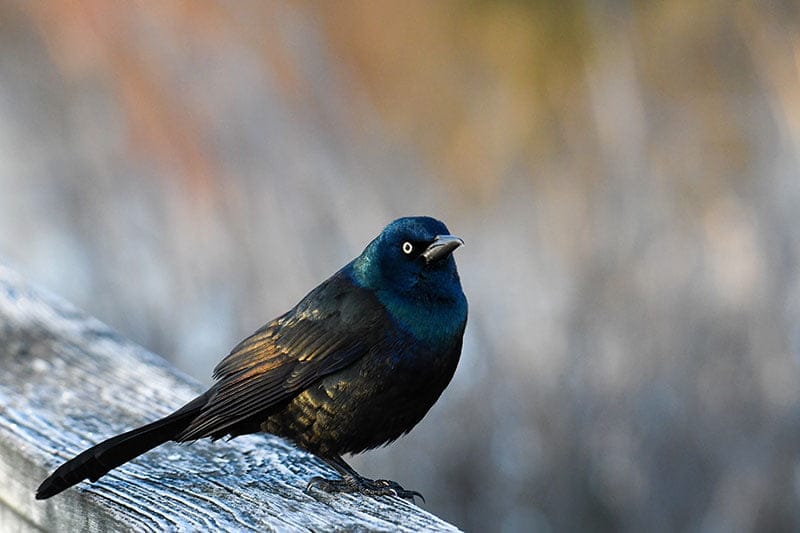
The common grackle is a large blackbird with long legs, a long tail, and a stout bill. The adult male has a bronze sheen on the plumage of his body, a purple sheen on his wings, and blue or green iridescence on his head. His eyes are pale yellow, while his slightly downwards-curved bill, legs, and feet are black. The female is smaller than the male, with a browner appearance, less iridescence, a dark head, and a shorter tail.
It is found across much of North America east of the Rocky Mountains in agricultural fields, the edges of forests and woodlands, meadows, marshes, and city parks.
The common grackle generalist feeder and will readily visit gardens to eat sunflower seeds, corn, oats, millet, peanuts, suet, and fruit preferring to eat from the ground although it will use bird feeders.
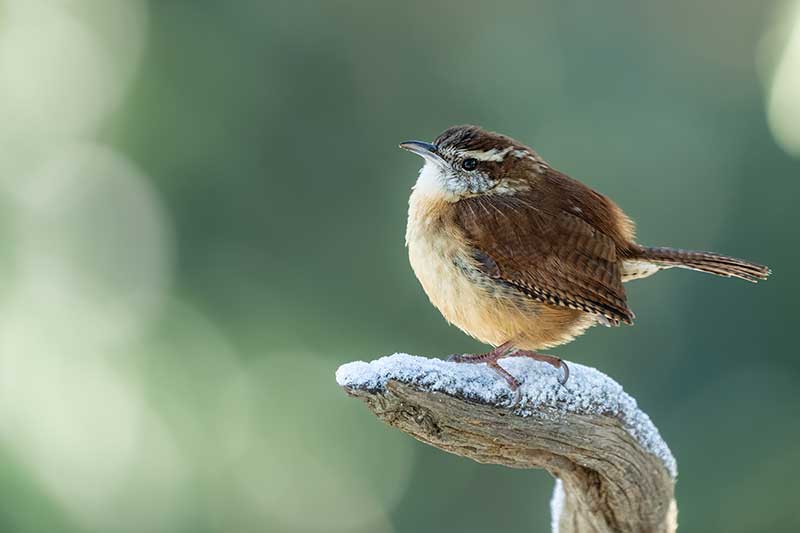
The Carolina wren is a small, chunky bird with a long tail, a large head, and a downcurved beak. It has reddish-brown upperparts with dark bars on the wings and tail, and buffy-orange underparts. The head is also reddish-brown, with a greyish-white chin and throat and a distinctive long white stripe above the eye. It has black eyes, a grey bill, and pinkish-brown legs and feet. Males and females share the same appearance. Seven subspecies are recognised, each with slight variations in plumage and song. Unlike other wrens in its genus, only male Carolina wrens sing.
This species is found throughout the eastern United States, southernmost Canada, and northernmost Mexico, thriving in a variety of habitats such as woodlands, forests, farmland, and areas with dense vegetation.
Carolina wrens frequently visit gardens, especially in winter, where they feed on suet, sunflower hearts, peanuts, and mealworms from bird tables, feeders, and the ground. They readily take shelter and breed in bird boxes but are also known to nest in unusual spots like flower pots, hanging baskets, mailboxes, and even coat pockets.