

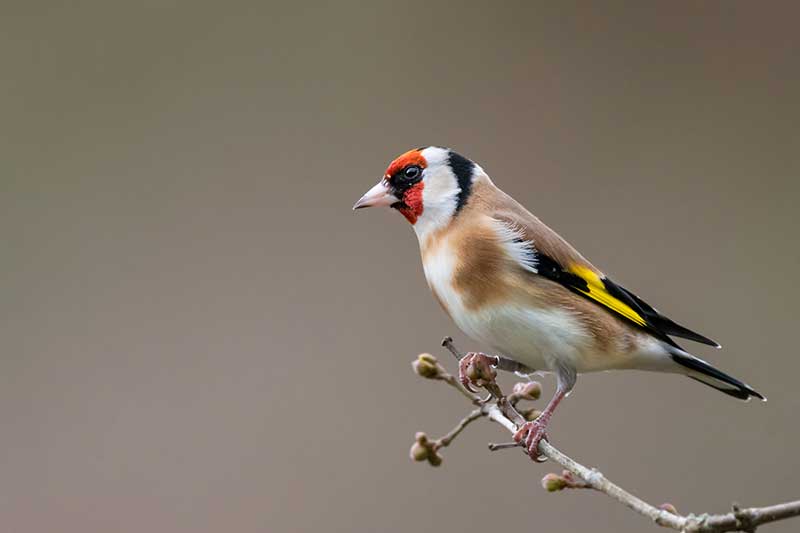
The goldfinch is a charming little bird, with a brown back and white rump. Its wings are black with a bright yellow wingbar. The underparts are white, with buff-coloured patches on the sides. Its face is red, with white cheeks and black markings to the side that extend to the crown. Males and females are similar except the red on the face does not extend as far back behind the eyes.
Goldfinches are commonly found throughout much of Britain, particularly in areas with bushes and trees, and are especially drawn to places with thistles. They are also frequent visitors to gardens, where they enjoy feeding on sunflower hearts and niger seed.
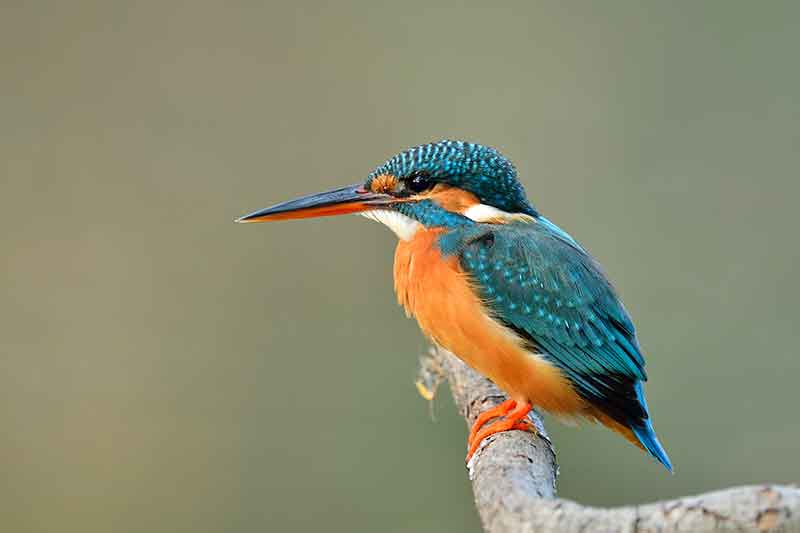
The kingfisher is a brightly coloured bird, with turquoise upperparts and darker blue wings marked with spots, along with a blue tail. Its underparts are orange, with slightly darker flanks. The crown, forehead, and nape are blue, with fine spots, the lores and ear coverts are orange, and the rest of the face is white. It has a long, black, dagger-shaped bill. Males and females are similar, but the female has an orange lower mandible.
Kingfishers are found across the UK, though they are more common in southern and central England. Look out for a flash of blue along slow-flowing rivers, streams, and canals.
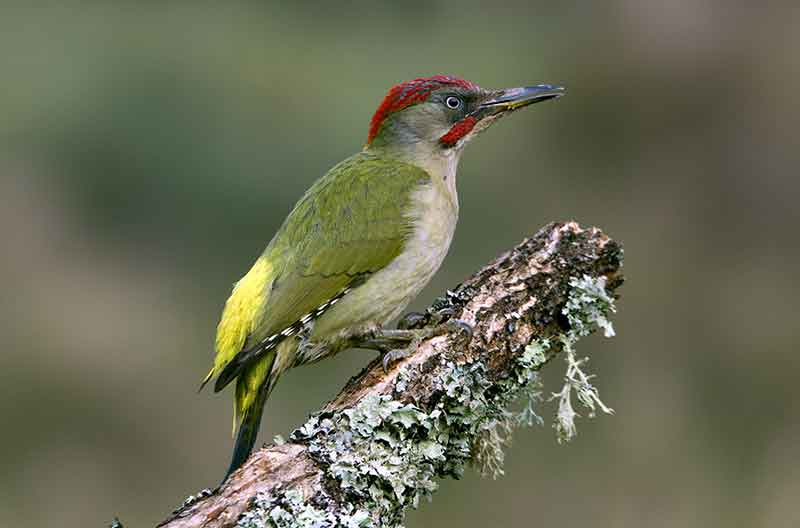
The green woodpecker is a large woodpecker, about the size of a jay. It has bright green upperparts, a yellow rump, and a black tail with green edges. The underparts are a paler green, and the underwings have grey and white bars. Its head is grey, with black markings around the eyes and bill, a red crown and a red stripe beneath its eyes. The female resembles the male, but her eye stripe is black rather than red.
Green woodpeckers are found throughout much of the British Isles, except in the far north of Scotland and Northern Ireland. They inhabit woodlands and open grasslands and are easily identified by their distinctive laughing call.
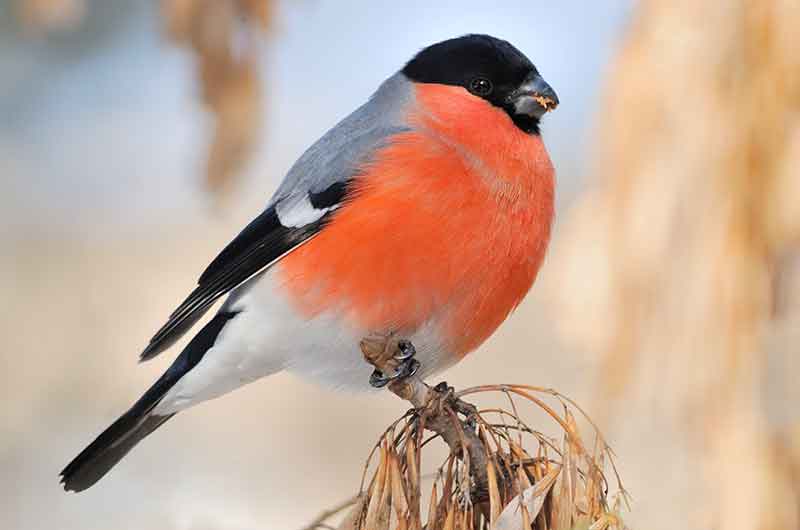
The bullfinch is a large, stocky finch with a blue-grey back, white rump, and black tail. Its wings are black, with a pale wingbar, and its underparts are pinkish-orange. The head is black, with orange cheeks and throat, and it has a stout, black, conical bill. The female is similar to the male but is generally duller, with a brown back and pale pink underparts.
Bullfinches are found across the UK, except in the north of Scotland. They are commonly seen in wooded areas and, in winter, often visit gardens in search of food.
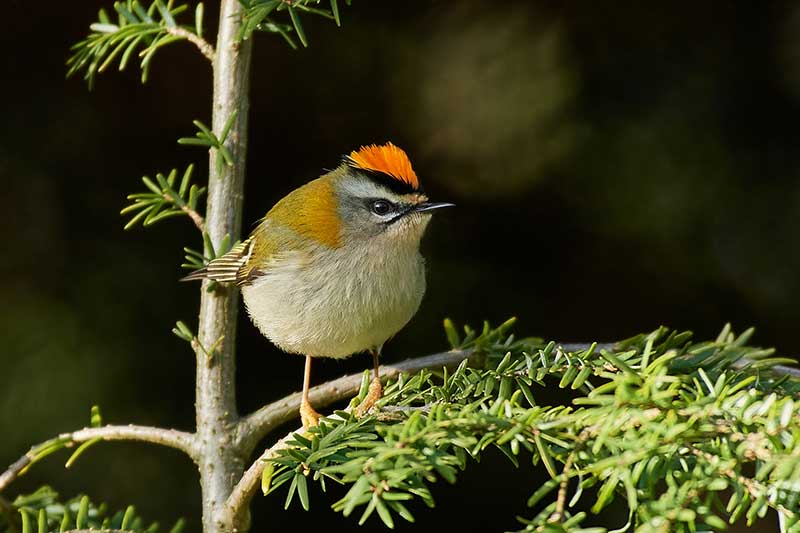
The firecrest is one of Britain’s smallest birds. It has olive-green upperparts with a bronze patch on the shoulder, and its flight feathers are edged with yellow. The underparts are paler. On its head, the crown is black with a bright orange stripe, and it has a white stripe above the eye and a crescent below, giving it a distinctly angry expression. The female is similar to the male, but the crown stripe is duller and may sometimes be absent.
Firecrests are mainly found in the south-east and south-west of England, as well as parts of Wales. Due to their small size and constant movement, they can be difficult to spot. In winter, they often join flocks of other small birds and occasionally venture into gardens.
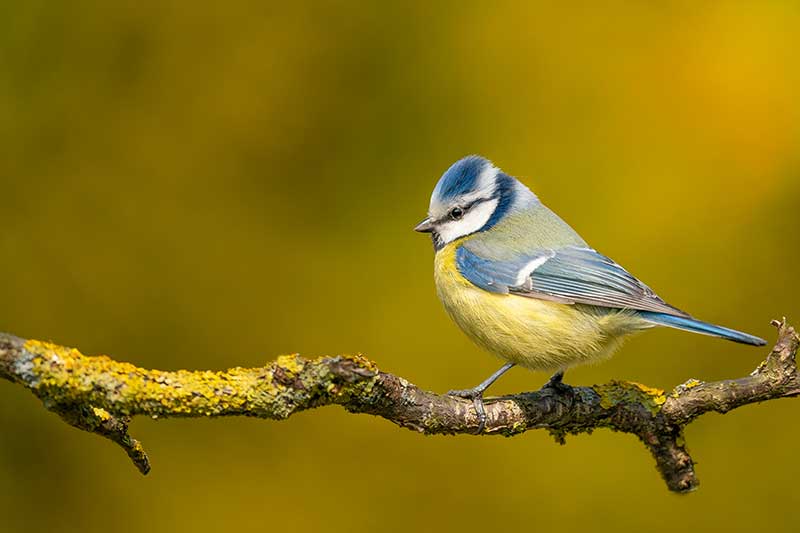
The blue tit is one of Britain’s most recognisable birds. It has a yellow-green back, blue tail, and blue wings with a white wing bar and white edges on the feathers. Its underparts are pale yellow, with a black stripe running down the centre of its breast and a white belly. The face has a distinctive black and white pattern, with by a bright blue crown. Males and females are similar, though the female is slightly duller.
Blue tits can be found throughout most of the UK, except on some Scottish islands. They are commonly seen in woodlands and parks and will readily visit gardens, where they feed on nuts and sunflower seeds from hanging bird feeders.
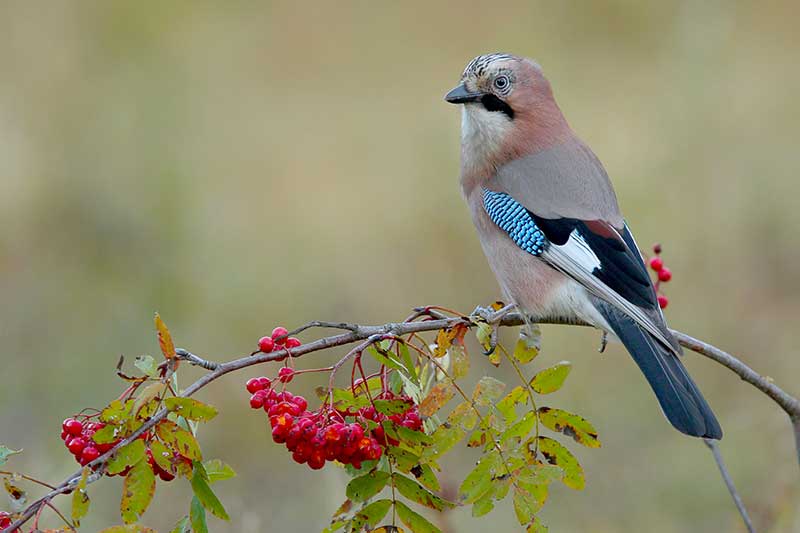
The jay is a colourful corvid, with pinkish-brown upperparts and a white rump. Its wings are black and white, with a distinctive blue patch barred with black. The head is pinkish-brown, with a white crown, chin, and throat, and a black malar stripe. Males and females are similar in appearance.
Jays are found across the UK in woodlands, parks, and gardens with trees. They are most noticeable during winter, when they venture into open areas in search of acorns and other nuts.

During the breeding season, the adult male shelduck has predominantly white plumage, with a distinctive chestnut band running from its back to the lower breast. Its wings are a mix of white, glossy green, and black, while the tail is white with a black band at the tip. The underparts are white, with a black band down the centre, and the area beneath the tail is chestnut. The head is dark, glossy green, with a bright red bill, and the legs and feet are pink. The female is similar in appearance but duller overall, with white spots at the base of her bill.
Shelducks can be found along the British coastline year-round, though their numbers increase in winter with migrants from the north. Look out for them in estuaries and coastal meadows.
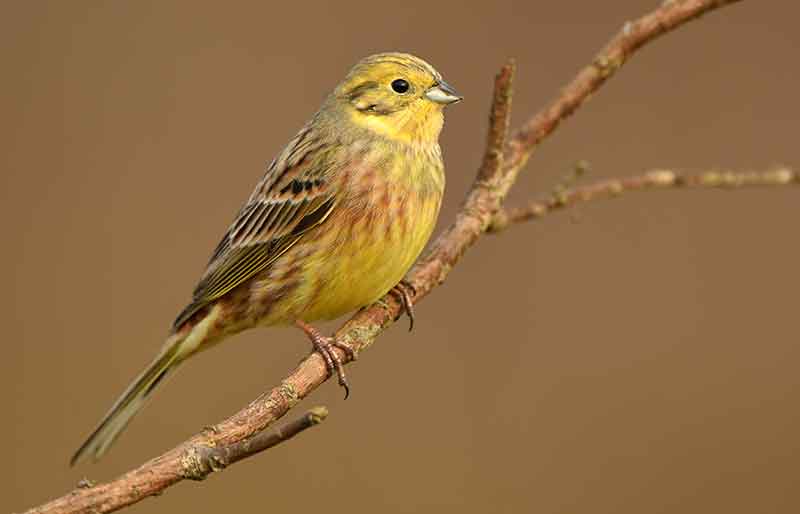
The adult male yellowhammer has brown upperparts with dark streaks and a rusty-coloured rump. Its underparts are bright yellow, with streaking on the breast and lower flanks, an olive breast band, and rusty tones on the breast sides and upper flanks. The head is yellow with dark stripes around the crown, while the cheeks are brown with darker markings around the ear coverts. The female is similar but duller and paler overall, with a more prominent head pattern.
Yellowhammers are found across most of the UK, though they are absent from some upland areas and less common in the north and west. They are typically seen in the countryside near bushes and hedgerows but may also visit gardens during winter.
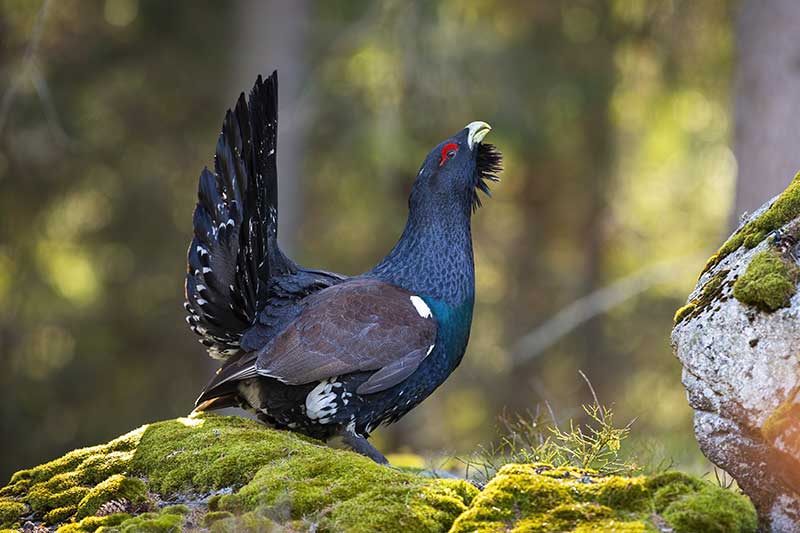
From a distance, the capercaillie may appear black, but up close, the male reveals slate-grey upperparts, dark brown wings, and a glossy blue-green breast. Its tail feathers are tipped with white, it has a bright red comb above the eyes, and the legs are dark grey and feathered. The female looks very different, with mottled and barred black, grey, and brown plumage, along with a distinctive rusty-red breast patch.
Capercaillies are found year-round in Scotland, primarily in Caledonian pine forests.


