

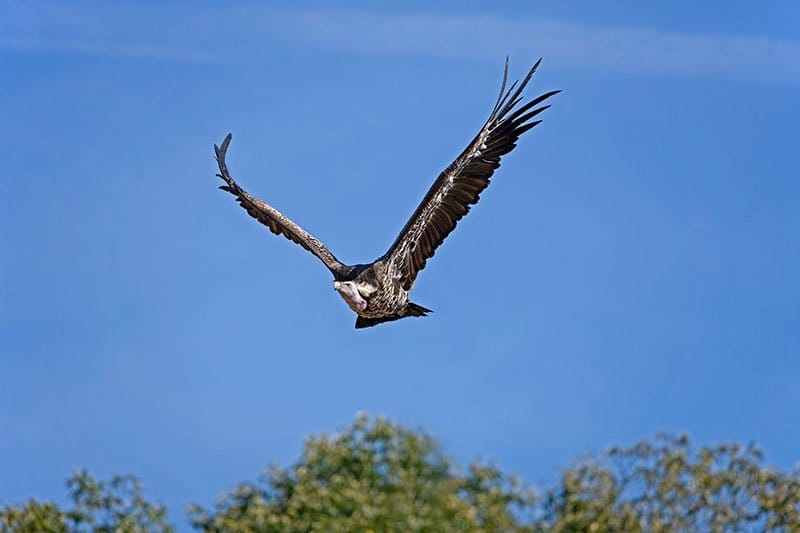
Rüppell’s vulture also known as Rüppell’s griffon vulture is thought to be the highest flying bird in the world with a confirmed flight at 11,300 m above sea level.
It is a large vulture with mottled black and brown plumage, a pale belly, and greyish-white fluff covering its head and neck. It is found in East Africa and the Sahara where it inhabits grasslands, mountains, and woodland. It usually flies at an altitude of about 6,000 m cruising at speeds of 35 km/h, and has a special variant of haemoglobin subunit alpha, which allows it to absorb oxygen despite the low pressure in the upper troposphere.
In November 1973 a Rüppell’s vulture was involved in a collision with an aircraft flying at 11,300 m over Abijan in Ivory Coast, western Africa, which damaged one of the aircraft’s engines causing it to shut down. The plane safely landed at Abijan, where the remains of the bird including several feathers enabled it to be identified as a Rüppell’s vulture.
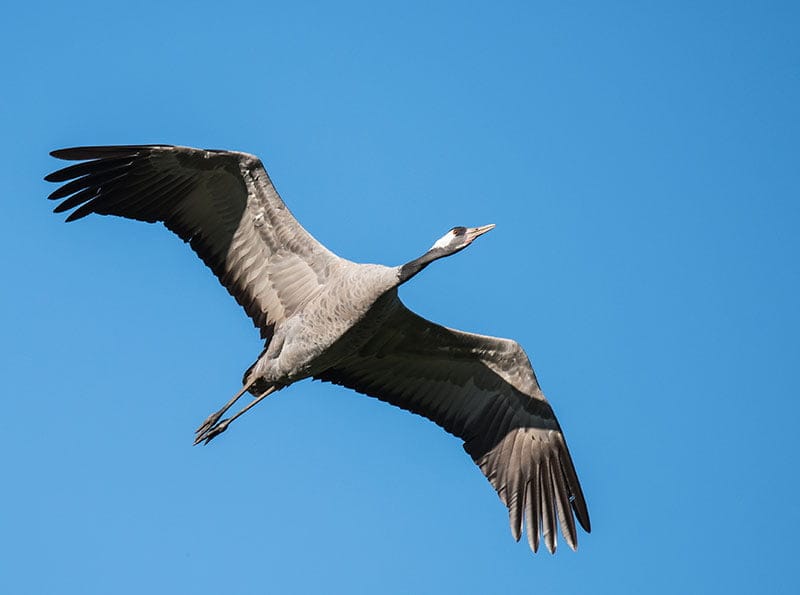
The common crane is a large, stately bird with a wingspan that measures up to 240 cm. It has grey plumage overall with a red crown and a white streak that runs from its eyes and down its neck to the top of its back. It breeds across Europe and Russia and recently successful reintroduction programmes have seen it reappear in several countries where it was previously extinct, including the UK.
During migration to their wintering grounds on the Indian subcontinent and eastern Asia, common cranes have been recorded flying at a height of 10,000 m across the Himalayas, which prevents them from being attacked by golden eagles as they make the gruelling journey.
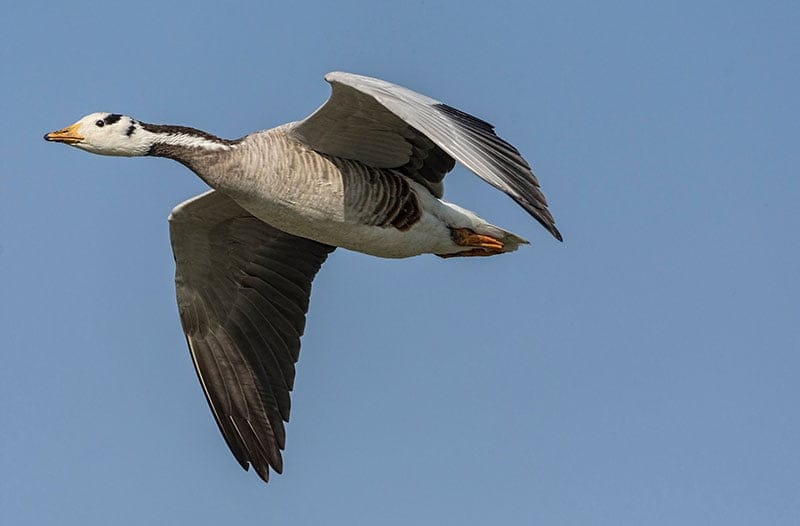
The bar-headed goose is a pale grey goose with an orange beak and striking black bars on its head. It breeds in Central Asia on high-altitude lakes and migrates south to spend the winter in South Asia.
George Lowe, a member of the 1953 British Mount Everest Expedition, in which Edmund Hillary and Tenzing Norgay reached the summit of the mountain, claimed he saw bar-headed geese flying over the top of Mount Everest which has a peak of 8,849 m.
Although this report is unconfirmed, in 2015, a team from Bangor University tracked several bar-headed geese as part of a research project and found that they regularly flew at altitudes of 6,000 m and one as high as 7,300 m, tending to fly through the Himalayan passes rather than over the tops of the mountains.
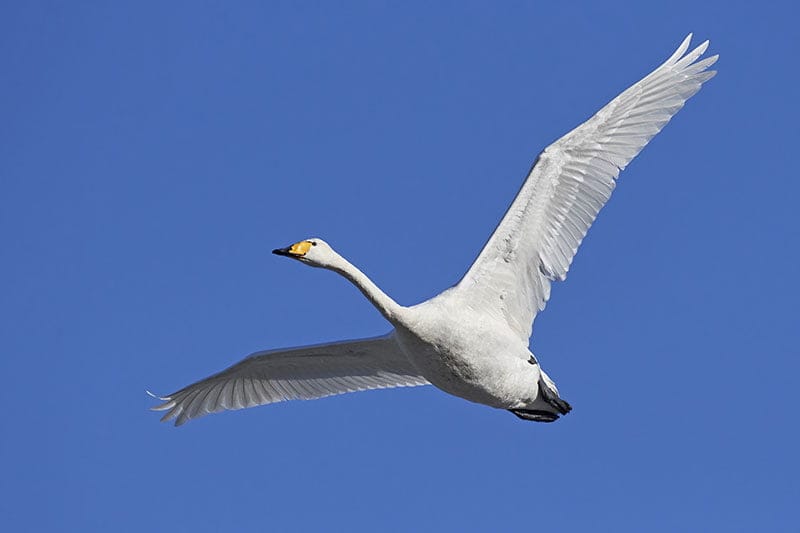
Although whooper swans aren’t the largest of the swan species – that title goes to mute swans – they are the highest flying. Similar in appearance to Bewick’s swan and the Eurasian counterpart of North American’s trumpeter swan, it is pure white overall with a yellow and black bill.
When they migrate for the winter from Iceland to Scotland or Ireland, they fly at incredibly high altitudes to avoid the snow squalls at lower altitudes, and ride the wind currents that allow them to fly at around 200 km/h, and which means they can complete the journey of 1,290 km in just under 7 hours.
In December 1967, a formation of 30 whooper swans was spotted by a pilot near Lough Foyle flying at an altitude of just over 8,200 m. The height was confirmed on radar by air traffic control.
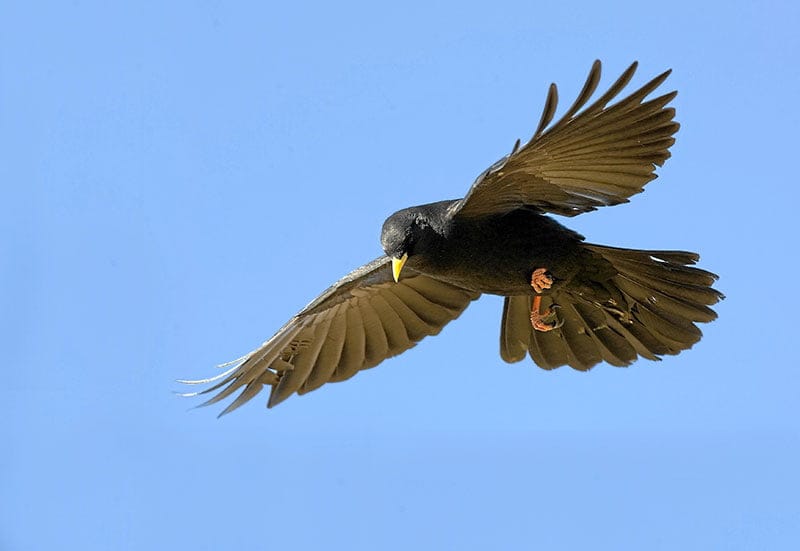
The alpine chough, also known as the yellow-billed chough, is a species of bird in the crow family. Closely related to the red-billed chough, it has glossy black plumage, red legs, and as the name suggests a yellow beak.
It breeds at high altitudes in the mountains of southern Europe, Central Asia, and western China, and has nested at 6,500 m, higher than any other species of bird.
In 1924, an individual was observed following a party of mountaineers climbing Mount Everest to an altitude of 8,200 m.
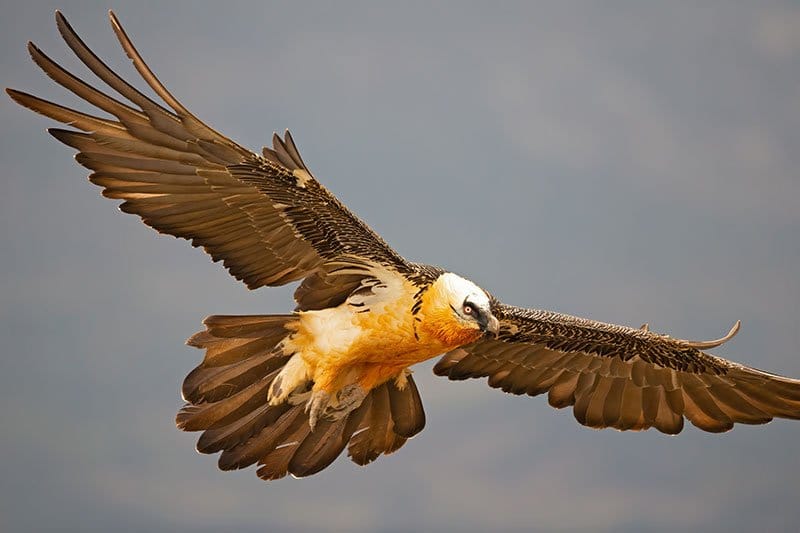
The bearded vulture is an Old World vulture closely related to the Egyptian vulture. It inhabits high mountains in southern Europe, East Africa, and India. Like other vultures, it is a scavenger that feeds on carrion, but eats mostly bones rather than meat.
When foraging, it flies at about 2 to 4 m off the ground, but after catching its prey will soar to heights of 50 – 150 m from where it will drop the bones onto the rocks below to crack them and get at the bone marrow inside.
In The Birds Of The Sikkim by Salim Ali, published in 1962, there is a record of a bearded vulture observed flying at 24,000 ft or 7,315 m above sea level.
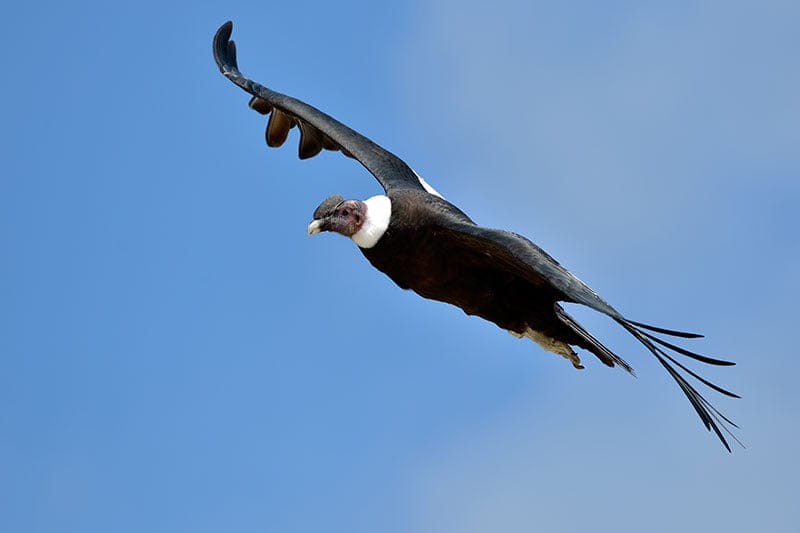
The Andean condor is one of the largest flying birds in the world. It is a New World vulture that inhabits the Andes mountains and the Pacific coast of South America. It has a wingspan of up to 3.3 m, and is the largst bird of prey in the world.
Condors don’t have a large sternum which would usually serve as an anchor for flight muscles of birds that flap, and the Andean condor spends most of its time soaring with its wings spread horizontally, and its primary feathers bent at the tip. Although it flaps during take-off, once airbourne, it users thermals to stay aloft, sometimes for hours at a time. In The Voyage of the Beagle, Charles Darwin noted that he watched Andean condors for half an hour without once seeing them flap their wings.
In an article published in National Geographic magazine in 1971, an Andean condor was observed reaching an altitude of 6,500 m.
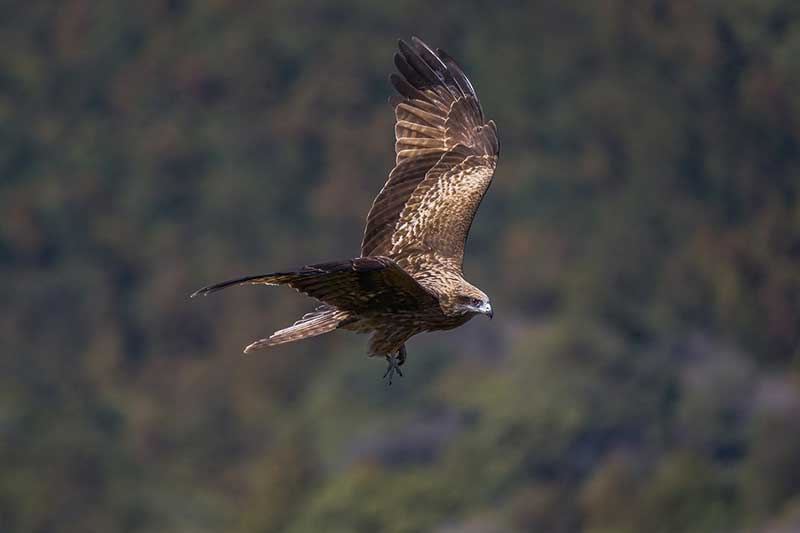
Black kites are one of the most widespread species of raptors in the world with a range that stretches through Europe, Asia, Africa, and Australia. They are similar to red kites, but are slightly smaller, the tail is less forked, and they lack the rufous plumage. They are opportunistic hunters and have adapated well to living in a variety of habitats including urban areas.
Black kites spend their time gilding and soaring on thermals in search of food which comprises carrion and small, live prey, as well as household waste, which has earned them the nickname shite hawks.
In 2022, a study that used GPS loggers to track black kites on migration observed them crossing the Himalayas at altitudes of 6,256 m, while during the night, they rested in mountains that were over 5,000 m high.
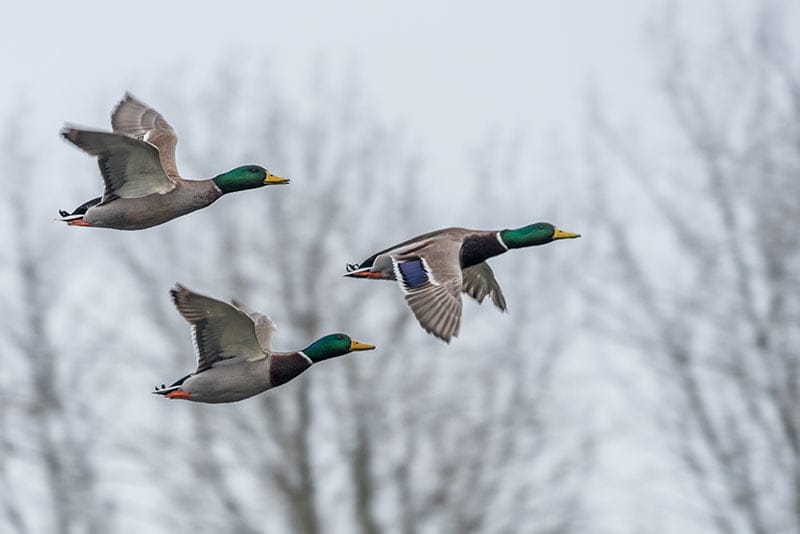
On the 9th July 1962, a plane flying over Nevada between Battle Mountain and Elko was involved in an airstrike by an unknown bird. At the time, the plane was cruising at 6,400 m and the pilot suspected it had been caused by an eagle, the only species of bird known to fly that high in the area. He felt a light thud, while the passengers said they felt a small explosion.
Upon landing, the crew found a dent and a hole in the plane’s body inside of which was a single feather which was taken to the United States Fish and Wildlife Service Bird and Mammal Laboratory and identified as that of a mallard.
During migration, ducks usually fly at anything from 60 to 1200 m but can fly much higher. In 1954, the crew of a climbing expedition to Mount Everest found the skeleton of a pintail at an elevation of just under 5,000 m.
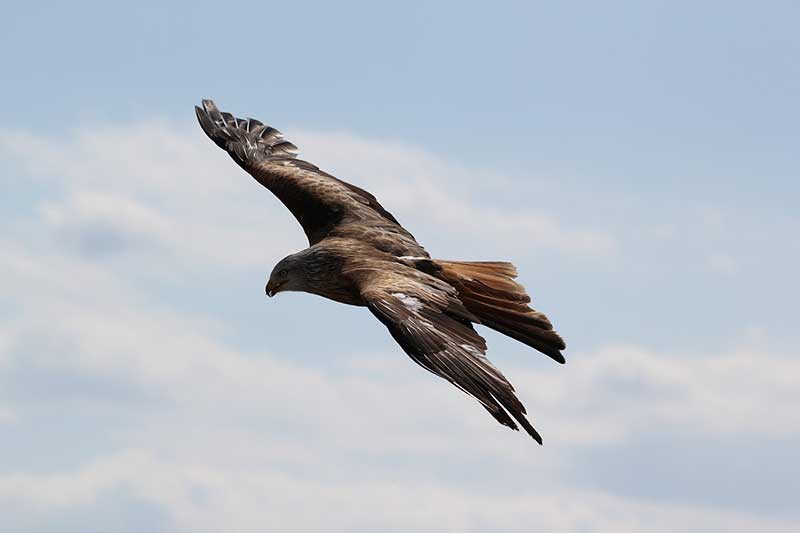
The golden eagle is the most widely distributed species of eagle with a range that extends across much of the Northern Hemisphere. It is an excellent hunter due to its agility and speed in the air and powerful and feet and talons, and due to this it is regarded in many cultures as a symbolic bird.
They have long, broad wings with indentations at the tips, and when they fly, they hold them in a slightly up-turned V-shape. When hunting, golden eagles can glide at speeds of up to 190 km/h and during stooping or diving they can reach speeds of up to 320 km/h not far behind the fastest bird in the world, the peregrine falcon.
In the mountain ranges of Central Asia, they are found at very high elevations, and in May 1975, a golden eagle was recorded circling at 6,190 m above sea-level in Khumbu in Nepal.
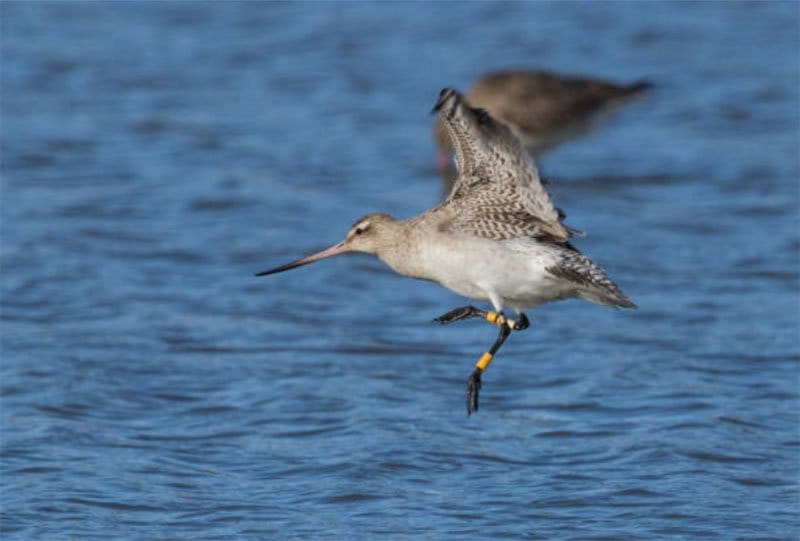
The bar-tailed godwit is a large wader that breeds in the Arctic and migrates to more temperate areas for winter. There are four subspecies, and while some make relatively short journeys to India, Africa, or northern Europe, L. I. baueri migrates from Alaska to Australia and New Zealand undertaking the longest non-stop migration of any species of bird.
Studies have shown that bar-tailed godwits spend about a fifth of their migratory journey flying above 5,000 m and reach maximum flight heights of nearly 6,000 m. It has been suggested that they use the low-pressure weather systems found at these altitudes to minimise the energy they need to fly these great distances.
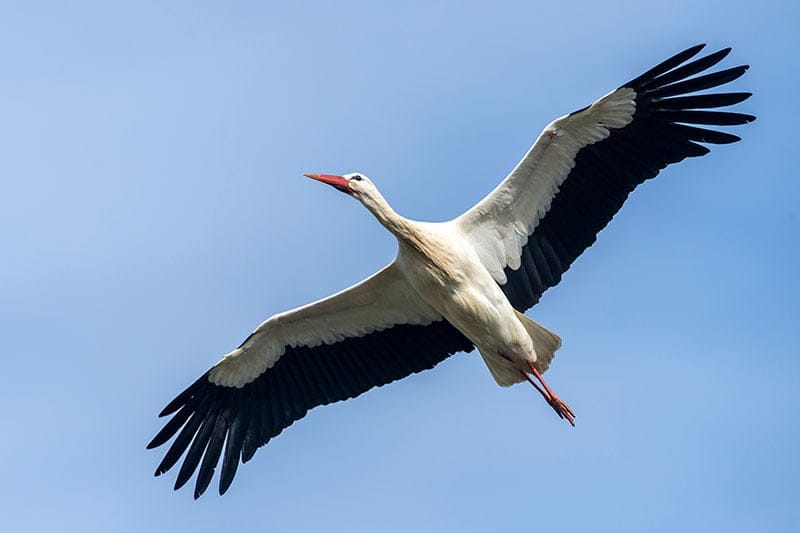
The white stork is one of the most extensively studied migratory birds, thanks to a large-scale ringing programme initiated in Germany and other parts of Europe during the early 20th century.
In late summer, white storks leave their European breeding grounds and migrate south to Africa. Rather than taking the shortest route across the Mediterranean Sea, they detour via the Levant. This is because thermals do not form over water, requiring the birds to expend more energy by flapping their wings.
During migration, flocks of white storks ascend on warm rising air, typically reaching altitudes of 1,200 to 1,500 metres. However, there is a record of a white stork soaring at an impressive 4,800 metres over Western Sudan.

One Response
What’s the fastest bird in the world