


Grey wagtails are resident across all of the UK except for the northern and western isles of Scotland. During breeding season and summer they are typically found in uplands near fast-flowing streams giving rise to their nickname ‘water wagtail’. However, due to the improved water quality of the UK’s rivers their range has expanded in recent decades and they now breed in most parts of the country.
In autumn and winter grey wagtails move to lowland areas including towns and cities and they can be found in gardens, on canal paths, sewage works, and Bird Spot’s urban rooftop. This short-distance seasonal movement is known as altitudinal migration.
Despite their wider range since 2015 grey wagtails have been included on the UK Red List due to their declining population numbers thought to be caused by harsh winters and loss of habitat.
It seems a shame that this handsome, colourful bird has been saddled with such a dull name and we understand why so many people assume they are yellow wagtails.
These charming illustrations from the Crossley ID Guide Britain and Ireland show not only the marked differences in the two species’ plumage but also the habitats in which they are most often found.
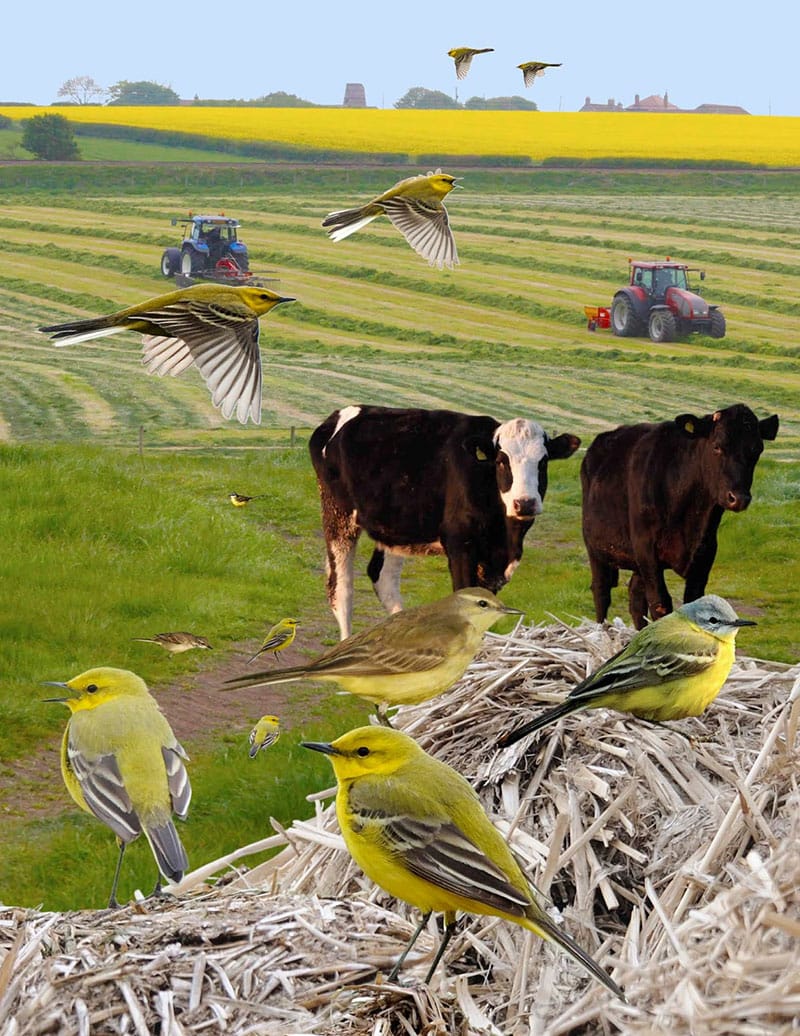
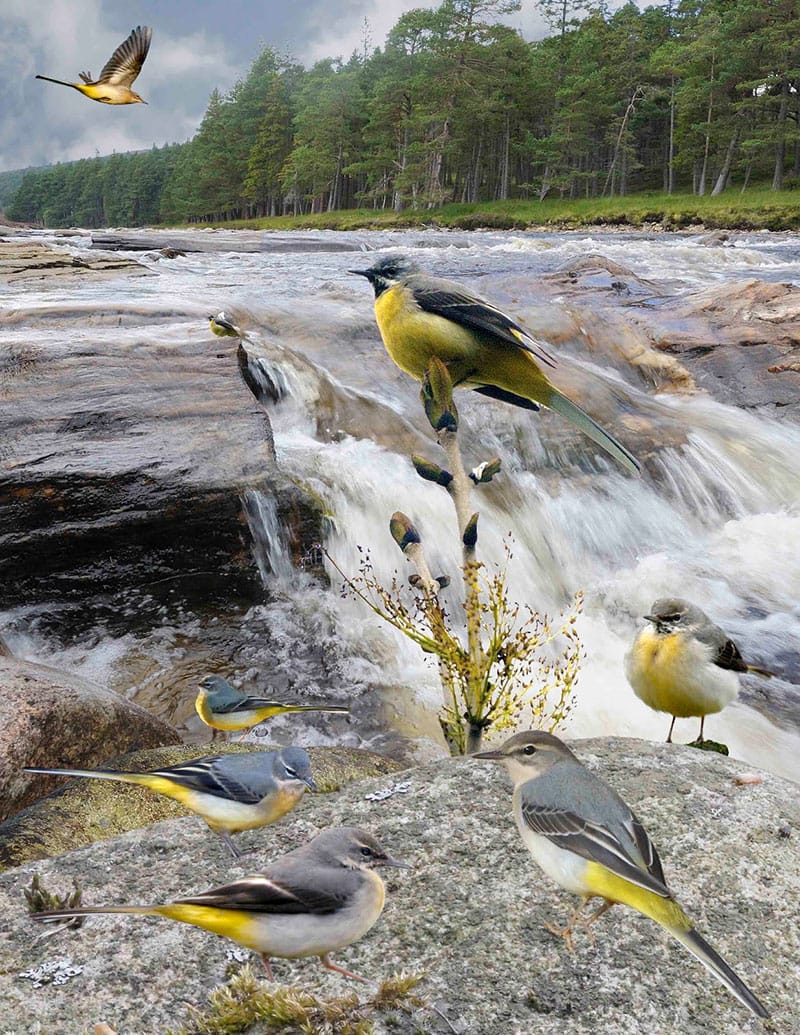
When compared side by side the difference between the two species in breeding plumage is clear. Yellow wagtails are yellow all over with bright yellow underparts and olive-yellow upperparts, whereas grey wagtails only have yellow-lemon plumage on their underparts.
However, confusion can arise out of breeding season when yellow wagtails of both sexes are duller and more grey. Juvenile yellow wagtails can also look similar to grey wagtails, and some juvenile females have no yellow colouring at all. In fact, of the 3 species of wagtail, including the pied wagtail, most commonly found in the UK and Ireland, only the grey wagtail shows some yellow all year round.
If the grey wagtail feels, and we apologise for anthropomorphising here, hard done by, then it should take heart from the fact that, along with its two cousins it has a plethora of more interesting nicknames to choose from.
Both grey and yellow wagtails are known as the ‘barley bird’ or the ‘oatseed bird’ due to their appearance on farmland coinciding with the sowing of these two types of grain.
As well as the aforementioned water wagtail, grey wagtails have a variety of nicknames due to their association with water. Common names in many rural areas for both the grey wagtail and pied wagtail are ‘Polly dishwasher’ and ‘Peggy dishwasher’. It is not known how these names came about but one theory suggests that these little birds could be spotted around village pumps or streams where women would go to wash clothes as well as pots and pans. The pied wagtail is also known as the Gypsy bird or Romani chiriclo, and although the origin of this name is unknown pied animals are often thought to be lucky in Romany tradition as they hold both dark and light in them simultaneously.
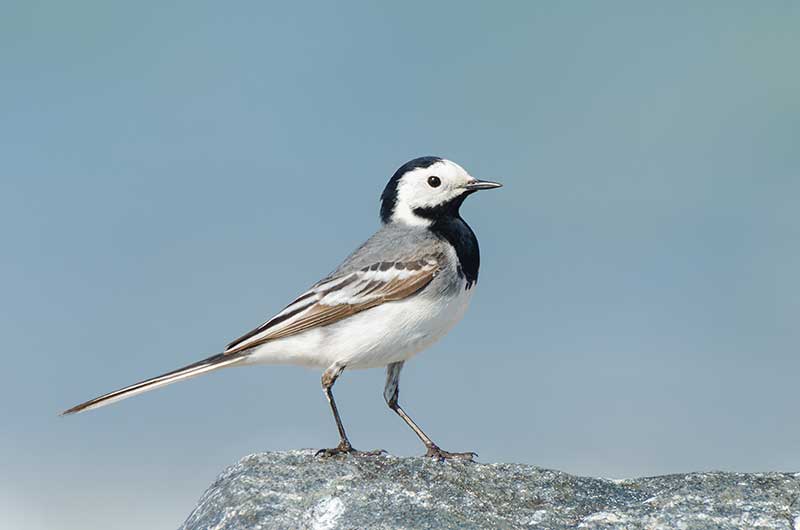
Romany mythology says that pied wagtails can bring good luck and that if you spot a wagtail then minutes later you will see a true born Romany. The connection is so strong that The Gypsy Lore Society, founded in 1888 to unite persons interested in the history and lore of Gypsies and rovers, adopted the wagtail as its emblem and its motto Oke romano chiriklo, dikasa e Kalen in the Welsh Romani language means ‘Behold a Wagtail and you shall see Gypsies’.
On a final note, while researching this piece we were absolutely delighted to come across this traditional Irish children’s song which likens a wagtail to a goblin.
Wee Mister Wagtail, hopping on a rock,
Daddy says your pretty tail is like a Goblin’s clock.
Wee Willie Wagtail, how I love to see,
Wee Willie Wagtail, wag his tail at me.
Wee Mister Wagtail, running by a pond,
Daddy says your pretty tail is like a Goblin’s wand.
Wee Willie Wagtail, how I love to see,
Wee Willie Wagtail, wag his tail at me.


