|
|
Scientists Count All The Birds In The World

Scientists Count All The Birds In The World

Flock Of House Sparrows

How many birds do you think populate the planet? If you tallied up all the birds that you encounter during your day, do you think you could estimate the total number around the world?

The last time scientists attempted to count the number of birds in the world was in 1997 when they arrived at a figure of anything between 200 billion and 400 billion.

But after completing one of the largest studies of data of its kind, a team from The University of New South Wales (UNSW) in Australia have recently estimated that there are only about 50 billion individual birds in the world – about 6 birds for every human.

Thankfully, the large gap isn’t due to a dramatic drop in the population of birds but is because the study from over 20 years ago extrapolated from small-scale estimates of density in which all bird species were considered equal.

This time around the scientists used a much more sophisticated technique and collected data from citizen science projects submitted to the eBird database between 2010 and 2019 to build a model that estimated global numbers.

Your next read

What Is The Most Common Bird In The World?

By taking the data from almost a billion bird sightings from 600,000 contributors they built an algorithm that considered each species’ ‘detectability’, which included factors such as their colour, size, whether they fly in flocks, or live close to cities.

To make sure everything was working as it should be, they cross-checked the results against 724 species of birds where population numbers were known from datasets produced by experts from Partners in Flight, the British Trust for Ornithology, and BirdLife International. They then extrapolated the data to 9,700 species, or 92% of all avian species in the world to come up with the figure of 50 billion. The remaining 8% of birds lacked available data and therefore were so rare that it’s unlikely they would have made a big impact on the overall number.

Just four species of birds are in what the researchers are calling “the billion club” – birds with a global population of over a billion. These are the house sparrow (1.6 billion), the European starling (1.3 billion), the ring-billed gull (1.2 billion), and the barn swallow (1.1 billion). Just missing out on an entry into the exclusive club are glaucous gulls (949 million) and alder flycatchers (896 million).

Interestingly, the red-billed quelea, which is often regarded as the most abundant bird on the planet, was estimated to have a population number of only 95 million.

But the team admitted that as with any study involving big data there may be biases. For example, eBird has far less data on birds found in the tropics than in less temperate regions. And bird watchers may be keener to record the more unusual species they have seen which means numbers logged for more common birds are underplayed.

eBird Dataset

Another example of a glitch in the data is that the model initially estimated that there were 500 living ivory-billed woodpeckers drumming their way around the southern United States, despite the species being declared “definitely or probably extinct” by the American Birding Association.

This was due to a couple of erroneous sightings included in the eBird database when it was downloaded which were later removed when the data was reviewed.

And the 50 billion number may be a conservative estimate. This is the midpoint or median estimate of the aggregated distribution of birds included in the study. If you take the mean estimate, the number would be much, much higher at 428 billion individual birds.

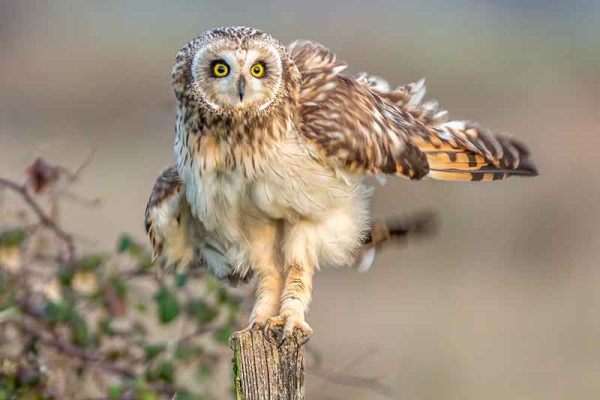
Although a few species dominate the numbers, the majority of birds are fairly rare with 1,180 (12%) birds included in the study having a population of fewer than 5,000. These include the Chinese crested tern, the black-breasted button quail, the noisy scrub-bird, and the invisible rail.

Species that have a population of under 2,500 are classified as endangered by the International Union of Conservation of Nature. However, Corey Callaghan a postdoctoral fellow at the UNSW, who led the research wasn’t too phased by the high number of birds with tiny populations.

He said, “One of the takeaways [of the study] is mother nature just loves rare species. It’s what some refer to as hyper dominance, which has been found in Amazonia tree flora and other plant groups. It’s not terribly surprising, but it’s good to have the data.”

Despite some of the uncertainty in the data, the research has excited the birding world. It provides a benchmark for other studies to build upon and it shows the important role citizen science can play in supporting conservation efforts.

Share your thoughts

Leave a Reply

Your email address will not be published. Required fields are marked *

More notes and news

Resplendent Quetzal
Bird Bucket List – 10 Iconic Birds
February 1, 2021
Capercaillies
Top 10 UK Bird Watching Holiday Destinations
January 1, 2023
All That Breathes
All That Breathes – Two Brothers On A Mission To Save The Black Kite
October 20, 2022
Manchester Blue Tit
Celebrating 10 Years Of The Manchester Blue Tit
August 15, 2021
Robin
National Robin Day – Help Save Our Garden Birds
December 17, 2019
Bird Photographer Of The Year 2020 Winners Announced
August 15, 2020

Save £30 o spring bird watching breaks with code SPRING30

Save £30 on spring bird watching breaks with the code SPRING30

Save £30 on spring bird watching breaks with the code SPRING30