Another club with a nickname that comes from the colour of its strip is Cardiff City. Despite being a Welsh team, Cardiff play in the English league as when it was established in 1899 there was no Welsh league. It joined the English Football League in 1920 and has remained there ever since, and is the only team from outside England to have won the FA Cup.
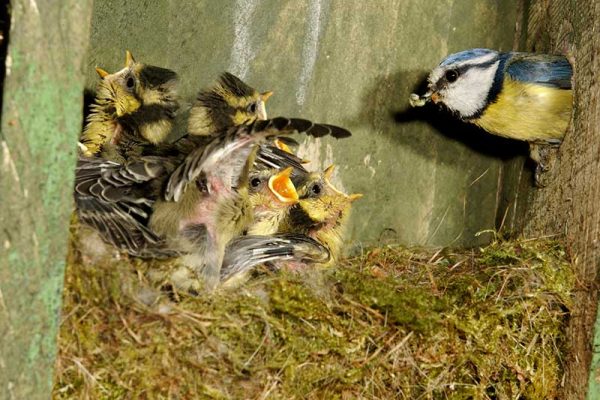
Cardiff play in blue and white and are also named after a bird with similarly coloured plumage, although not one you’re likely to see in the UK.

In 1911 a play for children written by the Belgian playwright, Maurice Maeterlinck, called The Blue Bird came to the New Theatre in Cardiff. It tells the story of a brother and sister who are sent on a journey to find the Blue Bird Of Happiness.
It’s a pretty dark tale and fairly heavy-handed with the metaphors, but after receiving rave reviews after its six-night run in Cardiff and Maeterlinck being awarded the Nobel Prize for Literature, an unknown Cardiff fan caught up in the hype decided to call the team The Blue Birds and the rest is history.

One bird that hasn’t been adopted as much as we thought it might is the eagle. Despite its history as a symbol of strength and power, we could only find one club named after the mighty Eagle. Crystal Palace, which was formed in 1905 and initially played their home games at the stadium situated inside the grounds of The Crystal Palace exhibition building, were originally nicknamed The Glaziers.
The nickname stuck until 1973 when Malcolm Allison, known as ‘Big Mal’ and one of football’s most flamboyant and charismatic managers notable for his trademark fedora and cigar, decided the name was too fragile and renamed them The Eagles after Portuguese club Benfica, who were the top team in Europe at the time. As part of his rebranding exercise, Allison also changed the club’s colours from claret and sky blue to cardinal red and blue which he borrowed from Barcelona.
And it was The Eagles nickname that in part inspired Brighton & Hove Albion to adopt the moniker The Seagulls. Although a dolphin had been depicted on the club’s crest since the 1940s, The Dolphins was only used as their official nickname for the 1974/75 season.
When Crystal Palace and Brighton appointed Terry Venables and Alan Mullery as their respective managers in 1976, so began a fierce rivalry as both teams attempted to lift themselves out of the Third Division. Despite the lack of geographical proximity, shortly after the meeting of the two teams became known as the M23 derby. And group of fans, frustrated by the shortcomings of chanting ‘Dolphins’ to try and drown out the ‘Eagles’ came up with the alternative ‘Seagulls’ over a few lashings of beer on Christmas Eve 1975.
It soon spread to the terraces much to the annoyance of Ron Pavey, then the commercial manager of Brighton, who had to get rid of all the club merchandise with Dolphins on it. However, the club has been known as The Seagulls ever since with the bird incorporated into the crest in 1977 – although many bird aficionados would argue that a seagull isn’t really a bird at all.
We’ve mentioned numerous clubs that are nicknamed after birds due to the colour of their strips, but the colours of Norwich City’s strip are derived from the bird the club is named after.
The Elizabethan Strangers, usually referred to as the Strangers, were a group of Flemish refugees who arrived in Norwich in the 1560s after fleeing the Inquisition in the Catholic Low Countries.
The refugees, who eventually made up a third of the population of Norwich, were employed in the textile industry, and brought with them canaries who sang to the weavers while they were working on their machines. Acting a little like ‘medieval radios’, the birds kept the workers company throughout the night, and their love of canary breeding soon caught on with the locals.

It was not long before there was a new breed, known as the Norwich canary, bred for how it looked rather than for its colour or song. Also known as the John Bull canary, it is a robust bird with a large head and thick neck. It has laid back personality and although not as lively as some of the smaller canary breeds, make good pets.
Over 300 years later in 1902, Norwich City football club was founded. Its original nickname was the Citizens but in 1907, the chairman John Pyke, who was a keen breeder of canaries, dubbed the team The Canaries, and changed the strip to the characteristic yellow and green. The club’s crest also depicts a canary standing on a football, which relates the club’s song ‘On The Ball, City’ which is the world’s oldest football song still sung today.
Good luck Gareth Southgate and the England team ⚽