Breeding birds: 1,000,000 pairs
Family: Crows, Jays, And Magpies
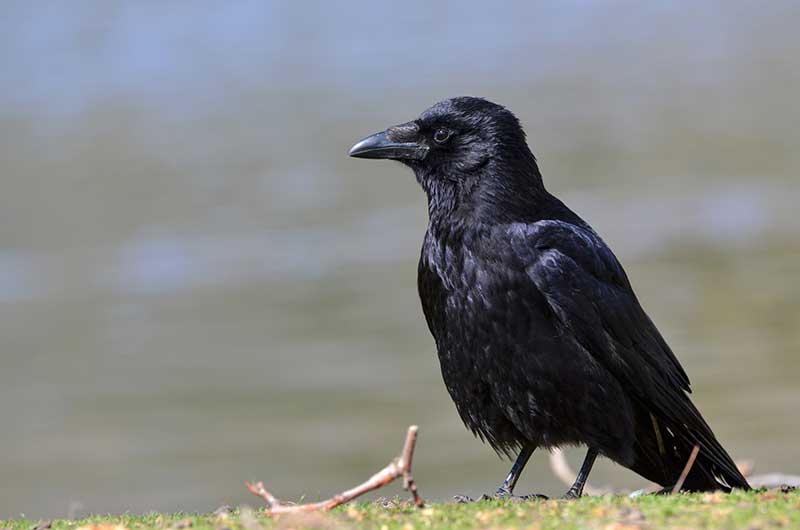
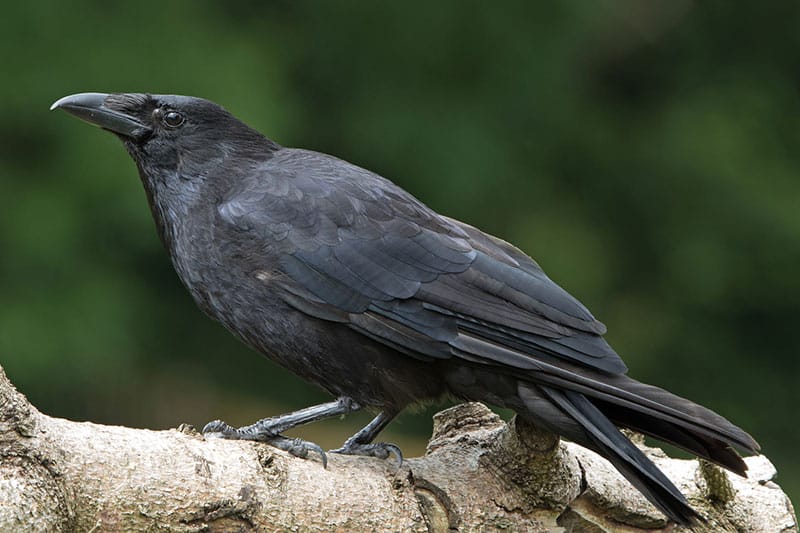
Carrion crows have black plumage all over with a green gloss on the head and wings, and a purple gloss on the rest of the upperparts. The underparts have faint scales on the breast, flanks, and belly, while the lower underparts are duller.
The stout bill is black, the eyes are dark brown, and the legs and feet are black. Both male and female are similar.
Juvenile carrion crows have duller, sooty black plumage with pale blue-grey eyes and a pale gape.
Try our interactive bird identifier
Carrion crows breed between late March and early June and produce one brood a season. They build their nests in the fork of a tree, on cliff edges, old buildings, electricity pylons, and sometimes on the ground. Both sexes build the nest which is large construction made from sticks and twigs, as well as other materials such as wire and small bones, strengthened with mud, and lined with hair, bark, wool, feathers, grass, and paper.
Carrion crows lay 4-7 smooth, glossy, blue-green eggs with dark brown markings which are incubated by the female for 18-20 days. The male feeds her while she is on the nest. Chicks are covered in grey down and are initially fed regurgitated food by the female. Later both parents feed them. They fledge at 28-35 days after hatching but depend on their parents for another few weeks. They are sexually mature at a year.
Carrion crows have a varied diet and will eat insects, worms, berries, birds’ eggs and chicks, small mammals, snakes, frogs and discarded food. They have even been known to eat human vomit.
They may occasionally catch birds in flight while larger birds may be taken from the ground with two or more crows hunting together.
Carrion crows are found all over the UK except for the north and west of Scotland and Northern Ireland.

Britain's Birds
RSPB Handbook Of British Birds
Collins Bird Guide
Crows are highly intelligent and have a sophisticated form of language including regional dialects.