Wintering birds: 43,000 birds
UK passage: 70,000 birds in spring
Family: Plovers And Lapwings
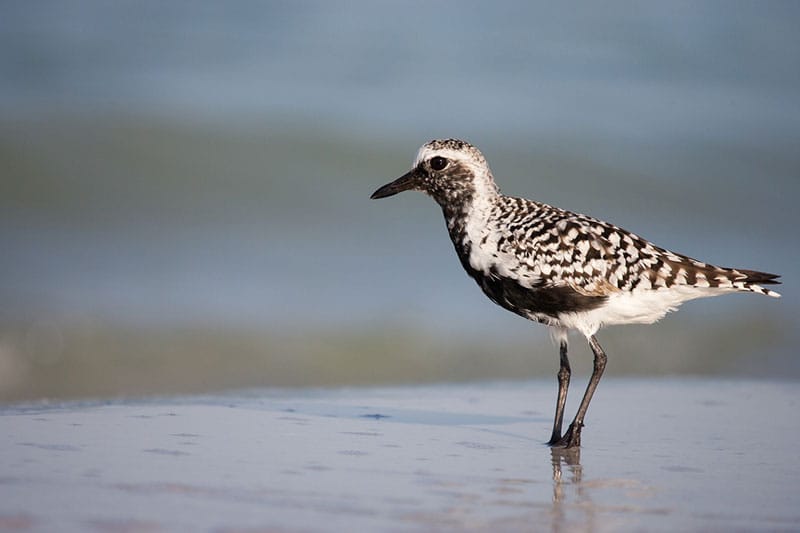
Adult male grey plovers in breeding plumage have spotted silver-white and grey upperparts and black underparts. They have a white band that extends from their foreheads, crowns, napes, and necks, down to their breasts. Their rumps and uppertail coverts are white and their tails are barred with grey spots.
Grey plovers have black flight feathers with a white wing bar across their primaries. Their lower bellies and undertail coverts are white and they have dark grey underwings.
They have black faces, chins and cheeks and white crowns spotted with black. Their foreheads and napes are white. Grey plovers have black bills, dark brown eyes, and black legs and feet.
Adult females in breeding plumage look similar but are more spotted white and duller.
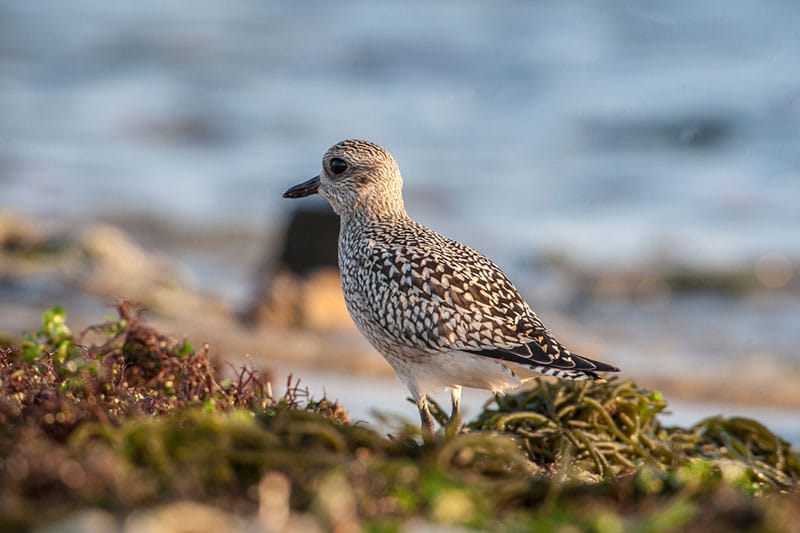
Outside breeding plumage grey plovers have speckled brown-grey upperparts with golden brown and white streaks. They lack the black underparts. Their faces are pale grey with white streaks above their eyes. Their chins and throats are white and their white breasts are streaked with grey.
Juvenile grey plovers resemble adults in non-breeding plumage with darker upperparts with yellow spots. They have streaks on their breasts and flanks.
Try our interactive bird identifier
Grey plovers breed between May and June. They are monogamous and solitary nesters. Females build the nest which is a scrape in the ground lined with pebbles, moss, and lichens.
Grey plovers lay 4 eggs which may be pink, green, or brown, with dark grey or purple markings. Both parents incubate the eggs for 26-27 days with the male doing most of the work. Chicks are reared by both parents for 2-3 weeks and they fledge at about 23 days.
Grey plovers eat mainly insects but will also take shellfish and earthworms and occasionally seeds and shoots.
Grey plovers can be found around the coast of the UK all year round. Peak numbers are seen between November and March and wintering birds leave in April and May.
Look out for them in muddy and sandy estuaries.
Britain's Birds
RSPB Handbook Of British Birds
Collins Bird Guide
In North America grey plovers are known as black-bellied plovers.