Breeding birds: 110,000 pairs
Wintering birds: 340,000
Family: Oystercatchers
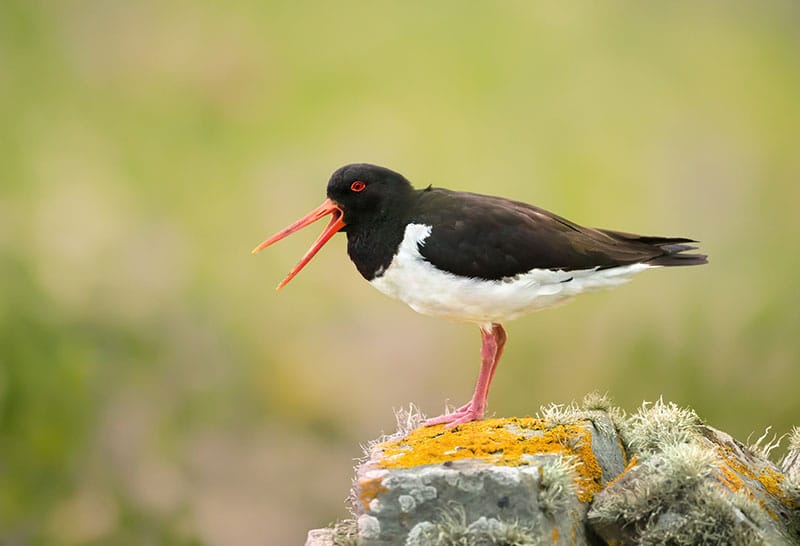
Male oystercatchers in breeding season have black and white plumage with black upper back, upper wings, head, neck and top of their breasts. They have broad white wing bars and white low back, rump and belly.
Oystercatchers have long bills which are bright orange-red with yellower tips. Their eyes are red with a red eye-ring and legs and feet are pink. Females look similar with slightly longer bills.
In winter adult oystercatchers have a white collar and the bill is duller. Juvenile oystercatchers resemble adults but with paler bill, legs and feet with buff feathers on their upperparts.
Try our interactive bird identifier
Oystercatchers’ nests are a scrape in the ground made by the male. It may be lined with shells, fragments of rocks or small mammal droppings.
Oystercatchers lay 2-5 camouflaged eggs which are incubated by both male and female for 24-35 days. Chicks are covered in down and are fed by both parents. They fledge around 33 days but will still rely on their parents for food for some time.
Despite their name, oystercatchers eat mainly mussels and cockles as well as limpets, whelks, crabs , worms and occasionally fish.
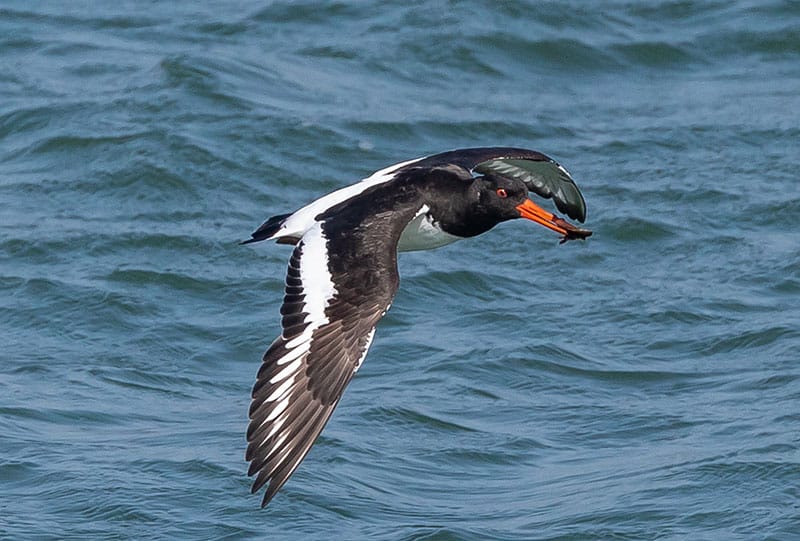
Oystercatchers can be seen all year round on almost all the coasts of the UK. In the winter you will see large numbers in estuaries.
Britain's Birds
RSPB Handbook Of British Birds
Collins Bird Guide
Oystercatchers use different techniques to break into shellfish which are inherited.