Breeding birds: 140,000 pairs
Wintering birds: 650,000 birds
Family: Plovers And Lapwings
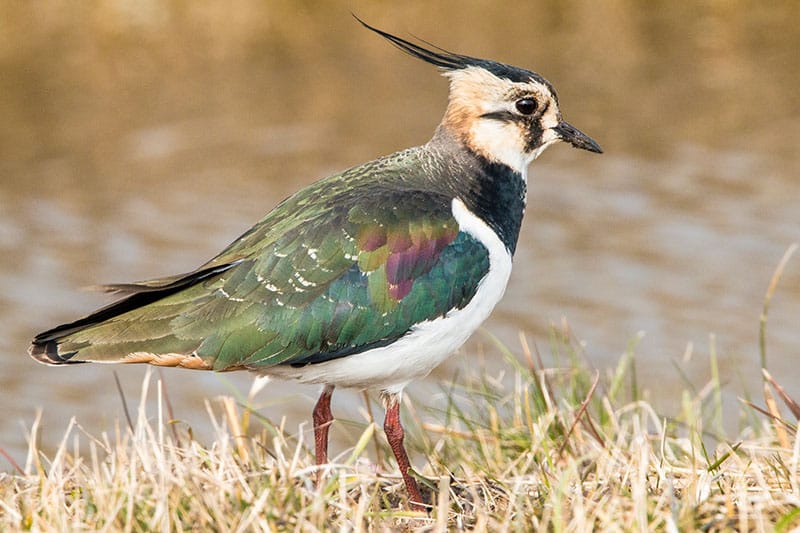
Adult male lapwings in breeding plumage have glossy green upperparts with a purple sheen on their scapulars. Their rumps are chestnut and they have white tips on their flight feathers. Their uppertails are white with a broad black band and narrow white terminal line.
Their underparts are white and they have black chins, throats, and breasts. They have chestnut undertail coverts and white underwing coverts with black flight feathers.
Lapwings have black foreheads, crowns, and crests and their faces are white with black markings around their eyes. They have black straight bills, dark brown eye and pink legs and feet.
Outside of breeding season male lapwings have buff tipped mantles and their heads are pale buff with black patches below their eyes. They have white chines, throats, and upper breasts and their black collars are narrower.
Female lapwings in breeding plumage have less marked heads than males and they have shorter crests. In non-breeding plumage they look similar to non-breeding males.
Juvenile lapwings are duller than the adults with shorter crests.
Try our interactive bird identifier
Lapwing breed from late March to early June. Their build their nests in areas of short grass. It is shallow scrape lined with plant matter such as stems and leaves.
Lapwings lay 4 brown eggs with black markings. Both parents incubate the eggs for 21-28 days. Chicks are able to walk and feed within a few hours and ready to fly when they are 5-6 weeks old.
Lapwings eat invertebrates such as worms, insects, beetles, ants, flies, moths, spiders, and snails.
Lapwings can be found across the UK all year round. They can be spotted on farmland and wetlands with short vegetation. In winter they flock on pastures and ploughed fields.
Britain's Birds
RSPB Handbook Of British Birds
Collins Bird Guide
“Plover’s eggs” were an expensive delicacy in Victorian Europe, The 1928 Protection of Lapwings Act restricted people taking their eggs for food because it had severely reduced populations.