Northumberland is the northernmost county in England. It has almost 100 km of coastline comprising cliffs, sandy beaches and mudflats as well as moorland, woodland and peat bogs inland.
Visit Northumberland National Park in spring to spot birds like whinchats and redstarts returning from warmer regions to breed. In the Cheviot Hills, you can find dippers, common sandpipers, and grey wagtails along the waterways, while the heather moorlands are home to black grouse, golden plovers, ring ouzels, and wheatears.
During winter, hundreds of migratory birds, including black-tailed godwits, whooper swans, greylag geese, goldeneyes, teals, wigeons, and tufted ducks, gather at Grindon and Greenlee Loughs near Hadrian’s Wall.
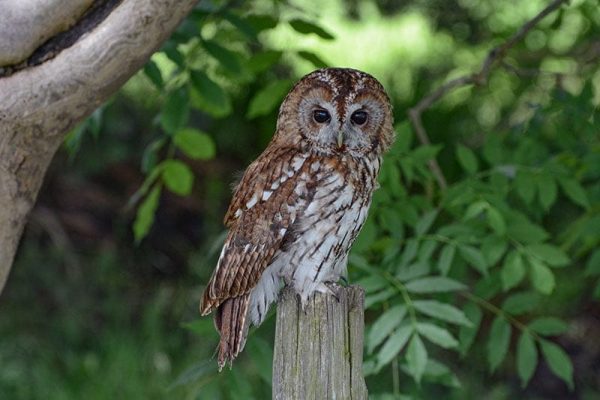
Kielder Forest, the largest man-made woodland in Europe, is home to a variety of woodland birds, including crossbills, siskins, green woodpeckers, and goshawks. The Kielder Forest Birds of Prey Centre houses over 60 birds, such as eagles, owls, hawks, vultures, and falcons, as well as a pair of great white pelicans. Visitors can enjoy hawk walks, photography courses, and daily flying demonstrations.
Kielder Water, the vast reservoir at the centre of the forest, is a stronghold for ospreys, successfully reintroduced to the area. From spring to autumn, visitors can observe these majestic birds fishing and raising their young through live webcams or at observation points. Keep an eye out too for whooper swans, goosanders, and goldeneyes. In the quieter creeks, you’ll find a thriving population of Mandarin ducks, making Kielder the best site in northern England to see them.
Check out these places to stay nearby
No trip to Northumberland is complete without visiting the Farne Islands. Hop on a boat from Seahouses and marvel at the incredible variety of birdlife, including fulmars, eiders, kittiwakes, sandwich terns, shags, guillemots, razorbills, and the ever-popular puffins.
About 30 km south of the Farne Islands lies Coquet Island, an RSPB reserve and a haven for birdwatchers, home to over 40,000 breeding seabirds. The island hosts one of the UK’s rarest breeding seabirds, the roseate tern, alongside thriving colonies of puffins. Its surrounding mudflats and sandbanks attract curlews, redshanks, eider ducks, fulmars, and oystercatchers.
While access to the island itself is restricted to RSPB wardens, boat trips from Amble Harbour operate year-round, depending on tides and weather conditions, offering excellent views of this wildlife sanctuary.
Once an open-cast coal mine, Druridge Pools is now a thriving wetland reserve managed by the Northumberland Wildlife Trust. It serves as an important wintering site for waterfowl such as wigeons, teals, gadwalls, shovelers, and goldeneyes. The wet meadows around the lakes provide habitat for snipes, redshanks, and curlews, while in summer, house martins and swallows can often be seen darting over the water, catching insects.
The nearby dunes are home to stonechats, twites, and meadow pipits, and the surrounding woodlands come alive in spring with the songs of chiffchaffs, whitethroats, and willow warblers.
Further north lies Budle Bay, part of the Lindisfarne National Nature Reserve, an important stop for wintering wildfowl and waders. At low tide, expansive mudflats are revealed, attracting a wide variety of birds. Species commonly spotted include pink-footed geese, brent geese, grey plovers, bar-tailed godwits, spotted redshanks, and purple sandpipers. Little egrets are also occasionally seen, and in winter, you might even catch a glimpse of a snow bunting.
Nearby Holy Island is another exceptional birdwatching destination and the only regular wintering site in the UK for the rare pale-bellied brent goose from Svalbard. Other notable waterfowl and waders include wigeons, teals, pintails, dunlins, and greylag geese. Birds of prey, such as kestrels and merlins, often perch on the dry stone walls to scout for prey.
Thanks to its location on the east coast, Holy Island is an excellent spot for observing migrating birds from the east. Large numbers of fieldfares and redwings pass through, along with rarer visitors like yellow-browed, dusky, and barred warblers.
The reserve is also home to eider ducks, locally known as Cuddy’s ducks. These birds are associated with Saint Cuthbert, who during his time as a hermit on the island grew