

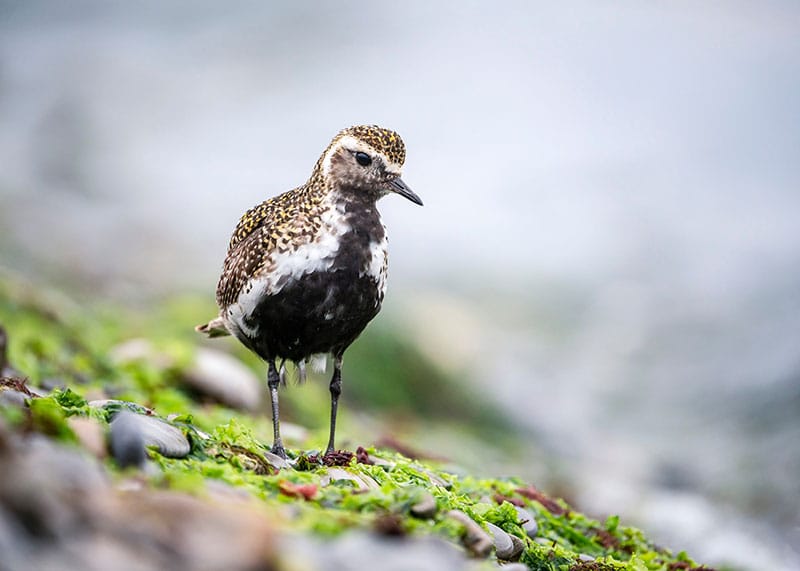
Comprising a brackish lagoon and freshwater pools, Cresswell Pond supports a vast number of waterfowl and waders all year round.
Monday | All day |
|---|---|
Tuesday | All day |
Wednesday | All day |
Thursday | All day |
Friday | All day |
Saturday | All day |
Sunday | All day |
Adults – free, but donations are welcome
Children – free, but donations are welcome
Cresswell Pond is an excellent site for wading birds, particularly during the spring and autumn migrations. Species such as black-tailed godwits, ruffs, redshanks, greenshanks, spotted redshanks, common and green sandpipers, and lapwings are commonly seen, while avocets have successfully bred here since 2011. Nearby fields often host curlews, golden plovers, and whimbrels.
Herons, cormorants, moorhens, and coots are resident on the ponds, joined in winter by large numbers of roosting waterfowl including pink-footed and greylag geese, wigeons, pochards, teals, long-tailed ducks, scaups, and whooper swans. Mediterranean and little gulls occasionally feed at the lagoon’s edge, along with spoonbills and great white egrets.
In the reed beds, keen-eyed visitors may spot the elusive water rail, as well as reed warblers, sedge warblers, and Cetti’s warblers. The willow trees often shelter firecrests, yellow-browed warblers, and tree sparrows. In spring, the call of the cuckoo is a welcome sign of the season. Yellowhammers, wheatears, and whinchats are also regularly recorded in the surrounding fields, while twites can be spotted on the dunes, and barn owls hunt at dusk.
The reserve is known for attracting rare species, with past sightings including long-billed dowitchers, white-rumped sandpipers, isabelline shrikes, and great reed warblers.
A spacious hide on the western side of the reserve offers excellent year-round views over the lagoon. It is open to the public and fitted with glass shutters to provide shelter on windy days, as the site is quite exposed.
A public footpath runs along the northern end of the reserve, with generally flat and even terrain. A boardwalk with a handrail and a wide latch gate leads to the hide, followed by two small stone steps down to an earth path.
Parking is available at the northern end of the reserve, on the coastal side of the road. Visitors should follow the path toward Blakemoor Farm; the reserve is accessed via the farm track. After heavy rain or during very high tides, the road may flood, with water levels reaching up to 30 cm, so exercise caution if attempting to drive through.
Please note, well-behaved dogs are welcome on the reserve, but must be kept on a lead at all times.


Jan
Feb
Mar
Apr
May
Jun
Jul
Aug
Sep
Oct
Nov
Dec
J
F
M
A
M
J
J
A
S
O
N
D
For seasonal opening times, further information about facilities, and any restrictions, please visit the site’s website for full details.


