Breeding birds: 38,000-59,000 pairs
Wintering birds: 420,000 birds
Family: Plovers And Lapwings
In breeding plumage adult male golden plovers have black upperparts spotted with gold and their upperwings have a narrow white wingbar. Their underparts are black and their underwings are white with some grey marks. They have white markings on their chin, throat, breast, and bellie.
Golden plovers have a conspicuous white band that extends from their forecrowns, down the sides of the neck and flanks, joining at the undertail coverts.
They have a black crown and hindneck spotted with gold and dark faces. Their eyes are dark brown and their legs and feet are dark grey with a green tinge.
Female golden plovers look similar but with less black and a paler head.
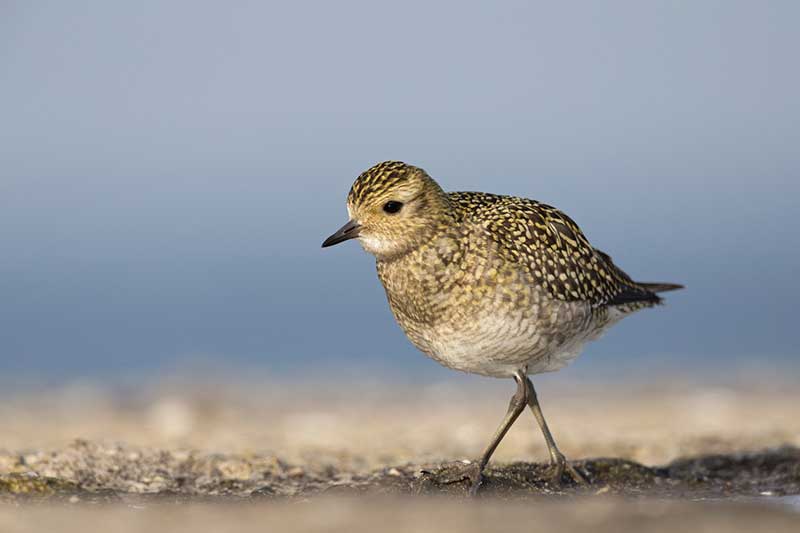
Out of breeding plumage adults have golden brown upperparts, face, and breast. They have no black on their underparts and their lower flanks and belly are white.
Juveniles resemble adults in winter plumage but they are slightly duller and paler.
Try our interactive bird identifier
Golden plovers are solitary nesters and they breed between late March and late July. The male builds the nest which is a shallow depression in the ground lined with moss, leaves, and stems.
Golden plovers lay 3-4 olive eggs with dark markings. Both parents incubate the eggs for 27-31 days. Chicks fledge at 34-42 days and are independent shortly after.
Golden plovers eat mainly invertebrates such as insects, spiders, earthworms, snails, and crustaceans. They will also eat plant material including berries, seeds, and grass.
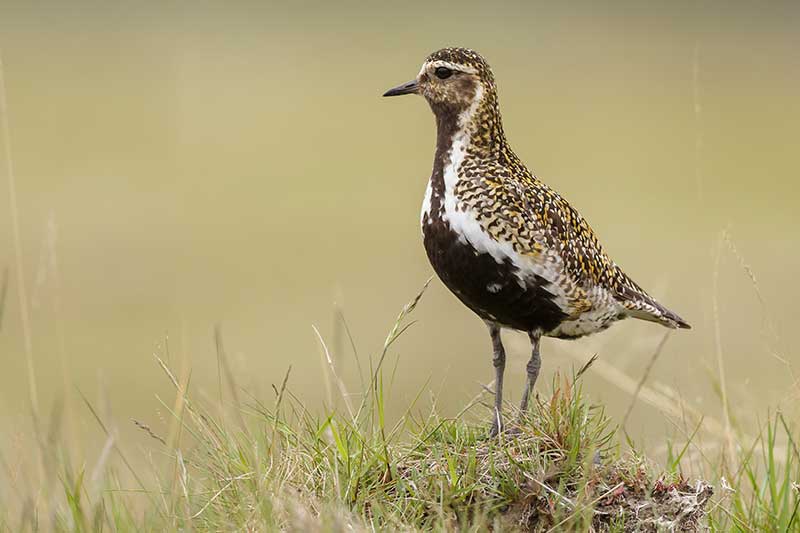
Golden plovers can be seen all year round in the UK. During the summer they can be found in the Highlands of Scotland. In winter they move to the rest of the UK to farmland where they form large flocks with lapwings.
Britain's Birds

RSPB Handbook Of British Birds

Collins Bird Guide
There are two other species of golden plover – the American golden plover, and the Pacific golden plover. Both birds are very rare visitors to the UK each year.