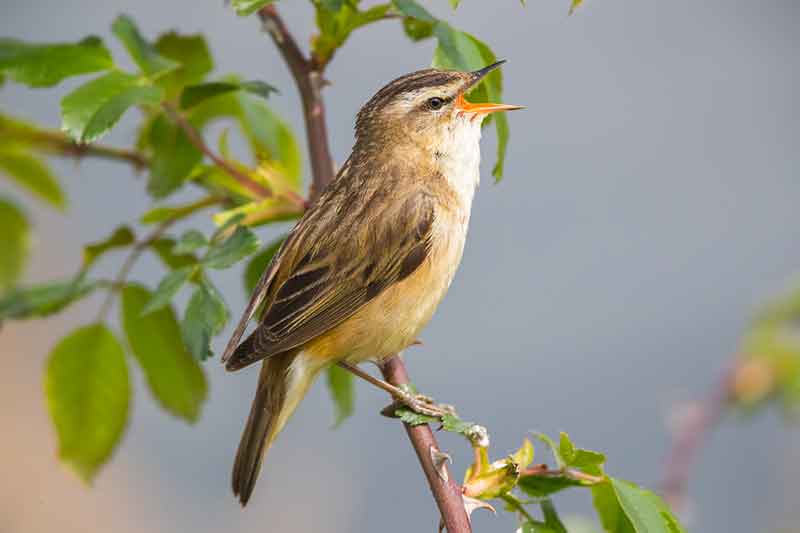
The dawn chorus is the natural symphony of birdsong that fills the air in the early hours of the morning, particularly during spring and summer. As the sun begins to rise, birds take turns singing to establish territories, attract mates, and communicate with one another. Each bird has its own distinctive call, from the rich, fluid notes of the blackbird to the high-pitched warble of the robin and the repetitive song of the chiffchaff.
The timing and intensity of the dawn chorus are influenced by factors such as daylight length, temperature, and breeding cycles. Typically, smaller birds with higher-pitched songs begin singing first, as their eyesight is less effective in low light, while larger species join in as visibility improves. It is most obvious in spring, as birds become more vocal in preparation for the breeding season.
International Dawn Chorus Day, held on the first Sunday of May each year, is a worldwide celebration of the phenomenon hitting its peak.
The event began in 1987 when wildlife enthusiast and environmental campaigner Chris Baines decided to mark his 40th birthday by inviting friends and family to join him at 4:30 am at Moseley Bog Nature Reserve to listen to the dawn chorus. For those who couldn’t attend, he suggested they take part by rising early and tuning in to the birdsong wherever they were.
Moseley Bog, managed by the Birmingham and Black Country Wildlife Trust, was the childhood playground of the author J.R.R. Tolkien, inspiring the “Old Forest” in The Hobbit and The Lord of the Rings.
Buoyed by the success of his television series and accompanying book The Wild Side of Town, as well as a tour with the folk-rock band Albion Band for the British Wildlife Appeal, Baines decided to expand the event. In 1988, he wrote to several key conservation figures, including David Attenborough, David Bellamy, and the Duke of Edinburgh. He also contacted the BBC, which picked up the story, with John Humphrys announcing on Radio 4’s Today programme: “The first Sunday in May is International Dawn Chorus Day.”
At the time, Baines was vice president of the Birmingham and Black Country Wildlife Trust, then known as the Urban Wildlife Trust, and the UK’s first urban wildlife trust, which played a key role in promoting the event. Thanks to their efforts, International Dawn Chorus Day has grown into the global celebration it is today.
You can hear the dawn chorus anywhere birds are present, but it is most prominent in woodlands, wetlands, and parks, where a variety of species combine to create a rich, layered melody. You don’t have to travel far to enjoy it – simply open your bedroom window and listen to the birds in your garden or nearby trees. However, for the most immersive experience, it’s worth venturing a little further.
Set your alarm for just before sunrise, ideally around 5 am in the UK, when the chorus reaches its peak. By 6:30 am, the intensity begins to fade, but even if you’re not an early riser, you’ll still hear plenty of birdsong a little later in the morning.
The best conditions for experiencing the dawn chorus are dry mornings with clear skies and light breezes. Birds are less likely to sing in the rain, preferring to stay tucked up in their roosts to conserve energy. If you’re heading out to listen, dress warmly, as pre-dawn temperatures can be chilly, even in May.
Visit your nearest park or nature reserve, let the sound of birdsong wash over you, and see if you can identify different species. You might also consider joining a guided event with the RSPB or The Wildlife Trusts.
If you’re more of a night owl than an early bird, many species also sing as dusk falls. While the evening chorus isn’t as dramatic as the dawn symphony, it still offers a beautiful listening experience, more like a chamber ensemble than a full orchestra. Some birds, such as blue tits and sparrows, are particularly vocal at dusk, while robins, blackbirds, song thrushes, and dunnocks can also be heard. More unusual species, including woodcocks, grasshopper warblers, long-eared owls, nightjars, and corncrakes, add their voices to the twilight chorus.