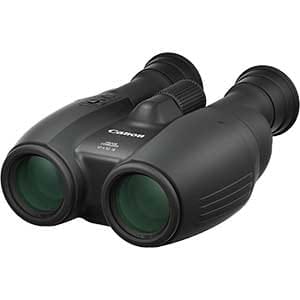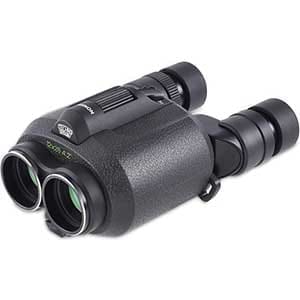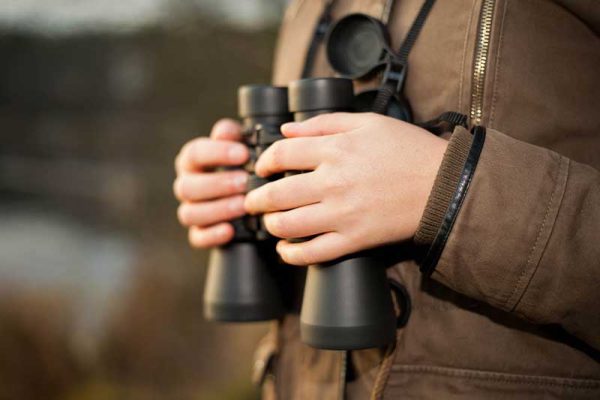
Bird watchers know the importance of clear, stable views when observing their feathered subjects, especially when tracking birds in motion or viewing from a distance. Image-stabilising (IS) binoculars have revolutionised the field by reducing shakiness caused by hand movements, making them invaluable in certain scenarios. But are they the right choice for every bird watcher? This guide explores how they work, their advantages and disadvantages, and when they might be worth the investment.
Image-stabilising binoculars use advanced technology to counteract vibrations and hand movements, providing a steady view. There are two main types of IS systems:
Passive systems rely on internal gyroscopes to detect motion and adjust the internal prisms or lenses to counteract the movement. As you move your hands, the gyroscopes sense the direction and keep the view stable by shifting the optics accordingly. These systems are purely mechanical and don’t rely on batteries, making them reliable in the field.
Active systems use electronic sensors to detect movement and employ small motors to adjust the lenses or prisms. These systems are powered by batteries and often offer finer adjustments, resulting in extremely smooth and stable images. However, they depend on battery life and can be more expensive due to the additional electronics.
While IS binoculars aren’t essential for all bird watchers, they excel in specific scenarios:
For bird watchers who use binoculars with magnifications above 10x, stabilisation becomes critical. At these magnifications, even minor movements – such as breathing, adjusting your grip, or the natural tremor of your hands – can cause noticeable shakiness, making it difficult to focus on small or distant birds. IS binoculars stabilise the view internally, allowing you to enjoy a clear and steady image without the hassle of setting up a tripod or monopod.
Tracking birds in flight can be challenging with traditional binoculars. IS binoculars compensate for both the bird’s movement and your own hand movements, providing a smooth and steady view. This makes it easier to follow fast-flying species, maintain focus, and observe details like wingbeats or hunting behaviour.
Early mornings and late evenings are prime bird watching times, but they also present challenges due to reduced light levels. IS binoculars enhance image clarity and brightness in these conditions by keeping the image steady, even at high magnifications. A stable view allows your eyes to make the most of the available light, revealing subtle details like plumage textures or markings that might otherwise be blurred.
Long bird watching sessions can be tiring, especially when your hands struggle to keep the binoculars steady for extended periods. IS binoculars reduce this physical strain by stabilising the image, allowing your eyes and hands to relax. This is particularly beneficial for older birdwatchers or those with shaky hands, making extended viewing more comfortable and enjoyable.
When you’re bird watching for hours, the constant effort of trying to steady your binoculars can lead to significant eye strain and fatigue. Image-stabilising (IS) binoculars reduce this issue by delivering a steady image, even with unsteady hands or movement caused by wind or fatigue.
IS binoculars are incredibly user-friendly, even for beginners. The stabilisation mechanism works automatically or at the touch of a button, allowing you to focus on enjoying the experience rather than fiddling with settings or external equipment. This “point and look” simplicity means you can quickly lock onto a bird, especially in dynamic environments where birds may appear and disappear rapidly. Unlike traditional binoculars that may require a tripod or other support, IS models simplify the process, making them ideal for spontaneous or fast-paced bird watching.
The stabilisation technology in IS binoculars not only prevents shaky images but also enhances overall image clarity and sharpness. A stable view allows you to fully appreciate fine details, such as intricate feather patterns, subtle colour variations, and even small behavioural cues like beak movements. The steadiness also improves brightness and contrast, particularly in low-light conditions like early morning or late evening, when birds are most active.
Bird watching often involves tracking fast-moving species, and the stabilisation in IS binoculars helps you keep up with these movements by maintaining a smooth, steady image as you follow the action. This is especially valuable for bird watchers who enjoy observing birds in flight or those who move across the ground quickly.
High-magnification binoculars (above 10x) often require a tripod to stabilise the image, as even the smallest hand movements can cause noticeable shaking. IS binoculars eliminate this need by stabilising the view internally, freeing you from the hassle of carrying and setting up additional equipment, ideal for bird watchers on the move.
The advanced technology used in IS binoculars, including gyroscopes, sensors, and stabilisation systems, significantly increases their production cost. As a result, IS binoculars are priced higher than standard models, often starting at several hundred pounds and reaching into the thousands for premium options. For budget-conscious bird watchers, this hefty price tag can be a major deterrent. While they offer exceptional features, the investment might not be justifiable for casual users or those who primarily observe birds at lower magnifications, where stability is less of an issue.
IS binoculars tend to be bulkier and heavier than their non-stabilised counterparts due to the internal components required for stabilisation, such as gyroscopes, motors, and electronics. This extra weight can make them less comfortable to hold for long bird watching sessions, especially if you’re trekking or covering large areas. For bird watchers who value portability and lightweight gear, the added heft may be a significant drawback. While some newer models have improved in this regard, IS binoculars still tend to weigh more than standard designs.
Most IS binoculars rely on batteries to power their stabilisation systems, introducing a level of dependency on an external power source. Batteries may need frequent replacement, especially if you’re using the stabilisation function extensively. For bird watchers in remote locations or on multi-day outings, running out of battery power can render the stabilisation feature useless. Some models use specialised batteries that may not be readily available, creating further inconvenience in the field.
Not all IS binoculars are fully waterproof or fog-proof, as their complex internal mechanisms can be more challenging to seal against moisture and humidity. For bird watchers who venture into wetlands, forests, or coastal areas, this lack of full waterproofing can be a significant limitation. Exposure to rain, humidity, or submersion risks could compromise the binoculars’ functionality or lead to long-term damage. Some manufacturers do offer waterproof IS models, but these often come at an even higher price point.
Some IS binocular models may have a slight delay when activating their stabilisation systems. This means that when you point the binoculars at a bird, especially one in motion, the image might not stabilise instantly. For bird watchers trying to capture fleeting moments, such as a bird darting through the sky or a rare behaviour, this delay could result in missing the sighting. While higher-end models tend to minimise this lag, it remains a potential drawback for some users.
IS binoculars have more intricate internal components than traditional binoculars, including moving parts and electronic circuits. This complexity can increase the likelihood of malfunctions or the need for maintenance over time. Regular use in rugged environments may further exacerbate wear and tear. Repairs can be costly and require specialised servicing, which isn’t always readily available. Bird watchers accustomed to the durability of standard binoculars may find this added maintenance a frustrating trade-off for the stabilisation benefits.
IS binoculars typically offer magnifications ranging from 8x to 16x. Most bird watchers prefer magnifications between 8x and 12x because they provide a good balance of stability, field of view, and image detail. Higher magnifications, such as 15x or 16x, benefit the most from IS technology as they are particularly prone to shakiness. However, these may sacrifice some field of view, which can be a drawback for bird watchers tracking fast-moving birds.
Image-stabilising binoculars are a game-changer for bird watchers who prioritise stability and clarity, especially when using high magnifications or observing in challenging conditions. While they come with a higher price tag and some drawbacks, their ability to provide steady, high-quality images without a tripod makes them a worthwhile investment for many.
This page contains affiliate links. For more information please see our disclosure here.