In birds, the collarbones merge into a single structure called the furcula, or wishbone, while many bones in the wings and toes are also fused. Some lower back vertebrae combine into a single structure, which is then fused to the pelvic girdle, further reinforcing the skeleton, and providing support for the tail feathers which aid in flight and balance.
Neck vertebrae
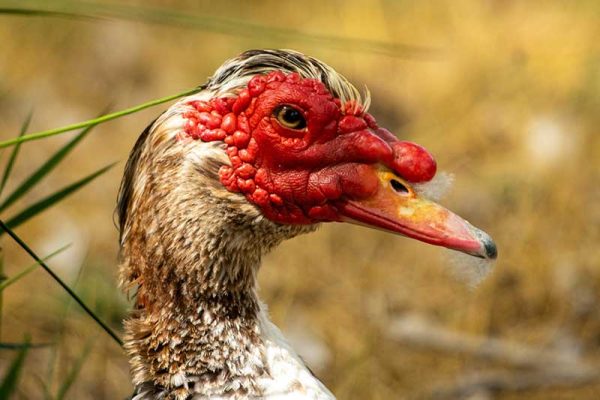
One of the biggest differences between birds and other tetrapods (animals with a backbone that have four limbs) is the number of neck bones. Most birds have relatively long necks, though feathers often conceal their true length. Even birds that appear to have short necks, such as owls, typically have about three times more neck vertebrae than humans. In long-necked birds such as
geese and swans, the number can of vertebrae be as high as 25.A long neck provides flexibility, helps birds focus on objects at different distances despite their fixed eye position, and aids in stability during rapid movements. It also plays an important role in
head-bobbing behaviour seen in birds like pigeons, chickens, and cranes, allowing them to keep their vision steady as they walk.
Keeled sternum
In addition to their fused collarbone, birds have another distinctive skeletal feature: a keel on the sternum (breastbone). This long, flat ridge of bone runs perpendicular to the ribs and serves as an anchor for the powerful pectoral muscles that drive the wings, providing the strong leverage needed for flight. The keel is particularly pronounced in expert fliers like swifts and hummingbirds, but is entirely absent in some large flightless birds such as ostriches, emus, cassowaries, and rheas.Penguins have a well-developed keel, but instead of aiding in flight, it powers their swimming. Their wings are too small in proportion to their bodies to generate enough lift for flight – flapping fast enough to take off would simply not be possible.Historically, the presence of a keel was used to classify birds into two groups: Carinatae (from the Latin
carina, meaning “keel of a ship”) and Ratites (from
ratis, meaning “raft,” referring to the flatness of their sternum). However, as scientific understanding evolved, researchers discovered that some flightless birds, such as the kakapo and the extinct dodo, descended from flying ancestors that originally had a keel. Over time, as these birds lost the need to fly, their keel gradually disappeared.
Lack of teeth
Another way that birds differ from the other tetrapods is the
lack of teeth. Bone at 1.6 g per cubic centimetre is already much heavier than muscle at 1.06 g per cubic centimetre, but tooth enamel is even denser at 2.7 g per cubic centimetre. Getting rid of teeth was a way for birds to make a significant weight saving. Birds also lack a true jaw and instead have a beak.