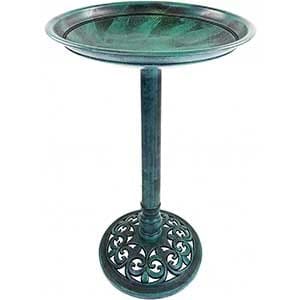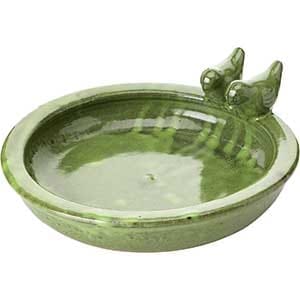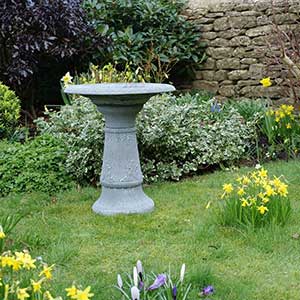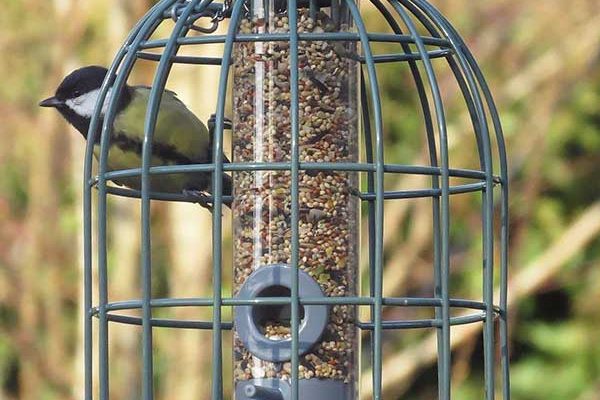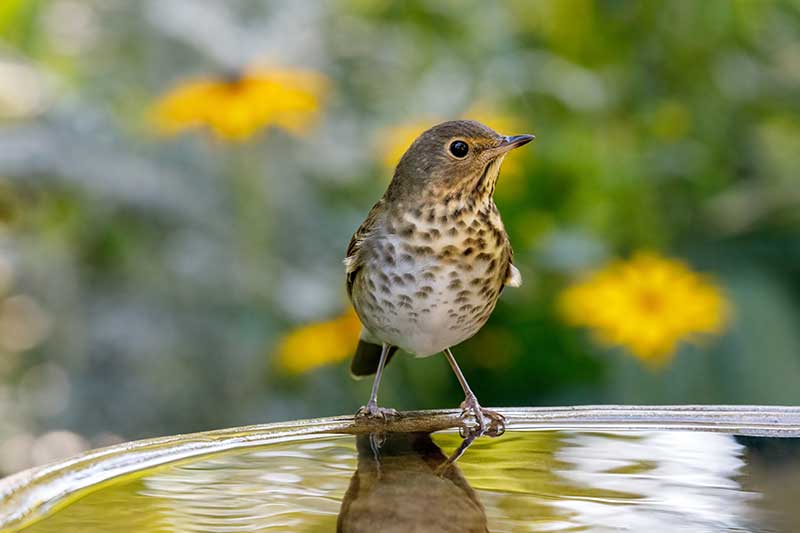
A fresh supply of water is vital for birds all year round, and no bird-friendly garden is complete without a bird bath. Birds use bird baths for drinking, bathing, and cooling down, but to attract a variety of species and ensure their safety, it’s essential to place your bird bath in a suitable location.
A poorly positioned bird bath can deter birds or even put them at risk. While you’ll want to enjoy watching them, their safety and comfort should always take precedence.
Avoid placing your bird bath in direct sunlight, as this can cause the water to evaporate quickly, promote algae and bacteria growth, and make the water uncomfortably warm. Instead, a shady, sheltered spot is ideal. Some sunlight on cooler days can help prevent the water from freezing. If you use a solar-powered bird bath with a fountain, choose one with a separate solar panel so you can keep the bath in the shade while the panel stays in the sun.
When birds drink or bathe, they’re often preoccupied and vulnerable to predators. Avoid placing your bird bath near thick shrubbery where predators like cats can hide. Ideally, the bath should be near a tree or bush with branches that provide birds an easy escape route if they feel threatened.
For added safety, you can surround the base of your bird bath with clippings from thorny hedges to further deter predators.
Place your bird bath in a quiet area, away from busy pathways or areas with heavy foot traffic. Birds may become spooked by movement and noise, causing them to avoid the bath. Likewise, avoid placing the bath near noisy equipment such as air conditioning units or wind chimes. Birds prefer tranquil environments where they feel less threatened.
Birds are unlikely to use a bird bath located too close to feeders, which is why combining a bird table and bath is not recommended. Birds can be messy eaters, and discarded seeds and husks can quickly fill your bird bath, leading to mould and disease. Similarly, a bath positioned under a tree or bush that sheds leaves, flowers, or fruit may soon become clogged with debris and droppings.
Place your bird bath on flat ground to prevent it from toppling, especially if you have children or pets. If there’s a risk of it falling over, consider anchoring it with pegs or sandbags. Think about the potential need to move your bird bath depending on the season or weather. Choose a model that’s easy to move, but not so lightweight that it could blow over in strong winds.
Birds can become disoriented by reflections in windows or mirrors. If placing the bird bath near your home, make sure it’s far enough from reflective surfaces or that you’ve taken steps to minimise glare. Position the bird bath so you can easily see it from a window, but not so close that birds may accidentally fly into glass. To reduce reflections and prevent collisions, use blinds, curtains, decals, or window accessories like sun catchers or wind chimes.
Ensure your bird bath is in an area with good drainage. Avoid placing it directly on grass or soft soil that tends to get waterlogged, as this can create muddy surroundings.
Regularly clean your bird bath to prevent the build-up of algae, bacteria, and debris. During dry periods, make sure the bath is topped up. For convenience, place it near a hose or tap to make refilling easier. Make sure the bath is in a location that allows easy access for cleaning and refilling, and avoid tight corners or spots that become muddy after rainfall. When emptying dirty water, pour it onto resilient areas like grass, rather than delicate plants.
If birds aren’t using your bird bath, it may simply take time for them to discover it, particularly if other water sources are nearby. However, if there’s still no activity after a while, try the following:
Move the bath: Relocate it to a different spot that feels safer or more inviting for birds.
Add motion: A fountain or sprinkler can attract birds by mimicking the sound of running or splashing water.
Give it a clean: Dirty water will deter birds, so regular maintenance is key.
The ideal location for your bird bath combines safety, comfort, and convenience. Choose a spot with dappled shade, near cover but not too close to predators, and easily accessible for cleaning and refilling. This will provide birds with a reliable water source they’ll return to time and again.
This page contains affiliate links. For more information please see our disclosure here.