Bird baths are more than just decorative garden features; they play a vital role in supporting bird populations by providing a reliable source of clean water. Birds use bird baths for a variety of reasons, ranging from essential feather maintenance to socialising with other birds.
Water is essential for birds’ survival. Unlike mammals, birds lose water quickly through respiration and droppings, making regular hydration critical. A bird bath provides a reliable source of clean drinking water, especially during hot summers when natural water sources dry up or in winter when ponds and puddles freeze. Without sufficient water, birds risk dehydration, which can lead to reduced energy levels and even death.
Feathers are crucial for a bird’s survival, acting as insulation, waterproofing, and an essential tool for flight. Bathing helps birds maintain their feathers by removing dirt, dust, and debris, which can impair their efficiency. After bathing, birds engage in preening, a process where they realign their feathers and apply oils from their uropygial gland to ensure they remain in top condition.
A clean bird bath is essential for this process, as dirty or stagnant water can actually worsen feather conditions, promoting bacteria or fungi that can harm the birds.
In warmer months, birds use bird baths to regulate their body temperature. Unlike mammals, birds do not sweat. Instead, they lose heat through their respiratory system and by bathing. Splashing in cool water helps birds lower their body temperature, especially during heatwaves when natural water sources may dry up.
Birds are often host to parasites like mites, fleas, and ticks, which can cause irritation and health problems. Bathing in water helps dislodge these pests and wash them away. A bird bath serves as a safe, reliable way for birds to stay free from infestations, which is critical for their overall health and survival.
Moulting is the process where birds shed old, worn feathers and grow new ones. This happens annually for most species and is an energy-intensive and vulnerable time. Bathing helps ease the discomfort caused by moulting and keeps the new feathers clean as they grow. A bird bath can also help soften keratin sheaths around emerging feathers, making it easier for birds to preen and complete the moulting process.
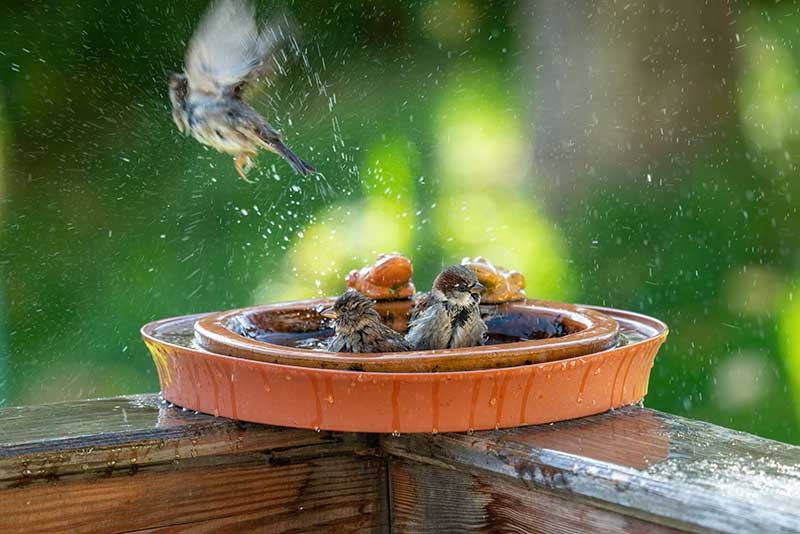
Bird baths often become hubs of activity, especially in the morning and late afternoon when birds are most active. Many species, such as starlings and sparrows, enjoy bathing in groups, making bird baths an important social gathering point. Social interactions around the bird bath can include courtship displays, bonding between mates, or establishing dominance within a flock. Observing these behaviours can be fascinating for birdwatchers.
Natural water sources such as puddles, streams, or ponds can become contaminated with pollutants, bacteria, or algae, making them unsafe for birds. A well-maintained bird bath provides a clean, reliable alternative, ensuring birds have access to safe drinking and bathing water.
In winter, natural water sources may freeze, making a bird bath an essential lifeline. Regularly breaking the ice on your bird bath or adding warm water ensures that birds have access to hydration during harsh conditions.
To support birds year-round, it’s important to maintain your bird bath properly:
Keep it clean: Rinse the bath daily and scrub it weekly to remove algae and bacteria. Avoid using harsh chemicals that may harm birds.
Provide shallow water: Most birds prefer a depth of 2–3 inches, so choose a shallow bath or add stones for perching.
Prevent freezing: During winter, add warm water or float a small ball to minimise ice formation. Never use antifreeze or salt, as they are toxic to birds.
Choose a safe location: Place your bird bath in a quiet, sheltered spot with some nearby cover for birds to retreat to if predators appear.
Bird baths play a vital role in birds’ daily lives by supporting their physical health, hygiene, and social needs. From aiding feather maintenance to helping with pest control and providing a clean, year-round water source, bird baths are an invaluable resource. By maintaining a bird bath in your garden, you’re not only helping local bird populations but also creating a vibrant and fascinating space to observe your feathered friends
This page contains affiliate links. For more information please see our disclosure here.