Breeding birds: 1,700,000 pairs
Family: Finches, Euphonias, And Allies
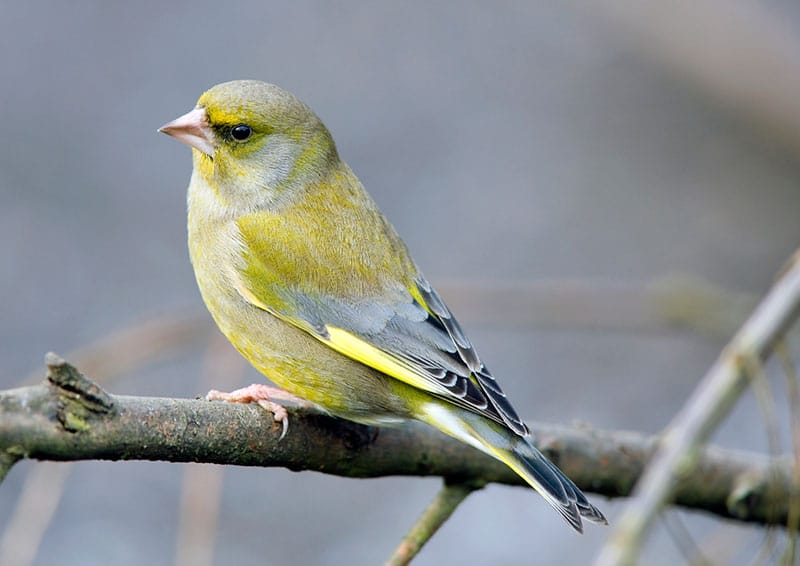
Greenfinches are stocky birds with a plump body. Adult males in breeding plumage are olive-green with yellow on the upperparts and darker upperwings. The flight feathers are grey with bright yellow edges and a conspicuous yellow patch. The tail is grey with a yellow patch at the base. The underparts are yellowy-green.
Male greenfinches have olive-green heads and a horn-coloured conical-shaped bill. Their eyes are dark brown, and their legs and feet are pink.
In winter plumage adult male greenfinches are duller with a pale grey patch on the head and a pale grey collar on the neck.
Adult female greenfinches are duller than males with less conspicuous wing patches. They have a slight green or yellow tint on the belly.
Juveniles look similar to adult females but are greyer with heavier streaking. They have pale yellow edges on the tail feathers.
Try our interactive bird identifier
Greenfinches are mostly solitary nesters but will sometime nest in small colonies with each pair defending its territory. They build their nests in vegetation such as small shrubs and trees, or plants climbing against walls. The nest is made from dried grasses and moss lined with plant fibres, feathers, and wool.
Greenfinches lay 4-5 glossy pale blue or creamy white eggs with reddish spots. The female incubates the eggs for 13-14 days. Chicks are fed by both parents and leave the nest 13 days later and fledge about 18 days after hatching.
Greenfinches eat mainly sunflower seeds but during breeding season will also eat other seeds, buds, berries, and insects.
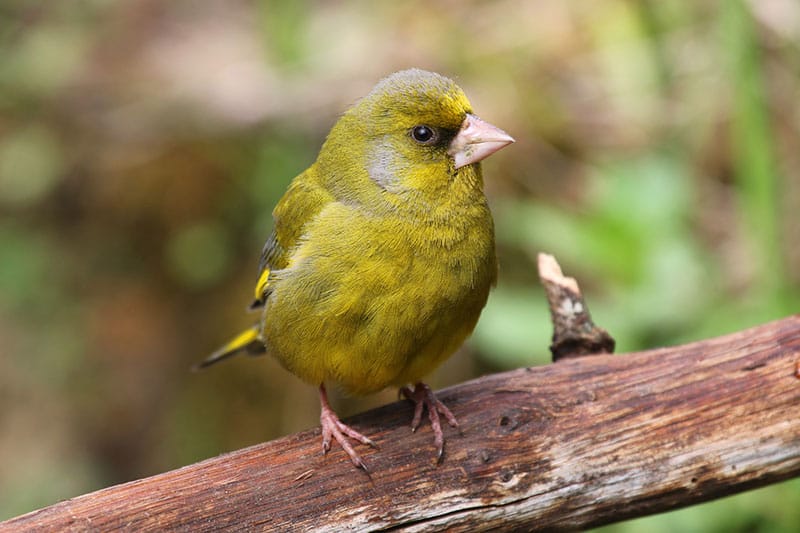
Greenfinches are found all across the UK except upland areas without trees and bushes. They can be seen in the countryside in woods and hedges as well as on farmland, parks, and gardens.
Britain's Birds
RSPB Handbook Of British Birds
Collins Bird Guide
Although some greenfinches will travel distances of up to 200 km during migration, most greenfinches in the UK are sedentary, only moving about 20 km from their place of birth.