Short-eared owls and long-eared owls are both medium-sized species, similar in size and shape to barn owls but with noticeably longer wings.
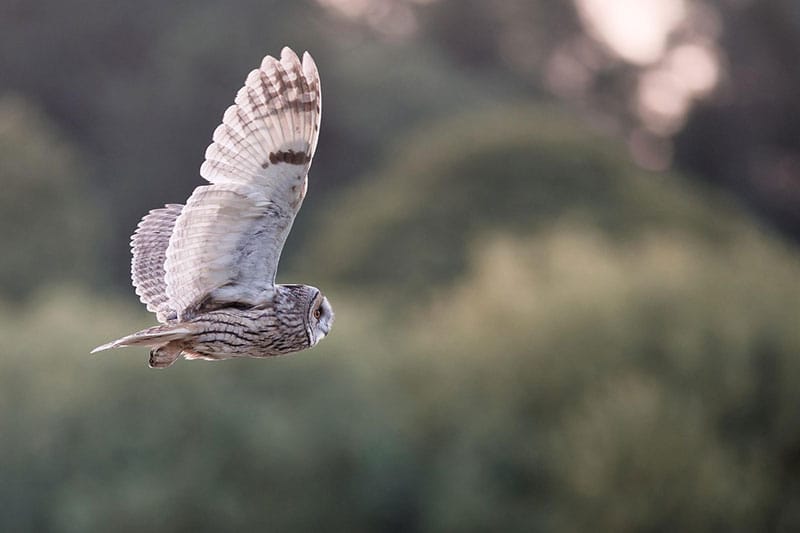
While perched, they show several distinctive features that aid identification. However, in flight, particularly in low light, it can be more difficult to tell them apart.
Both species breed only in small numbers, but sightings become more likely in winter, when migrants arrive later in the year.
Neither species is particularly vocal. During the breeding season, male short-eared owls may be heard giving a series of rapid hoots. Long-eared owls, by contrast, begin hooting earlier in the year with a clear, deep call that is repeated at a steady pace.
Short-eared owl

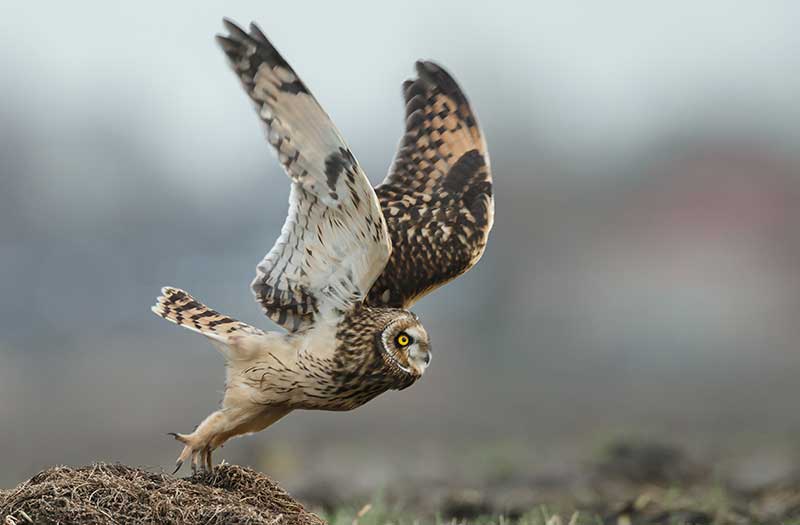
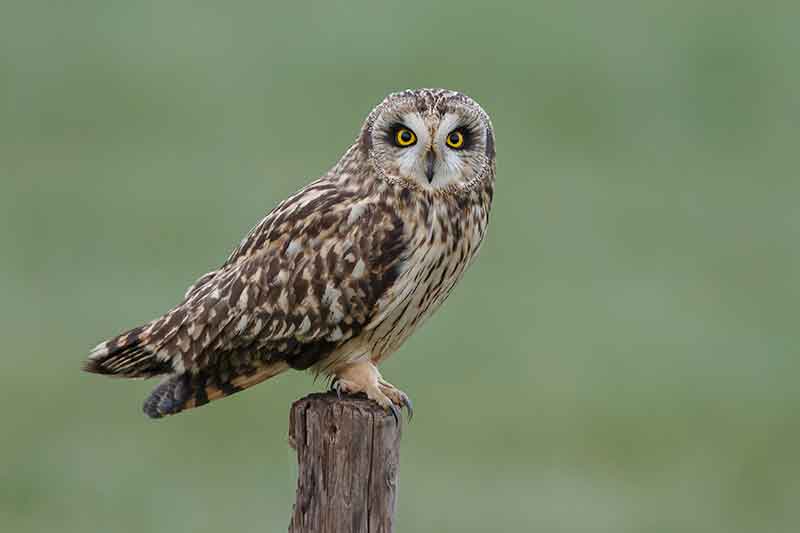
The short-eared owl has piercing yellow eyes, often visible even from a distance, set within a buff-coloured facial disc and surrounded by sooty black markings, giving them a deep-set appearance. Despite its name, the owl’s short ear tufts are rarely visible.
It has a pale belly that matches the colour of the underwings, a white trailing edge on the upper wings, black wingtips, and a distinctive black C-shaped patch on the underwing.

Of the two species, the short-eared owl is the more likely to be seen during daylight hours, and as it roosts and nests on the ground, it does not rely on wooded habitats.
In summer, it can be spotted hunting over uplands, moorlands, and heaths. In winter, look for it in coastal areas and rough grassland.
Long-eared owl

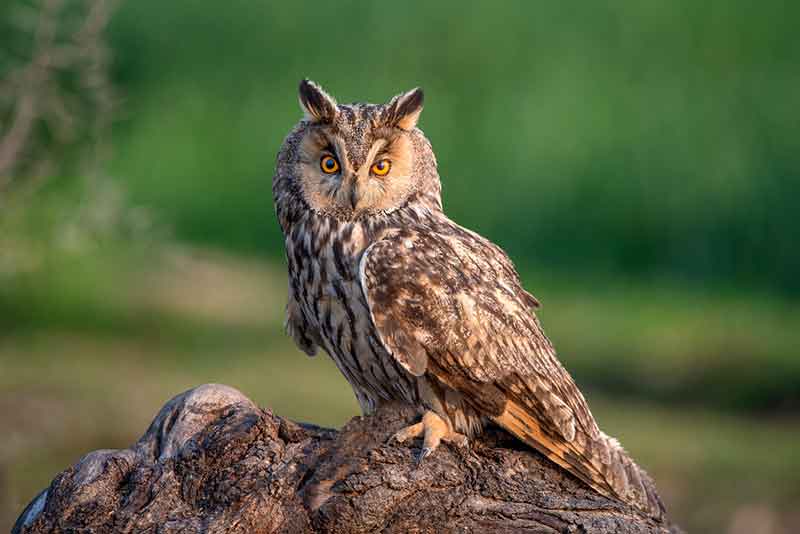
The long-eared owl is a well-camouflaged bird with orange eyes and an orange-toned facial disc marked by vertical white lines. It has prominent ear tufts, though these are sometimes flattened and not always visible.
In contrast to the short-eared owl, the streaked markings on the chest of the long-eared owl continue down onto the belly, creating a clear contrast with its pale underwings. It also lacks the white trailing edge on the upperwings seen in short-eared owls.

Highly nocturnal, the long-eared owl is rarely seen during the day. It prefers habitats with mature trees, particularly conifers, close to open areas for hunting. In winter, it can also occasionally be found roosting in scrub and hedgerows.