The ruddy duck is a stiff-tailed dumpy, diving duck that is considered an invasive species in the UK. It became established in the second half of the 20th century as escapees from collections began to breed. It is currently subject to a government-led eradication programme to prevent it hybridising with Europe’s only native stifftail, the white-headed duck, and drive the population to extinction, particularly in Spain.
Breeding birds: Fewer than 100 birds
UK wintering: 60 birds
Family: Ducks, Geese, And Swans
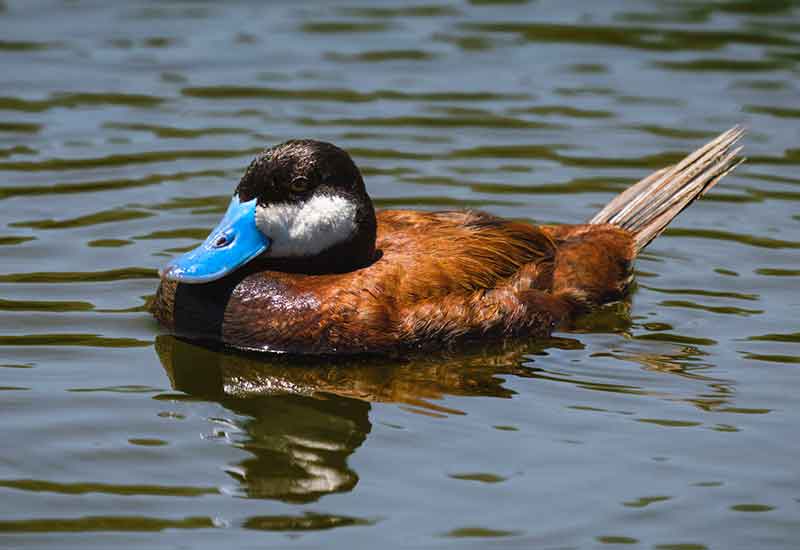
In breeding plumage adult male ruddy ducks have bright chestnut upperparts with a black tail. The underparts are chestnut with white streaks on the belly, the undertail is white, and the underwings are white with dark grey flight feathers.
On the head the crown and nape are black while the cheeks are white. The large, flattened bill is blue, the eyes are black, and the legs and webbed feet are grey.
Out of breeding season the plumage is dull chestnut-brown. On the head the cap is black, the cheeks are white, and the chin, neck, and nape are grey. The bill becomes duller.
Female ruddy ducks in breeding plumage are browner than males. The forehead and crown are dark brown, and the face is white with brown streaks and a dark brown stripe that goes across the cheek. The bill is dark grey.
In winter, females are darker, greyish-brown with pale buff cheeks and a less distinct stripe.
Juveniles are similar to females in winter but the plumage is streaked and they have mottled underparts. The tail feathers are smaller than the adults.
Try our interactive bird identifier
Ruddy ducks build their nests in marshy vegetation. It is made from dry stems lined with down and is added to by the female as more eggs are laid.
Ruddy ducks lay 5-10 cream-coloured eggs which are incubated by the female alone for 22-26 days. Chicks are precocial and leave the nest a day after hatching. They can swim, dive and feed themselves but the female protects them. They can fly at about 42-49 days after hatching.
Ruddy ducks are mostly vegetarian and eat seeds and roots, but will supplement their diet with larvae, crustaceans, and aquatic insects.

Ruddy ducks can be seen all year round but are very secretive during breeding season. They are found in the West Midlands, northern England, and southern Scotland, and can be spotted on lakes and reservoirs.
Britain's Birds
RSPB Handbook Of British Birds
Collins Bird Guide
Ruddy ducks court females by beating their bill against their neck hard enough to create a swirl of bubbles in the water.