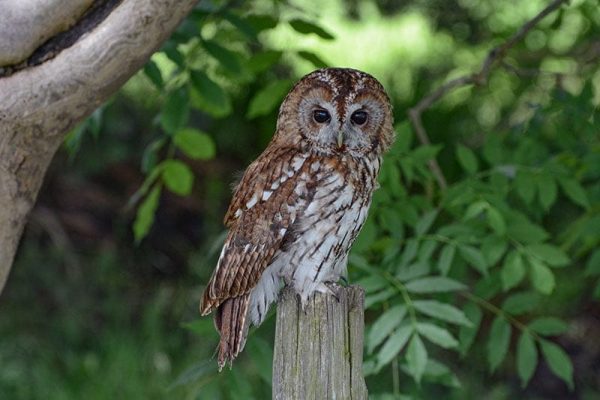
Once a military training ground, Misson Carr is a small nature reserve that’s an important site for a variety of breeding owls.
Monday | Access by permit only |
|---|---|
Tuesday | Access by permit only |
Wednesday | Access by permit only |
Thursday | Access by permit only |
Friday | Access by permit only |
Saturday | Access by permit only |
Sunday | Access by permit only |
Adults – free, but donations are welcome
Children – free, but donations are welcome
Misson Carr, managed by the Nottinghamshire Wildlife Trust, is a small but ecologically rich nature reserve with a diverse range of habitats, including wet woodlands, marshes, and historic grazing pastures. It also contains Nottinghamshire’s largest surviving remnant of the once-extensive fenland system, much of which has been lost to drainage and agriculture over the past 300 years.
The reserve was once under threat from shale gas fracking, with an exploratory drilling site at Mission Springs located just 120 metres away. However, following a decade-long campaign, the site was finally restored in March 2024, securing the future of this important habitat.
Designated as a Site of Special Scientific Interest (SSSI), Misson Carr was formerly an RAF training area before being acquired by the trust from the Ministry of Defence in 2001. Since then, extensive conservation efforts have helped restore its wetland ecosystem. Ditches dug by the military in the 1970s to drain the land for bomb removal have been dammed to raise the water table, preserving valuable wetland areas. The surrounding grasslands are carefully managed with longhorn cattle grazing to prevent scrub from encroaching on more delicate habitats.
The site is particularly important for breeding owls, including short-eared, long-eared, barn, and tawny owls, which played a key role in the anti-fracking campaign. Buzzards, red kites, and marsh harriers can also frequently be seen soaring overhead.
In spring and summer, the woods come alive with the songs of blackcaps, willow warblers, chiffchaffs, and other warblers, along with the distinctive laughing call of green woodpeckers. Pheasants and red-legged partridges are often spotted roaming the open grasslands.
The wetland areas attract an array of birdlife, including shovelers, mallards, gadwalls, curlews, wood sandpipers, green plovers, and black-headed gulls. In winter, the reserve becomes a refuge for fieldfares and redwings.
Access to Misson Carr is by permit only, which can be obtained through the Nottinghamshire Wildlife Trust.
Please note, dogs are welcome on the reserve, but must be kept on a lead.

Jan
Feb
Mar
Apr
May
Jun
Jul
Aug
Sep
Oct
Nov
Dec
J
F
M
A
M
J
J
A
S
O
N
D
For seasonal opening times, further information about facilities, and any restrictions, please visit the site’s website for full details.