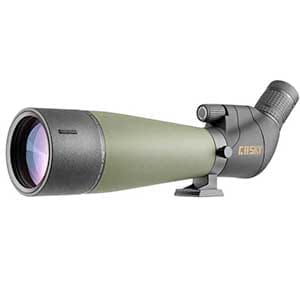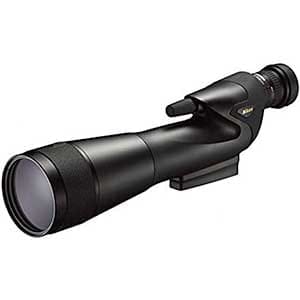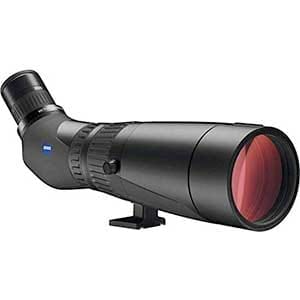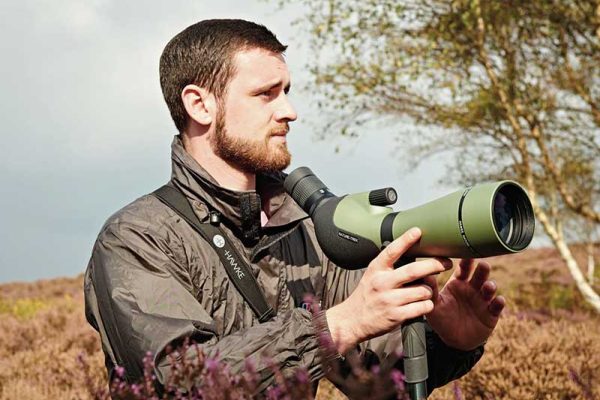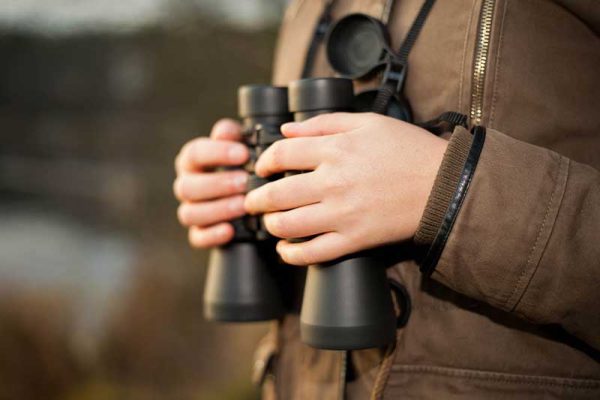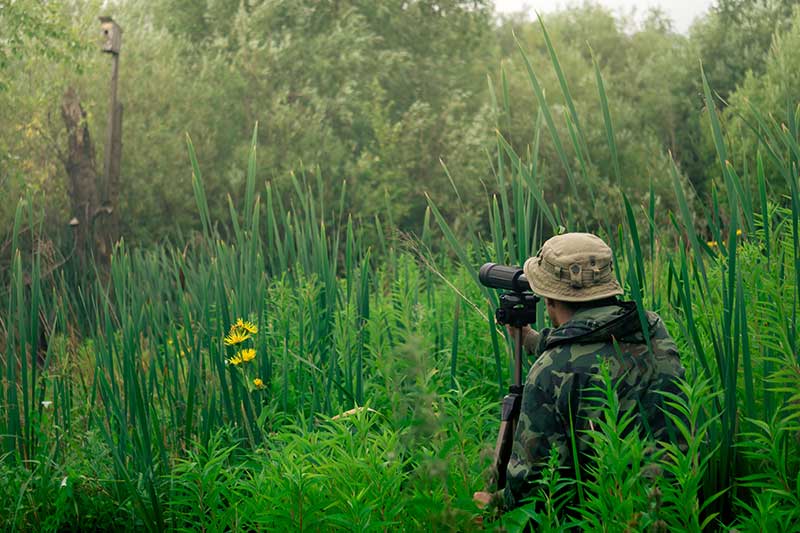
Bird watching is a rewarding hobby that allows enthusiasts to observe and appreciate the beauty of birds in their natural habitats. While binoculars are a popular choice for many birders, a spotting scope can take bird watching to the next level, providing enhanced clarity, magnification, and detail, especially for long-distance viewing.
A spotting scope is a high-powered optical device designed for terrestrial observation. It is essentially a small, portable telescope equipped with advanced optics to deliver sharp, detailed images. Unlike astronomical telescopes, spotting scopes are built for daytime use, featuring rugged, waterproof construction and coatings that enhance visibility in various lighting conditions. Most models are mounted on a tripod to ensure stability and reduce image shake, particularly at higher magnifications.
Choosing the right spotting scope can be overwhelming due to the wide range of models, features, and price points available. This guide will break down the key factors to consider when selecting a spotting scope, helping you make an informed decision based on you specific bird watching needs, budget, and preferences, whether you’re a beginner looking for your first scope or an experienced birder upgrading to a higher-quality model.
The two msin specifications to consider are magnification and objective lens diameter, as they determine the optical performance of the scope. The design of the spotting scope – whether it’s angled or straight – also affects usability and comfort depending on the type of bird watching you plan to do.
When looking at spotting scope specifications, you will typically see numbers like 20-60×80 or 15-45×65. These numbers represent:
Magnification (zoom range)
The first part of the specification (e.g., 20-60x) indicates the scope’s magnification power.
A 20x magnification means the image appears 20 times larger than what you see with the naked eye.
A zoom range of 20-60x means the scope can adjust from 20x magnification up to 60x, allowing for flexibility in observing both nearby and distant birds.
Higher magnification (above 40x) provides greater detail but also reduces the field of view and brightness, making a steady tripod essential.
Objective lens diameter
The second number in the specification (e.g., 80 in 20-60×80) represents the diameter of the objective lens in millimetres.
A larger lens (80mm or 85mm) gathers more light, improving brightness and clarity, especially in low-light conditions (early morning or dusk).
A smaller lens (50mm-65mm) makes the scope more compact and portable but may result in slightly dimmer images at high magnifications.
For general birdwatching: A spotting scope with 15-45x or 20-60x magnification and a 65mm-80mm objective lens offers a great balance between power, brightness, and portability.
For long-distance viewing (e.g., shorebirds, raptors, or open landscapes): A larger objective lens (80mm or more) and higher magnification (up to 60x) are beneficial.
For handheld use or travel: A compact scope with a 50mm-65mm objective lens and 15-40x magnification is easier to carry.
Spotting scopes come in two main body designs: angled and straight. The choice between them depends on how and where you plan to use your scope.
Angled spotting scopes
An angled spotting scope has the eyepiece positioned at a 45-degree or 90-degree angle relative to the body.
Pros
More comfortable for prolonged use, especially when mounted on a tripod.
Easier to use for birding at higher elevations (e.g., treetops or flying birds).
Allows for a lower tripod height, making the setup more stable and reducing strain when sharing the scope with different users.
More versatile for digiscoping (attaching a camera or smartphone for photography).
Cons
Takes more time to line up with the target compared to a straight scope.
Slightly bulkier and less intuitive for beginners.
Straight spotting scopes
A straight spotting scope has the eyepiece aligned directly with the body of the scope, making it look like a small telescope.
Pros
Faster target acquisition, so it’s easier to aim at birds moving across open areas.
More intuitive for beginners, especially those used to binoculars.
Better suited for viewing birds at eye level or on the ground.
Easier to use from a car window mount for drive-by bird watching.
Cons
Less comfortable for prolonged use, especially for birds positioned above eye level.
Requires a taller tripod, which may be less stable and more prone to vibrations.
Which one should you choose?
Choose an angled scope if you often watch birds in trees, use a tripod for extended periods, or plan to share your scope with others.
Choose a straight scope if you prefer quick target acquisition, watch birds at eye level, or plan to use your scope from a vehicle.
The quality of the optics is one of the most important considerations when selecting a spotting scope. A well-made scope with high-quality glass and coatings will deliver sharper, clearer images with better colour accuracy and contrast.
Lens coatings
Coatings on the lenses help reduce glare, increase light transmission, and improve image quality. There are different types of coatings to be aware of:
Coated: A single layer of anti-reflective coating applied to one or more lens surfaces.
Fully coated: A single layer of coating applied to all glass surfaces.
Multi-coated: Multiple layers of anti-reflective coatings applied to some lens surfaces, enhancing brightness and reducing reflections.
Fully multi-coated: Multiple coatings applied to all glass surfaces, providing the highest level of light transmission and image clarity.
For bird watching, it’s recommended to choose a fully multi-coated spotting scope to ensure maximum brightness and contrast, especially in low-light conditions such as dawn or dusk.
ED (Extra-low dispersion) glass
ED glass significantly reduces chromatic aberration (colour fringing), which can be a problem at higher magnifications. Scopes with ED glass provide:
Sharper images with better colour fidelity.
Reduced blurriness around the edges of birds and other subjects.
Improved contrast, making it easier to distinguish fine feather details.
While ED glass models are generally more expensive, they are worth the investment for serious bird watchers who want the best image quality.
Prism types
Spotting scopes use prisms to correct the orientation of the image. The two main types are:
Porro prism: Larger and bulkier but generally more affordable and known for excellent depth perception.
Roof prism: More compact and lightweight but often more expensive due to the additional precision manufacturing required.
Most high-quality spotting scopes use roof prisms with phase correction coatings, which enhance image sharpness and brightness.
Field of view (FOV)
The field of view (FOV) refers to the width of the area visible through the spotting scope at a given distance, usually measured in feet or metres at 1,000 yards/metres.
A wide field of view makes it easier to track moving birds, especially those that are fast or unpredictable, such as swallows or warblers.
A narrow field of view occurs at higher magnifications, making it more difficult to locate and follow birds in motion.
Typical field of view fanges
Wide FOV (130–180 feet at 1,000 yards) – better for scanning large areas and tracking birds in flight.
Narrow FOV (80–120 feet at 1,000 yards) – common at high magnifications but requires more precision when aiming.
If you plan to watch birds in dense forests or follow birds in flight, a spotting scope with a wider field of view will be beneficial.
Close focus distance
Close focus distance refers to the shortest distance at which a spotting scope can focus sharply. This is particularly important if you want to observe birds at close range, such as those visiting a garden feeder or perched nearby in bushes. A spotting scope with a close focus distance of 10–15 feet is ideal for watching birds at shorter ranges while still providing excellent detail. Some models have a close focus of 20 feet or more, which may not be ideal for close-up birding but is sufficient for mid- to long-range viewing. If you frequently observe small birds up close, look for a scope with a short close focus distance to capture fine details.
Eye relief
Eye relief is the distance between your eye and the eyepiece while still being able to see the full field of view. This is particularly important for those who wear glasses, as insufficient eye relief can result in a reduced field of vision.
Standard eye relief: 12–15mm – suitable for most users without glasses.
Long eye relief: 16–20mm – recommended for glaases wearers, as it allows comfortable viewing without needing to remove glasses.
Most spotting scopes feature adjustable eyecups that can be twisted up or down to accommodate both glasses wearers and non-glasses wearers. If you wear glasses, look for a model with at least 16mm of eye relief to ensure a full, unobstructed view.
When selecting a spotting scope for bird watching, size and weight play an important role in determining how portable and practical the scope will be for your specific needs. A balance must be struck between portability and optical performance, especially if you plan to travel frequently or bird watch in remote locations.
Spotting scopes generally fall into two main categories based on their objective lens diameter and overall size:
Compact spotting scopes (50mm–65mm objective lens)
Pros
Lightweight and easier to carry, ideal for travel and long hikes.
Generally smaller and fits into a backpack with ease.
Faster setup and easier handling without requiring a heavy-duty tripod.
Performs well in bright daylight conditions.
Cons
Lower light-gathering ability, making them less effective in dawn, dusk, or overcast conditions.
Lower maximum magnification compared to full-size scopes.
Best for
Bird watchers who frequently travel or hike to birding locations.
Casual or beginner birders who prefer a more portable option.
Those who primarily watch birds in well-lit environments.
Full-size spotting scopes (80mm–100mm objective lens)
Pros
Superior light-gathering ability for brighter, clearer images, even in low light.
Higher magnification capabilities for distant birds.
Better image resolution and contrast, ideal for serious bird watchers and photographers.
Cons
Heavier and bulkier, making it less convenient for travel.
Requires a sturdy tripod, adding to the overall weight of your setup.
More expensive than compact models.
Best for
Dedicated birders who prioritize image quality over portability.
Those who birdwatch from a fixed location, such as a hide or backyard.
People interested in digiscoping (attaching a camera or smartphone to capture bird images).
If you plan to carry your scope for long distances, a compact model (50mm-65mm) is the best option, as it reduces overall weight and is easier to set up in the field.
If you prioritize optical performance and do most of your bird watching from a fixed location, a full-size scope (80mm-100mm) is the better choice, as it provides brighter, sharper images, especially at high magnifications.
A mid-range option (70mm-80mm) can offer a balance between portability and performance, making it suitable for versatile birdwatching conditions.
Since bird watching often takes place outdoors in varying weather conditions, it’s essential to choose a spotting scope that is built to withstand the elements.
High-quality spotting scopes are designed to be both waterproof and fog-proof, ensuring they perform well in all weather conditions.
Waterproofing
Spotting scopes labelled as waterproof are sealed using O-rings to prevent moisture, dust, and debris from entering the optical system. This feature is particularly useful for birdwatching in rainy, humid, or coastal environments, where exposure to water and salt can be an issue. Some models are fully submersible, meaning they can survive accidental drops in water, though this is more relevant for extreme conditions. Look for scopes that specify “IPX7” or “IPX8” ratings, as these indicate higher levels of water resistance.
Fog-proofing
Temperature changes, such as moving from a warm car to a cold morning field, can cause internal fogging if the scope is not properly sealed. High-quality spotting scopes are filled with nitrogen or argon gas, which prevents internal condensation from forming on the lenses. Argon-purged scopes tend to provide longer-lasting fog protection because argon molecules are larger and less likely to escape over time compared to nitrogen.
Choose a spotting scope that is both waterproof and fog-proof to ensure reliable performance in all environments.
Spotting scopes are often used in rugged outdoor environments where they may be exposed to accidental drops, impacts, or rough handling. A well-built scope should have
Rubber armour coating
Most high-quality spotting scopes come with a rubberized outer coating, which serves multiple purposes:
Provides a non-slip grip, even in wet or cold conditions.
Absorbs shock from accidental bumps or minor falls.
Protects the internal optics from scratches, dust, and debris.
Some models have textured or reinforced grip areas, making them easier to hold securely.
Build materials and construction
Magnesium alloy or aluminium body – durable yet lightweight, providing a good balance of strength and portability.
Polycarbonate body – more affordable and lightweight, but slightly less durable than metal-bodied scopes.
Sealed construction – ensures that dirt, dust, and moisture don’t enter the internal components, which is essential for long-term reliability.
Eyepiece and lens protection
Look for retractable sunshades on the objective lens to reduce glare and protect the front glass from dust and rain. Some models have twist-up eyecups, which protect the eyepiece when not in use. Lens caps should fit securely to prevent scratches and dust accumulation during storage and transport.
When choosing a spotting scope for bird watching, it’s essential to consider your budget and what you can expect in different price ranges. While high-end models offer superior optics and durability, many mid-range and budget-friendly options still provide excellent performance for casual or beginner birdwatchers.
Entry-level spotting scopes suitable for beginners and casual bird watchers.
Typically have smaller objective lenses (50mm–65mm), reducing brightness in low-light conditions.
Lower optical quality – may not have extra-low dispersion (ED) glass, leading to some colour fringing.
Limited magnification (often around 15-45x) with some image softness at higher zoom levels.
May lack full waterproofing or fog-proofing.
Best for: Beginners, back garden bird watchers, or those on a tight budget.
Great balance between price and performance – ideal for most birdwatchers.
Better optics, often with ED glass to reduce colour fringing and improve image sharpness.
Fully multi-coated lenses for better light transmission and clarity.
Typically larger objective lenses (65mm–80mm), improving brightness in low light.
Better build quality, often fully waterproof and fog-proof.
More stable focusing mechanisms for smoother adjustments.
Best for: Enthusiast birdwatchers looking for high-quality optics without spending thousands.
Top-tier optics with exceptional sharpness, contrast, and colour fidelity.
Fluorite or ED glass for superior image quality with minimal chromatic aberration.
High-quality coatings for maximum light transmission, making them excellent in low-light conditions.
Larger objective lenses (80mm–100mm), providing the brightest images possible.
Precision engineering, ensuring smooth focus adjustments and long-term durability.
Lightweight materials, such as magnesium alloy bodies, for superior portability without sacrificing strength.
Best for: Serious bird watchers, professional ornithologists, and those looking for lifetime investment optics.
This page contains affiliate links. For more information please see our disclosure here.