Bird watching is a rewarding and immersive hobby that requires the right optical equipment to fully appreciate the detail of birds in their natural habitat. While binoculars are a staple for many birdwatchers, spotting scopes offer a significant advantage when it comes to viewing birds at long distances with greater clarity and detail. A spotting scope is a high-powered monocular telescope designed for terrestrial viewing, providing higher magnification than binoculars, making it ideal for spotting distant birds, observing fine plumage details, and digiscoping – attaching a camera or smartphone for photography.
One of the key decisions when choosing a spotting scope is selecting between an angled or a straight design. This choice significantly impacts how easy and comfortable it is to use the scope in different bird watching scenarios.
When choosing between an angled or straight spotting scope, understanding the structural differences and how each design affects your viewing experience is essential for making an informed decision.
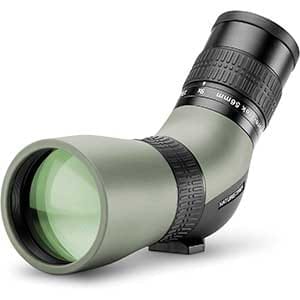
The primary feature of an angled scope is its tilted eyepiece, which is typically set at an angle of around 45 degrees. This design makes the eyepiece higher up relative to the barrel of the scope, which is particularly beneficial when viewing at high angles, such as birds in trees, cliffs, or the sky.
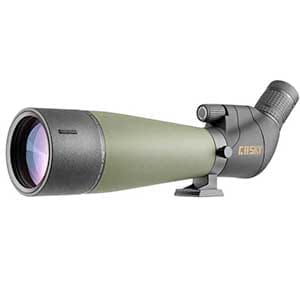
The eyepiece on a straight spotting scope is aligned directly with the barrel, which means it points in the same direction as the body of the scope. This design creates a more linear, streamlined shape, making the scope easier to use when you want to quickly acquire distant targets.
An angled spotting scope is designed to reduce strain on the neck and back, which is crucial when you’re bird watching for extended periods. When you’re looking at birds high up in trees or in the sky, the tilted eyepiece allows you to maintain a more natural and relaxed posture. This is especially beneficial during long sessions, as it prevents you from constantly having to crane your neck upward, which can be tiring. For birdwatchers with neck or back issues, the ergonomic advantage of the angled design can make all the difference, allowing for a much more comfortable viewing experience.
Angled scopes excel when you’re observing birds at high angles, such as those perched in tall trees or soaring in the sky. With the eyepiece tilted at 45 degrees, you don’t need to raise your arms or bend backward awkwardly. The angled design makes it easy to tilt the scope upward and keep it steady while looking up at birds without straining your posture. This feature is particularly advantageous for bird watching in forests, coastal cliffs, or when watching birds of prey like eagles and hawks.
When bird watching in a group, the angled spotting scope offers significant advantages. Multiple people, regardless of their height, can comfortably look through the scope without needing to adjust the tripod height constantly. The eyepiece’s tilt allows viewers to easily adjust their own angle of vision, making it much simpler for everyone to enjoy the same bird or scenery. Whether you’re sharing the view with friends, family, or fellow birdwatchers, the angled design ensures minimal disruption and maintains a more communal experience.
Because of the angled eyepiece, you can set the tripod at a lower height for a more stable viewing position. A lower tripod height reduces the risk of vibrations, especially in windy conditions, and provides a more steady image. This is especially useful for birdwatchers who frequently observe birds in open spaces where wind is a factor or when observing smaller, more subtle bird movements that require precision and stability. Additionally, this lower tripod setup allows for a more relaxed viewing angle while seated or kneeling, making it ideal for birdwatchers who prefer a comfortable, stable stance.
Angled scopes are often more suited for digiscoping, which involves attaching a camera or smartphone to the eyepiece to take photos or videos of birds. The angle of the eyepiece makes it easier to align the camera lens with the scope without having to awkwardly adjust the position of the tripod or scope. This allows for smoother transitions between visual observation and capturing high-quality images, making the angled design the preferred choice for birdwatchers who are interested in photography or videography.
For some birdwatchers, the angled design can feel a bit less intuitive compared to a straight scope, especially when it comes to quickly locating birds. Since the eyepiece is tilted, there may be more trial and error involved in finding the right angle and position to get the bird in view. This can be a minor hindrance when you need to quickly spot birds in motion, and may require some practice to become fully accustomed to the viewing setup. Some birdwatchers find the straight scope to be more instinctive when tracking fast-moving birds.
The viewing position through an angled scope can feel slightly less natural for those transitioning from binoculars or straight scopes. The tilted eyepiece may require a bit more adjustment to align your eye with the viewfinder, and some users might feel that it takes longer to get used to compared to a straight design. For beginners, this could potentially lead to some frustration while trying to maintain proper alignment, particularly when trying to keep up with fast-moving birds.
Angled scopes tend to be bulkier than straight models due to the additional tilting mechanism. This added bulk can make packing and transporting an angled scope a bit more cumbersome, especially for birdwatchers who like to travel light. Whether you’re hiking to a bird watching spot or need to store your equipment in a tight space, the larger size of the angled scope can be a bit more challenging to handle. While it may not be a dealbreaker, it’s something to consider if portability is a priority for you.
One of the primary advantages of a straight spotting scope is its ability to quickly locate birds, especially those that are moving. The direct alignment of the eyepiece and barrel allows birdwatchers to instantly point the scope toward a bird and start observing. This makes straight scopes ideal for beginners, as the design is simple and familiar, resembling the action of using binoculars. For those who are bird watching in areas where birds are constantly in motion, the straight design makes it easier to follow and track subjects without having to make constant adjustments to the tripod.
A straight scope offers a more natural viewing angle, especially for those transitioning from binoculars or other optical instruments. The straight-line eyepiece aligns directly with the birdwatcher’s line of sight, making it feel more intuitive and comfortable to use. This direct alignment is beneficial when you need to quickly adapt your focus from one subject to another or when trying to match the movement of fast-flying birds. For those who value simplicity and a seamless transition between different types of optics, the straight scope provides a more familiar and straightforward setup.
Straight spotting scopes are particularly well-suited for level or downward viewing. If you’re observing birds in open fields, on the ground, or at eye level (e.g., bird watching along shorelines, wetlands, or grasslands), the straight scope is the ideal tool. Because the eyepiece is aligned with the scope barrel, it offers a natural viewing angle for horizontal or downward observations. This is ideal for watching shorebirds, waterfowl, or any birds found in lower areas where the terrain is flat and the viewing angle doesn’t require a tilt.
When you’re bird watching from a vehicle, a straight spotting scope offers significant advantages. The design makes it easy to set up quickly on a car window mount or tripod. Straight scopes allow you to keep your eye level with the eyepiece without needing to adjust the height, making them much more convenient for car-based birding trips. This is particularly beneficial for watching birds in areas where they are often spotted along roadsides or when traveling through wildlife reserves and national parks.
While straight spotting scopes excel in flat or downward viewing, they can become uncomfortable when trying to observe birds at high angles. Birdwatchers may find themselves straining their necks when looking at birds perched in tall trees, cliffs, or watching birds in flight. Without the flexibility of an angled eyepiece, you’re forced to raise the tripod or adjust your posture to maintain a proper viewing angle, which can become tiring over time. For those focused on high-angle bird watching, this limitation may make a straight scope less appealing.
The fixed eyepiece angle in a straight spotting scope can make it harder to share the view with other birdwatchers. Since the eyepiece is positioned directly on top of the scope, everyone who uses the scope needs to adjust the tripod height to match their own eye level. This frequent adjustment can disrupt the viewing experience when sharing with others, especially in a group setting. If you’re bird watching with friends or family members of different heights, the angled scope’s more flexible viewing position may be a more suitable option.
To use a straight spotting scope comfortably, the tripod must be set higher, which can affect the overall stability of the setup. A higher tripod position makes the scope more vulnerable to vibrations and movement, especially in windy conditions. A heavier, more stable tripod may be required to ensure that the image remains steady, but this can reduce the portability and ease of use in more rugged environments. Additionally, the higher tripod height can make the scope less stable when observing small or subtle movements, which is especially important when observing birds that are less active or difficult to spot.
An angled scope is ideal for:
Woodland and high-angle viewing (forest, cliffs, and skies).
Group bird watching and shared views.
Digiscoping and photography.
Bird watching where comfort and prolonged use are priorities.
A straight scope is ideal for:
Open areas and fast target acquisition (e.g., shorelines, wetlands).
Beginners looking for an intuitive and straightforward design.
Vehicle-based bird watching and quick sightings from the car.
More natural, low-angle, or level viewing (e.g., flat terrain).
Ultimately, the decision comes down to the type of bird watching you do, how you want to use your scope, and whether comfort, speed, or group usability is a priority. Whichever type you choose, both angled and straight scopes can provide excellent views of the avian world – it’s simply about matching the right design to your personal needs and style of bird watching.
This page contains affiliate links. For more information please see our disclosure here.